Your Early Access launch is probably your real launch
More Steam games than ever start in Early Access, yet only about one in five earns more at 1.0. Plan your marketing around day one.
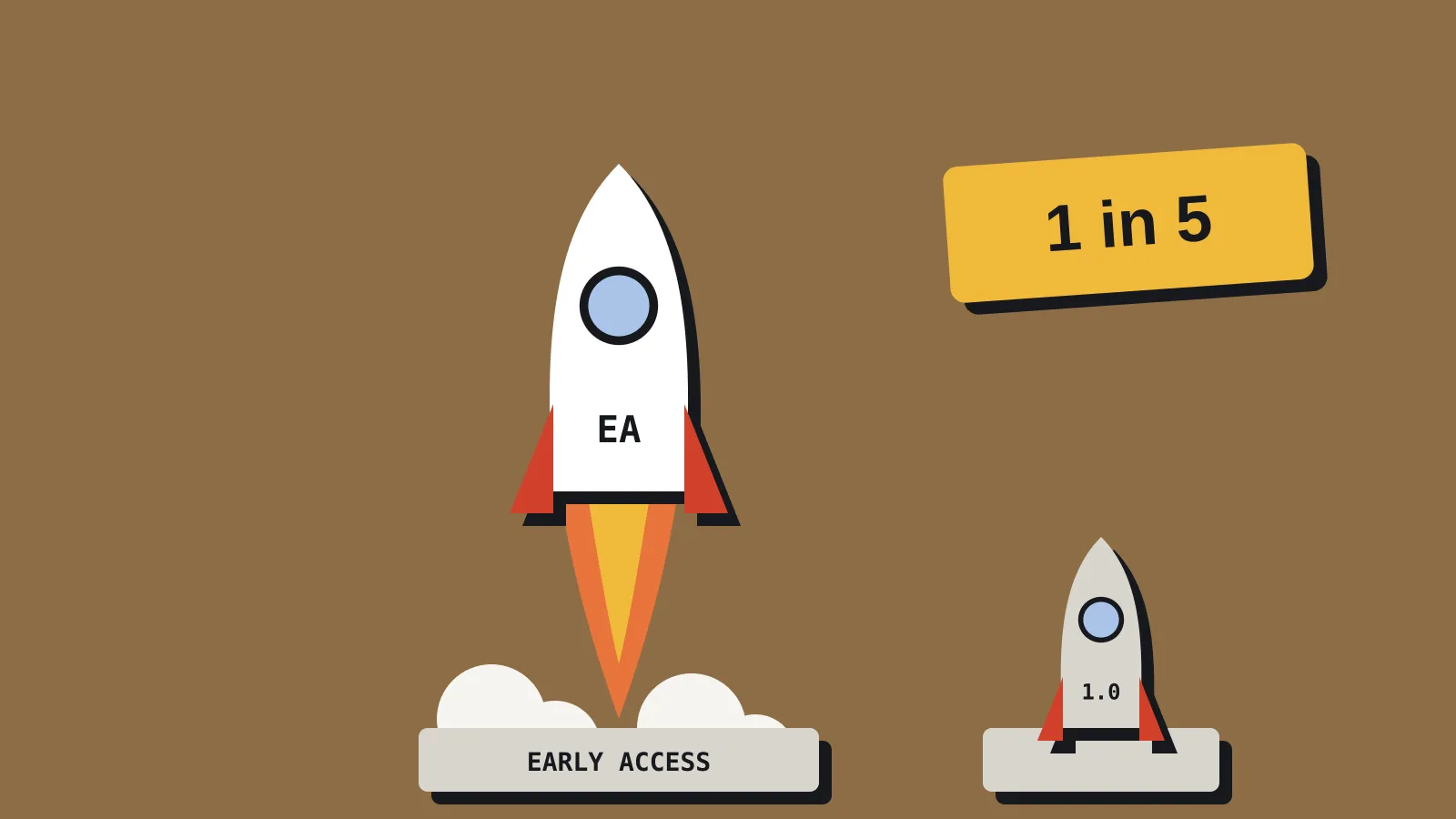
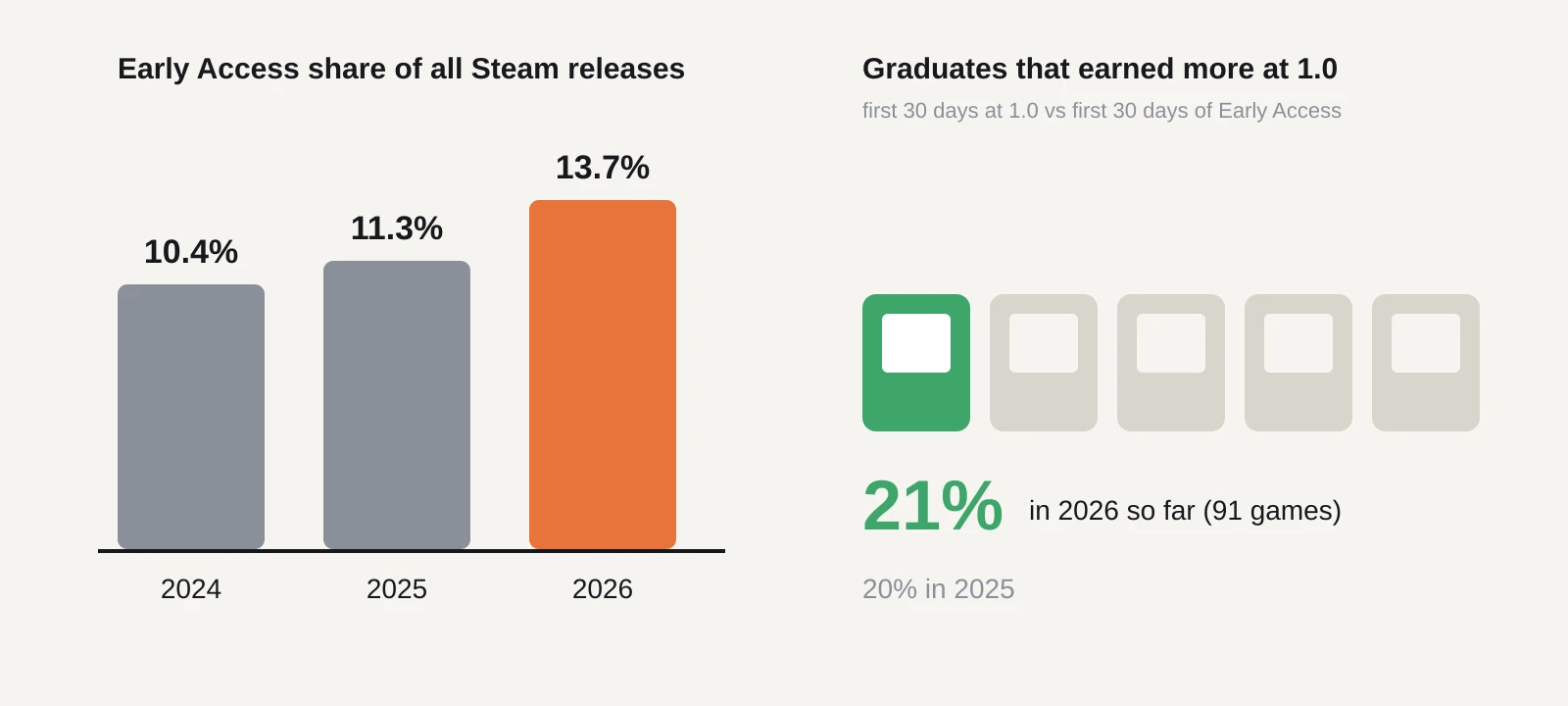
Only 21% of the Steam games that left Early Access in 2026 so far earned more in their first 30 days at 1.0 than in their first 30 days of Early Access. That’s from GameDiscoverCo’s May 2026 look at 91 Early Access graduates, and it barely moved from 20% in 2025. Meanwhile, more developers are choosing Early Access. If you’re a solo dev, the numbers point one way: the day you open Early Access is the launch that counts.
Early Access is growing fast
A GamesIndustry.biz report, summarised by WN Hub on 28 October, says 2,924 games had launched in Early Access on Steam by mid-October 2026. That’s up 18% on 2025 and 60% on 2020, using SteamDB data. Early Access also takes a bigger slice of all Steam releases each year: 10.4% in 2024, 11.3% in 2025 and 13.7% in 2026.
The same report quotes several studios saying players now treat an Early Access release like a full one. Iron Gate, the Valheim team, said players may forgive thinner content but still expect polish. Apocalypse Studios argued you should treat Early Access as a proper release because that’s how players see it. The ceiling is high, too. Paralives sold 250,000 copies in about eight hours after its Early Access launch on 25 May 2026, according to its creator Alex Massé, as reported by Notebookcheck and WN Hub.
What the graduate data shows
GameDiscoverCo’s 2026 analysis tracks paid games that sold more than 5,000 copies, or free games that made more than US$10,000, in their first 30 days of Early Access. It compares that first month with the first month after 1.0. The median game spent one year and three months in Early Access before graduating.
The fuller picture comes from GameDiscoverCo’s December 2025 study of 225 graduates. In that set, 45 games did better at 1.0 and about 180 did worse. The median game’s first 30 days at 1.0 brought in about 40% of what its first 30 days in Early Access did. Some big names dropped hard. Supermarket Simulator’s 1.0 month was down 95% on its Early Access month, Slime Rancher 2 fell 85% and Backpack Battles fell 87%. Hades II reportedly set a player-count record at 1.0 while earning about 75% less in its first month than it did at its Early Access launch.
The winners are worth studying. News Tower was up 138%, Escape the Backrooms 189% and Mars First Logistics 181%, with GameDiscoverCo crediting part of that last result to a big round of new languages. In 2026, Soulmask topped the chart, helped by a US$20 DLC sold alongside 1.0. Expandable strategy and building games such as Timberborn, Shapez 2 and Terra Invicta also did well.
Why 1.0 so often falls flat
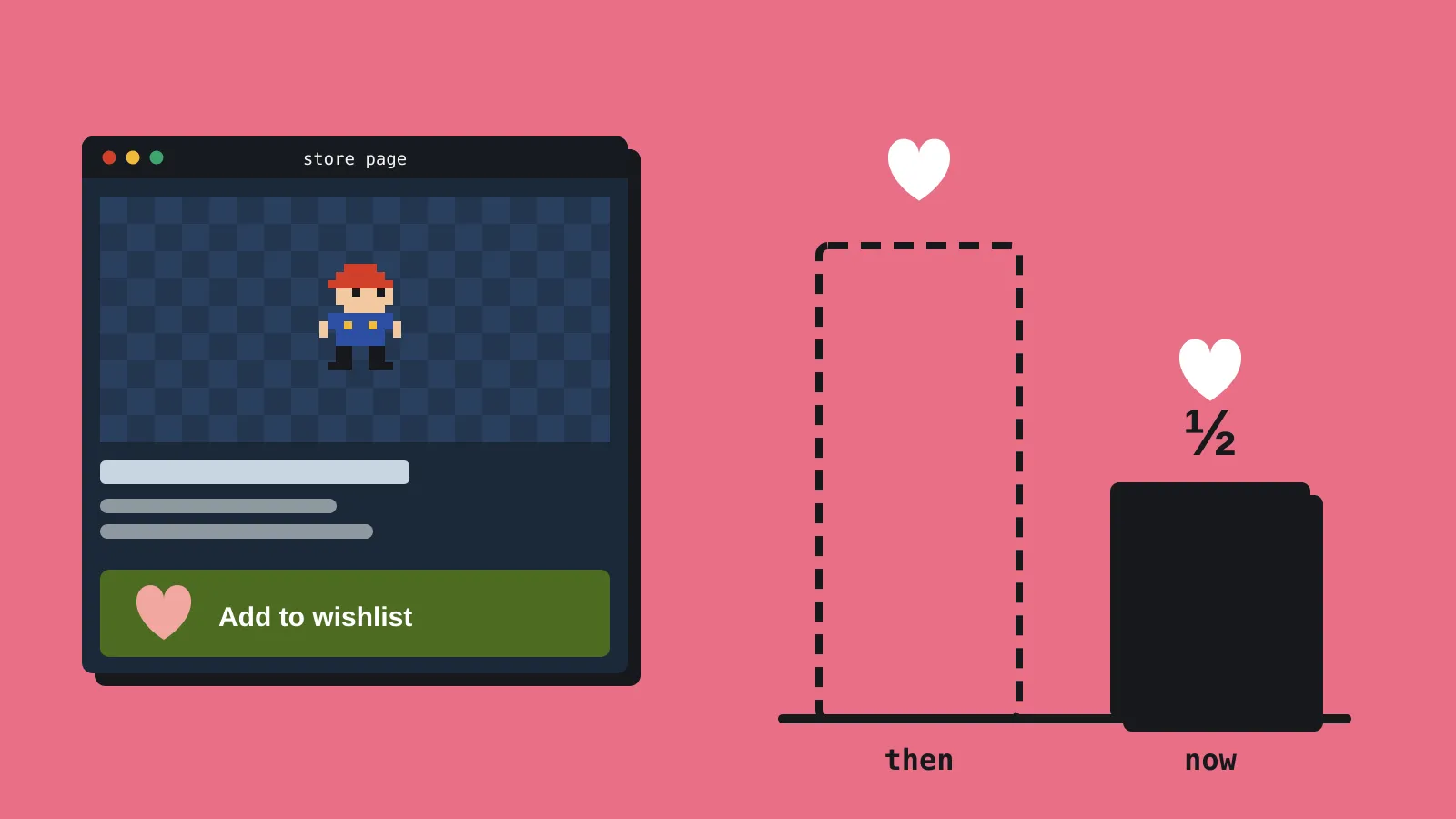
Your Early Access launch is when Steam spends its first-release attention on you. Valve’s visibility documentation says an Early Access game shows in the Early Access “All New Releases” tab and may trigger a wishlist email. Leaving Early Access is treated like a first full release, with a new-releases queue slot and a guaranteed wishlist email. That second push is real, but it lands on a smaller pool. Many of your keenest wishlisters already bought in during Early Access, and they don’t buy twice.
Your review score also arrives early. By 1.0, new visitors see months of Early Access reviews, good or bad. A rough first build follows you to graduation.
GameDiscoverCo points to another pattern. Games that patch constantly and discount through Early Access make 1.0 feel like one more update, so sales barely change. Its May piece makes a related point: the excitement of first-time players only happens once, so timing your biggest push matters. We covered a related squeeze in our piece on falling wishlist conversion.
What to do about it
Plan your marketing around the Early Access date. Treat it as your launch, with a press list, a trailer, creator outreach and a festival slot if you can get one. Our Next Fest followers piece covers how to time a demo before it. Make the first build polished, even if it’s short, because the first reviews set your score.
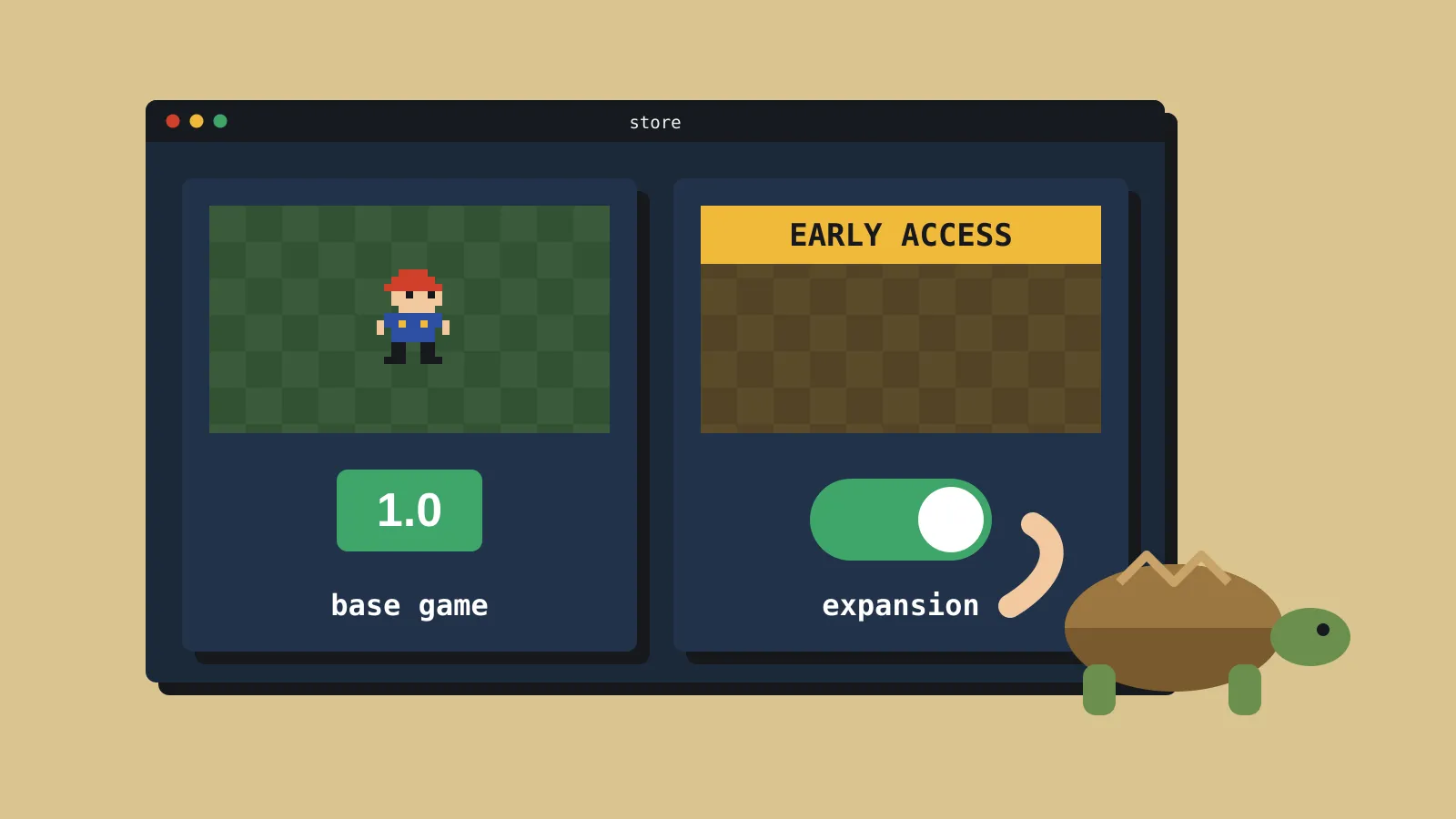
Decide early what 1.0 must add to earn a second push. Write it down before you open Early Access. Good candidates are a large content update, a batch of new languages, a console release and a paid DLC timed with 1.0. A version that only fixes bugs gives press and players little reason to look again.
Use pricing deliberately. Valve’s Early Access rules let you start below your target price and raise it later. After any price rise you must wait 30 days before discounting, and that includes the launch discount. Valve lists three routes at 1.0. You can keep the price and run a launch discount, raise the price with no discount, or raise it more than 30 days before 1.0 and then discount. Pick one early and tell your community. Going easy on discounts during Early Access also keeps 1.0 meaningful, going by GameDiscoverCo’s examples.
Consider skipping Early Access. Valve says it isn’t a way to crowdfund development and you shouldn’t rely on its sales to finish the game. If your game is linear or story-led, one strong launch may serve you better than two weaker ones. Early Access suits games that can ship a finished core and grow, like the strategy and building games above. Our Caves of Qud piece covers the other reason to use it: building the game with players.
If you’re already in Early Access, look at your wishlist count against your sales. A large unconverted wishlist is your 1.0 audience. Hold back a meaningful feature for graduation, and keep your store page roadmap current so those wishlisters know when it lands.
Sources
- What happened to Early Access graduates in 2026 so far? (GameDiscoverCo)
- The state of Steam Early Access graduates in 2025 (GameDiscoverCo)
- Early Access documentation (Steamworks)
- Visibility on Steam (Steamworks)
- Early Access on Steam is growing (WN Hub summary of GamesIndustry.biz)
- Paralives sells 250k copies in 8 hours on Steam (Notebookcheck)