Next Fest hit 7,240 demos. Followers still decide who gets seen
October's Steam Next Fest is the biggest yet, and early data says the games that win arrive with followers already banked, not with last-minute spikes.
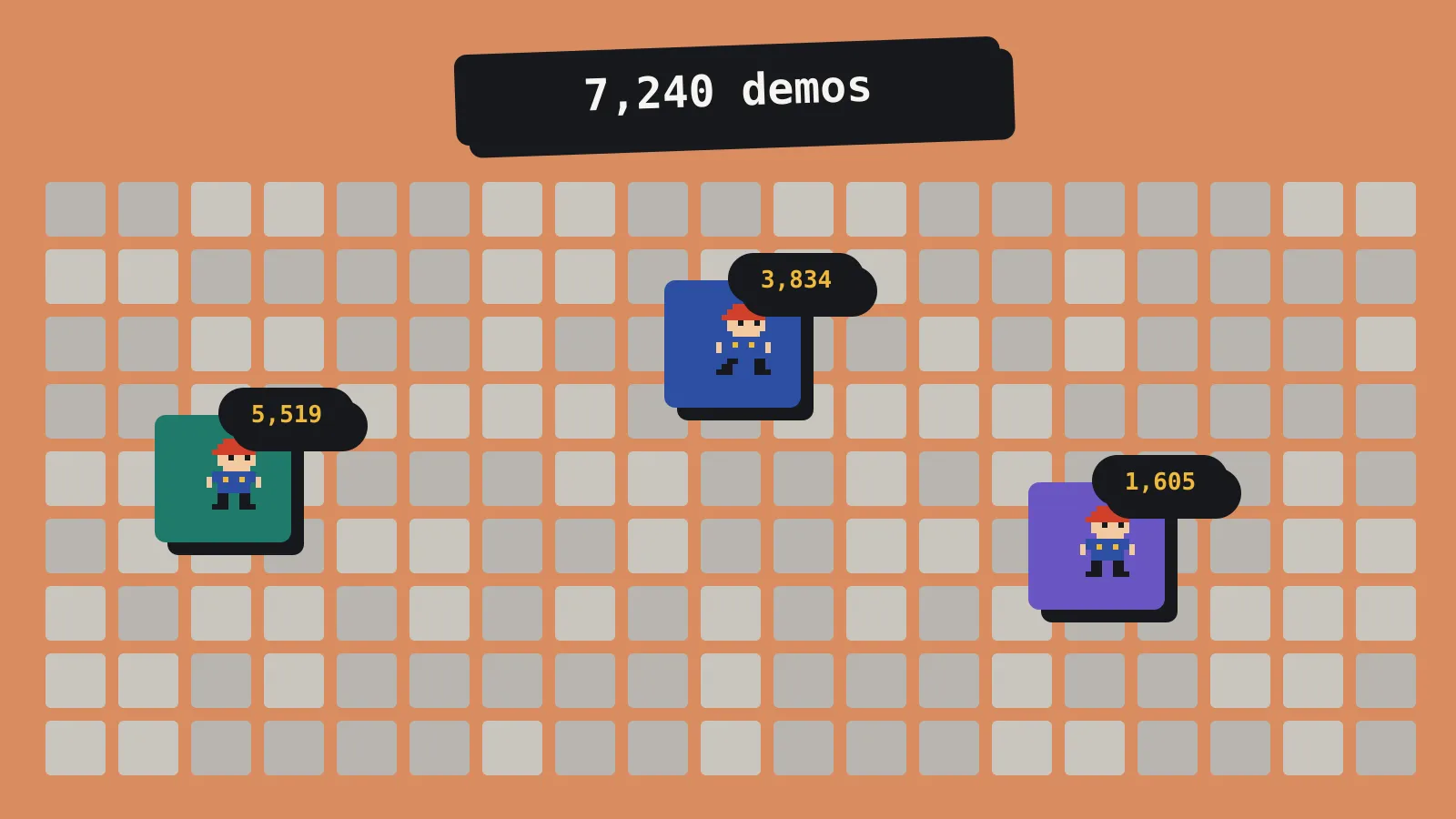
October 2026’s Steam Next Fest has 7,240 games taking part, a record. That’s up 65% on June’s 4,382 and roughly eight times the 887 games in the June 2023 edition. The numbers come from Chris Zukowski at How To Market A Game, who scraped the live festival pages a few days in and published an early analysis on 21 October. The festival runs until 26 October.
The headline figure matters less than what sits under it. The demos drawing players are the ones that arrived with a big follower count already in place. And about a third of everything in the festival says it used generative AI somewhere.
How big Next Fest has become
For years, roughly a third of each year’s Steam releases had a demo in a Next Fest. On the post’s figures, that was 33.6% in 2024 and 38.2% in 2025. Using a projected 29,300 Steam releases for 2026, this year’s festivals add up to about 51.7%. That last number rests on a projection, so treat it as a direction rather than a fact.
Zukowski’s explanation is simple: more developers now know the festival exists, and more of them enter. A press preview had put the count near 8,000 before some games dropped out.
For you, this means the floor has moved. Valve still gives every entrant a minimum amount of exposure through randomised front-page slots. With 7,240 games sharing that baseline, your slice of it is thinner than it was a year ago.
The top 25 arrived with followers
The post groups games by peak concurrent players (CCU) in their demo during the festival. Steam followers are a public stand-in for wishlists, which only the developer can see.
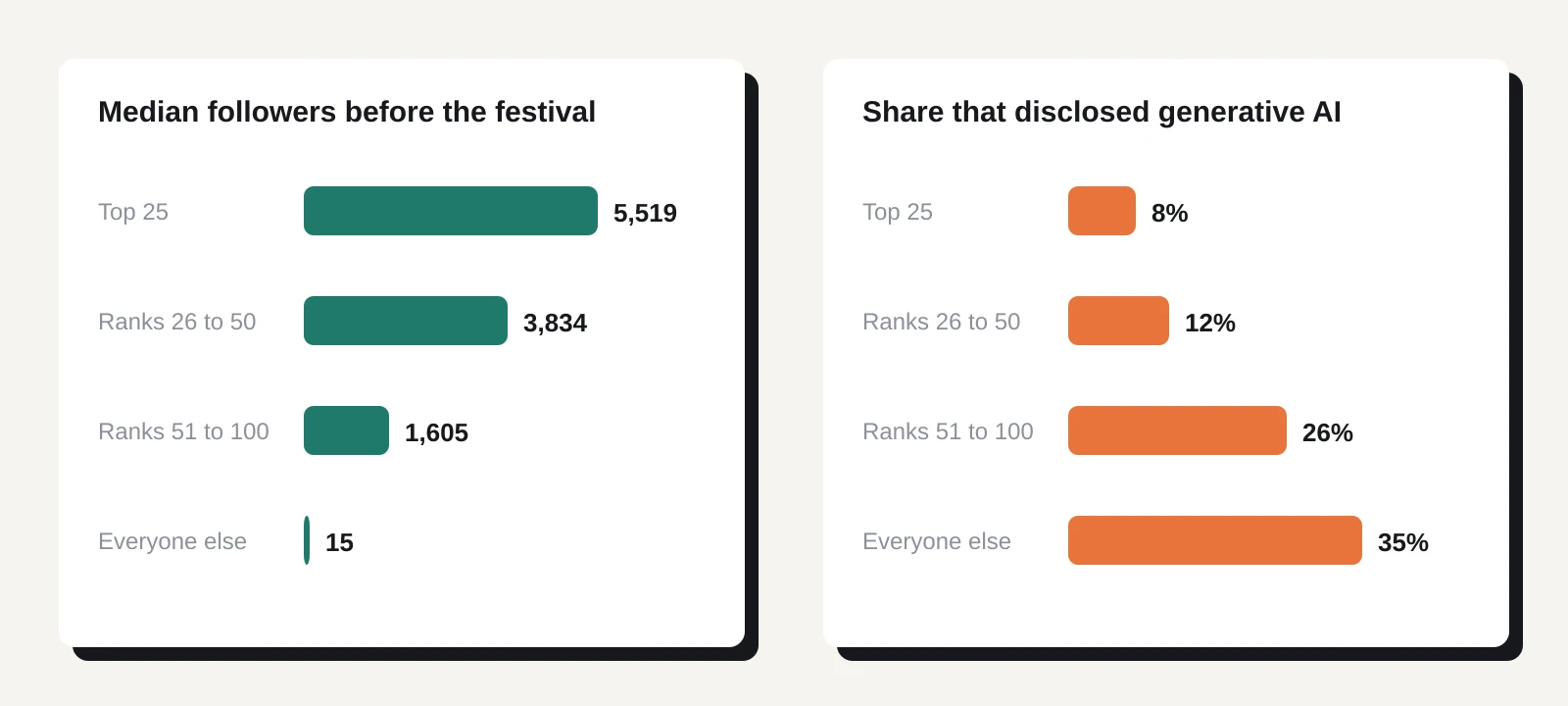
The top 25 demos peaked between 419 and 20,505 concurrent players. The day before the festival, their median follower count was 5,519. Games ranked 26 to 50 had a median of 3,834. Ranks 51 to 100 had 1,605. The other 6,942 games had a median of 15 followers.
Zukowski also tested which number tracks peak demo players best. Total followers the day before the festival had a correlation of 0.55. The raw number of followers gained in the final week came close, at 0.52. Percentage growth in that week had a slightly negative correlation, at minus 0.13.
That last figure is the useful one for small games. The bottom group showed the highest percentage growth (12.5%), but from a median of 15 followers, that’s one extra person. A spike in the week before the festival looks good on a chart and does little for your peak.
There’s one more detail worth checking against your own plan. The top 25 had their demos live for about 19 days before the festival on average. Everyone else averaged about 37. An older demo isn’t a problem by itself, but a demo that has been live for weeks without building followers won’t suddenly start during the festival.
A third of entrants disclosed AI use
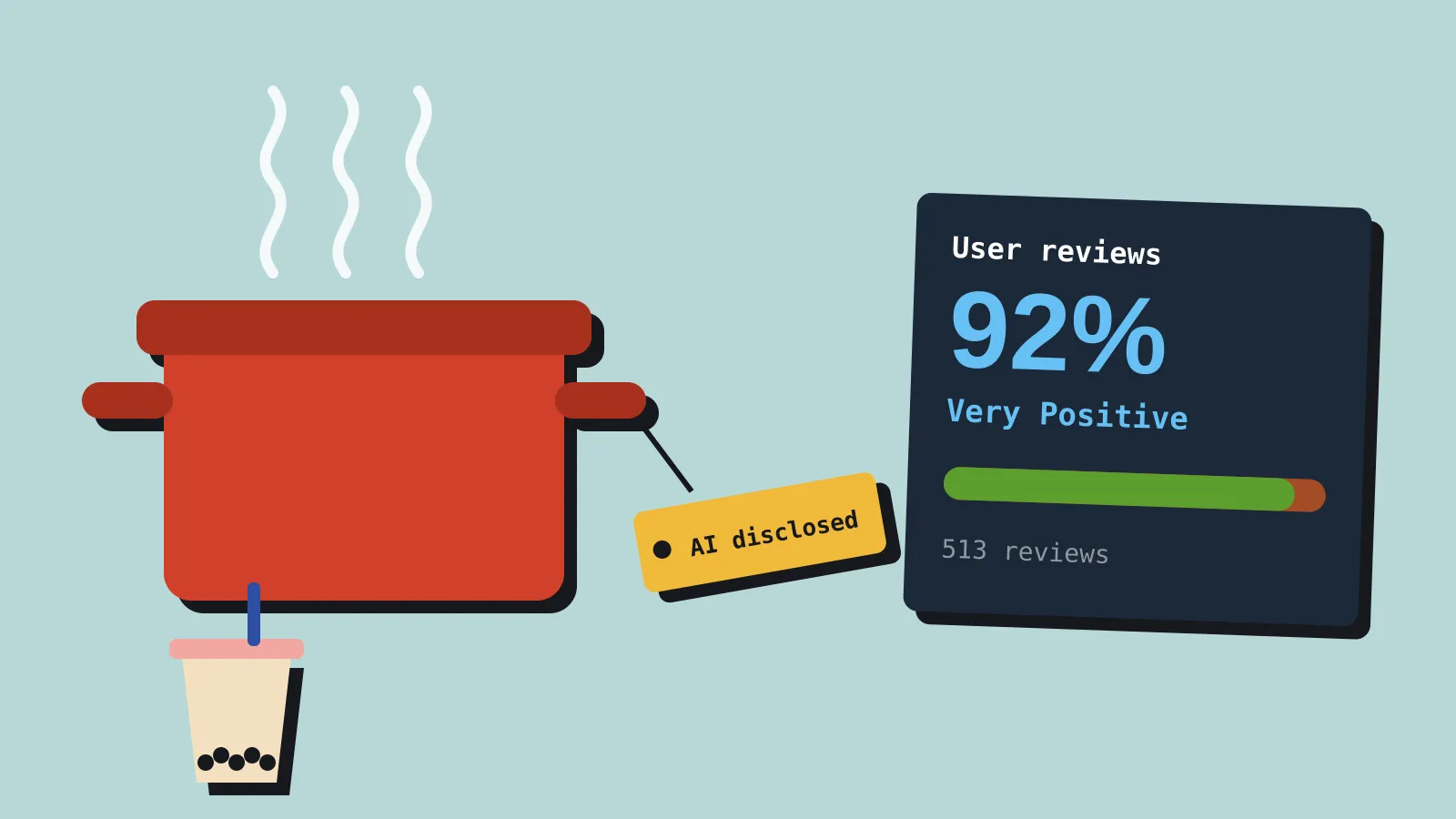
Steam asks developers to declare generative AI use on their store page. The post counted 2,502 games with a disclosure, about 35% of the festival. These are self-reported, so the real figure could be higher or lower.
The split by rank is sharp. Only 2 of the top 25 games (8%) disclosed AI use. Ranks 26 to 50 sat at 12% and ranks 51 to 100 at 26%. Everyone else was at 35%.
Art and visuals were the most common disclosure, listed by about three in four of those games. Text or localisation and audio or voice each appeared in about 38%. Code tools appeared in 23%, though Steam doesn’t require developers to disclose those, so that number only counts people who chose to.
Genre made a difference too. Strategy and tactics games disclosed most often, with Strategy RPGs at around 50% to 55%. Platformers disclosed least, with precision platformers at 15%.
The post doesn’t show that AI disclosure causes poor results. Plenty of low-ranked games disclosed nothing, and two of the top 25 disclosed and did well. What it does show is that the crowded bottom of the festival is where most disclosed AI work sits. If your game uses AI art, it’s competing for attention inside that crowd.
Which genres drew players
Across the whole festival, 7.6% of demos peaked at 10 or more concurrent players. Action RPGs did best, with 17% to 20% passing that mark depending on how the tag is counted. Crafting (16%), open world (14%), JRPG (13%) and RTS (12%) followed.
Platformers did worst. Only 1.9% of 2D platformer demos and 1.5% of precision platformer demos reached 10 concurrent players. Walking simulators sat at 2.6%.
A platformer can still do well here. It just needs a stronger follower base going in, because the festival crowd won’t find it for you.
What to do before your next Next Fest
The next edition is expected in February. If you’re planning to enter, here’s what the October data suggests.
Start counting followers now, not in the final week. The correlation favours a big base built over months. Wishlist campaigns, festival slots and press coverage in November and December do more for a February demo than a burst of posts in late January.
Track raw gains, not percentages. If you gained 40 followers last week, write down 40. A 50% jump from 80 to 120 won’t move your peak.
Check your genre against the tables. If you’re in a genre where few demos reach 10 players, budget more time for pre-festival marketing, or consider whether a later festival gives you time to build a bigger base.
Be honest on your AI disclosure. Steam requires it, and the post found top-ranked games that disclosed and still did well.
Use the tracker. Zukowski has updated his free Next Fest tracker, where you can enter your own traffic and wishlist numbers and compare them with the February and June 2026 festivals. It’s the quickest way to see whether your result was normal for your follower count.
Finally, keep the scale of this in mind. These are early numbers taken mid-festival, based on peak demo players rather than wishlists. Zukowski plans a follow-up on total follower gains once the festival ends, and we’ll update this piece when it lands.