Fyrox hit 1.0 with an editor. Bevy is still building one
Two free Rust engines, two bets: Fyrox ships a Unity-style editor and a stable API, Bevy stays code-first. Who each suits, and what's shipped on them.
Rust now has two serious, free game engines, and they disagree about how you should make a game. Fyrox reached its first stable release, 1.0.0, in March 2026 after seven years of work, and it ships with a full visual editor. Bevy released 0.20 on 8 October with 227 contributors and 817 pull requests, and it still has no editor at all. Both are open source and both are written in Rust. If you’re weighing Rust for your next game, the real choice is between those two ways of working.
Fyrox: the editor-first bet
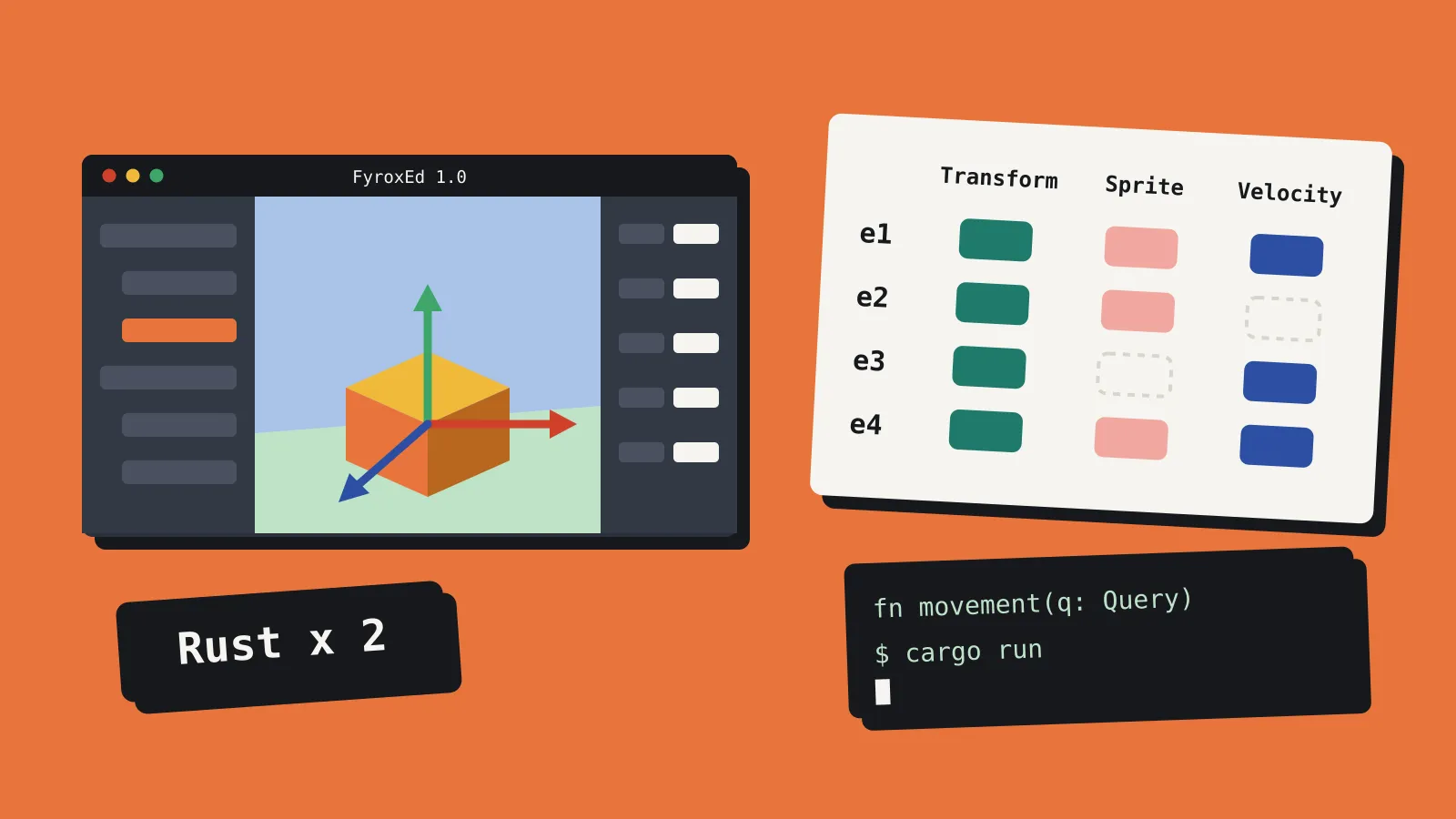
Fyrox started life as rg3d, and its developers describe it as Unity, but in Rust. The comparison mostly holds. You open a project in FyroxEd, lay out a scene by hand, adjust properties in an inspector and press play. Game logic lives in Rust scripts attached to scene nodes. Code and assets hot reload, so you can change a script without restarting the editor.
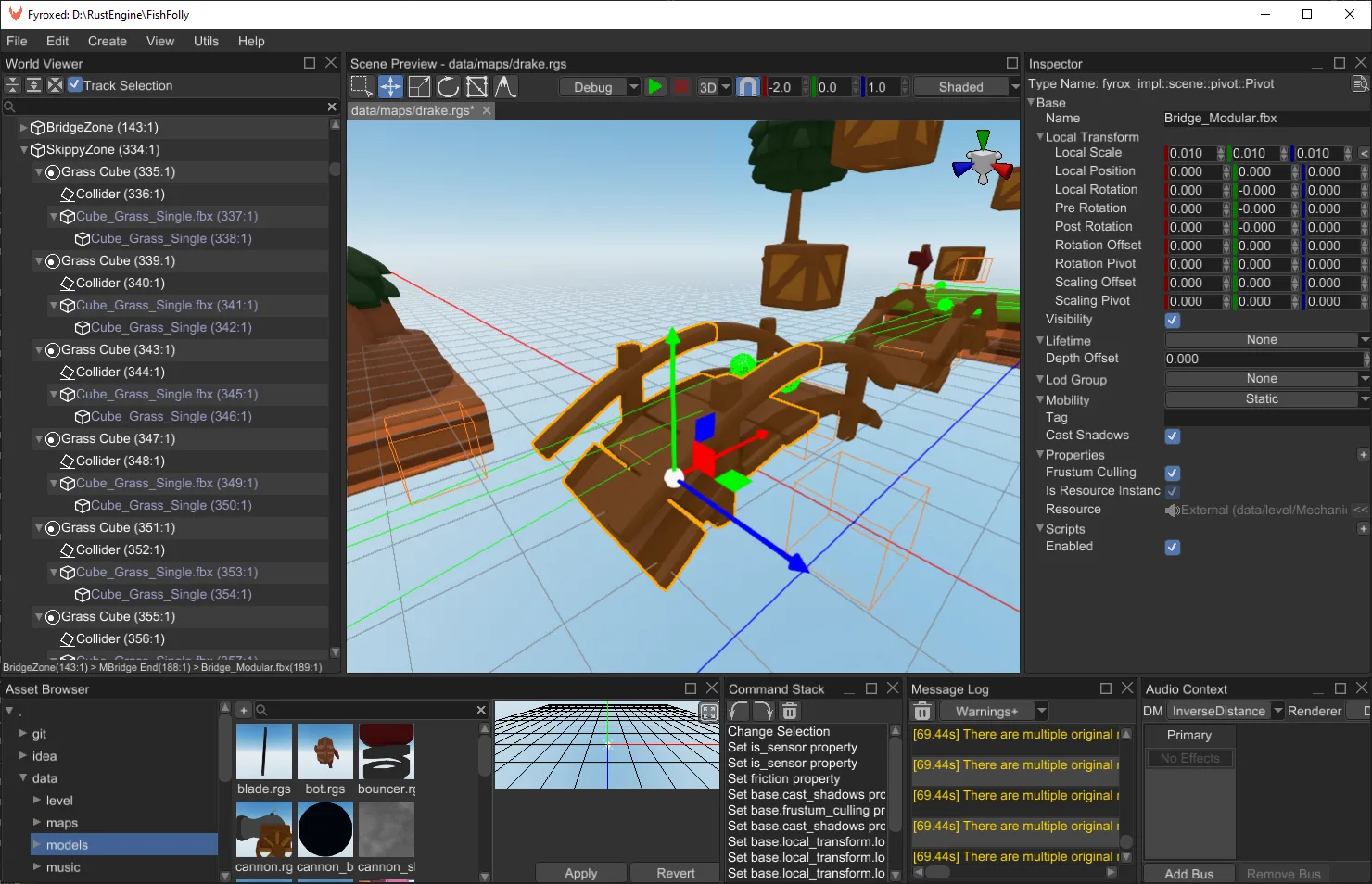
The architecture will feel familiar to Unity users too. Fyrox doesn’t use an entity component system (ECS) by default. Scene nodes, animations and sound sources live in memory pools, and changes flow from the top of the scene down, which avoids fights with Rust’s borrow checker. Its animation blending state machines are modelled on Unity’s Mecanim. The editor itself is built with fyrox-ui, the same UI library you’d use for your game’s menus.
Version 1.0 is less about new features than about stability. The headline addition is a command-line exporter that builds for PC, Android and WebAssembly, so you can run builds in continuous integration instead of clicking through a menu. The release candidates also moved native assets to a text format and dropped support for assets from older versions. A migration tool converts them.
The caveats are real. In the 1.0 announcement, the team says it’s quite small, with little to no funding, and that major new features are on hold for a few months while it rests. The renderer has no global illumination yet. The release candidate notes say that’s most likely a Fyrox 2.0 feature.
Bevy: the code-first bet
Bevy takes the opposite approach. There’s no editor to open. You write your game in Rust around an ECS: entities are IDs, components are plain data attached to them, and systems are functions that run over every entity with the right components. Bevy can run those systems in parallel across your CPU cores, which suits games that simulate a lot of things at once.
Bevy moves quickly and breaks things to do it. Version 0.18 shipped in January, 0.19 in June and 0.20 in October, and each comes with a migration guide. Expect to spend time on every upgrade, and to wait for the third-party plugins you depend on to catch up.
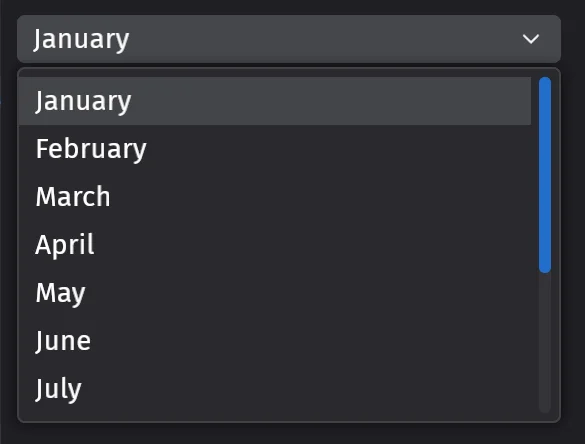
The editor is coming, slowly and in public. Version 0.19 introduced BSN (Bevy Scene Notation), a format for describing scenes that the release notes say will be used to build the editor. Version 0.20 adds more Feathers widgets, the editor-focused UI toolkit: colour inputs, dropdowns, scrollable lists and menus. We covered the rest of 0.20, including sprite materials and the Solari path tracer, in our Bevy 0.20 and Stride 4.4 comparison.
Until the editor lands, you build levels in code, in BSN, or in outside tools such as Blender, then bring them into the game.
What’s shipped on each
Here the two engines look very different.
Bevy has a genuine hit. Tiny Glade, a castle-building sandbox from the two-person Swedish studio Pounce Light, launched on Steam in September 2024. Developer figures reported by games analyst Simon Carless put it at 616,528 copies sold in its first month. Bevy’s third birthday post explains how it’s built: Bevy’s ECS and app framework, with a custom renderer in place of Bevy’s own. So it proves the core holds up in a commercial game, though not the whole engine. Beyond that, itch.io’s Made with Bevy tag lists plenty of smaller games, many from Bevy’s own game jams, and lots of them play in a browser.
Fyrox’s official games page lists six projects, and every link points to GitHub rather than a store. Three are by mrDIMAS, the engine’s lead developer: Station Iapetus, a sci-fi horror game in the style of Dead Space; Fish Folly; and rusty-shooter, a Quake III-style arena shooter built as a tech demo. The others are two open-source multiplayer shooters, RustCycles and Breakfloor, and a port of a Sensible Soccer-style game from the book Code the Classics, Volume 1. None is listed as a commercial release. A stable API is what a studio wants before committing, so the open question for Fyrox is who ships first.
Side by side
| Fyrox | Bevy | |
|---|---|---|
| Latest version | 1.0.0 (March 2026) | 0.20 (8 October 2026) |
| Visual editor | Yes, FyroxEd | Not yet |
| Structure | Scene graph and scripts | Entity component system |
| API stability | Stable from 1.0 | Breaking changes each release |
| Export | PC, web and Android from the command line; the site also lists iOS | Desktop, web and mobile |
| Licence | MIT | MIT or Apache 2.0 |
| Best-known game | Station Iapetus (in development) | Tiny Glade (ECS only) |
Who should pick which
Pick Fyrox if someone on your team needs to place things by hand. A designer or artist can work in FyroxEd without writing Rust, and the 1.x line means your project shouldn’t break every few months. It’s the closer match if you’re coming from Unity or Godot. Go in knowing the team behind it is small, so you may hit rough edges and have to fix some yourself.
Pick Bevy if you’re a programmer first and your game is mostly systems: colony sims, factory games, strategy, anything with thousands of moving parts. Its community is much bigger (227 people contributed to 0.20 alone), so you’ll find more plugins, tutorials and answers. The price is churn, and building your own level tools until the editor arrives.
If you can’t decide, spend a weekend making the same tiny game in each. You’ll know quickly which way of working suits you. There’s more in our engines section.
Sources
- Fyrox Game Engine 1.0.0 (Fyrox)
- Fyrox Game Engine 1.0 Release Candidate (Fyrox)
- Fyrox Game Engine (Fyrox)
- Games built using Fyrox (Fyrox)
- Fyrox Game Engine Reaches Version 1.0.0 (I Programmer)
- Bevy 0.20 (Bevy)
- Bevy 0.19 (Bevy)
- Bevy 0.18 (Bevy)
- Bevy’s Third Birthday (Bevy)
- How did an indie developer sell over 600,000 copies of their first game in one month? (Gigazine)
- Tiny Glade launched with extremely positive reviews (WN Hub)
- Bevy on GitHub (Bevy)