RimWorld left Unity. Should you build your own engine?
Ludeon moved RimWorld 1.7 to its own Waylith engine and says it runs 2 to 4 times faster. What it took, and whether a small team should try the same.
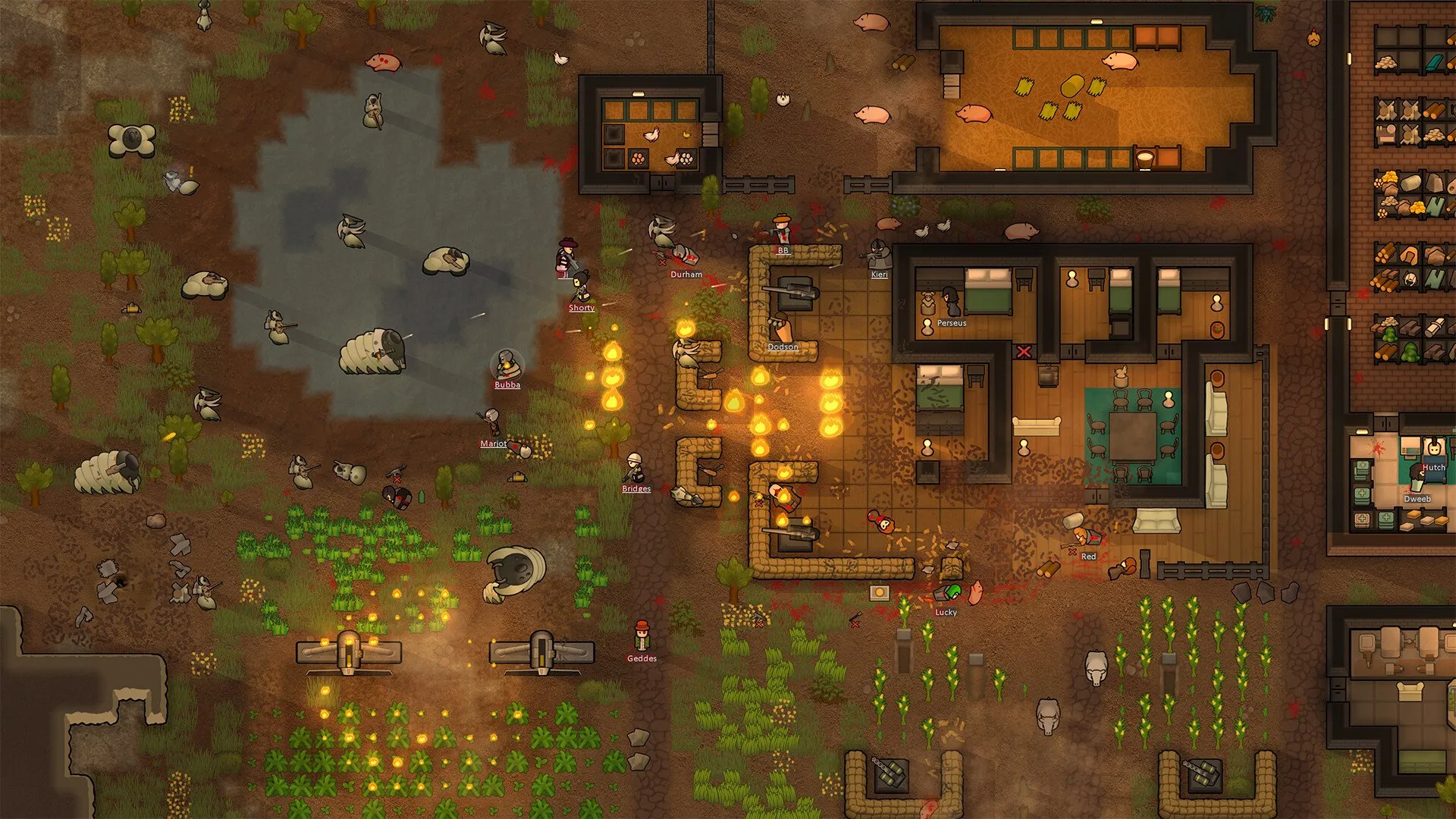
RimWorld 1.7 no longer runs on Unity. On 12 October, Ludeon Studios announced that the update moves its colony sim to Waylith, the studio’s own in-house engine, and said the game ran 2 to 4 times faster in its tests. You can try it now on Steam’s unstable beta branch: right-click RimWorld in your library, open Properties, go to Betas and choose “unstable”. The main branch stays on 1.6 for now, and Ludeon hasn’t given a stable release date.
Ludeon says the game looks and plays the same. There’s no new gameplay content in 1.7. The new engine is the whole update.
What Ludeon changed
All of the performance figures come from Ludeon’s own tests, and the studio says your results will vary with your PC and mod list. A late-game stress-test colony ran 2.2 times better than on 1.6. A pack of 1,500 mods loaded in about 6 minutes, down from about 14. Ludeon also reports faster startup, map and world generation, and ticks per second.
| Change | What it means for you |
|---|---|
| 2 to 4 times faster, in Ludeon’s tests | Big colonies and long mod lists should gain the most. Your own numbers may differ. |
| Most mods work without changes | Some show a yellow “potentially unsupported” label only because the version number changed. Ludeon asks modders to test and publish 1.7-tagged versions. |
| Saves work in both directions | 1.6 saves load in 1.7, and 1.7 saves load back in 1.6, so you can try the beta and go back. |
| PCs over 10 years old may not run it | If yours is one, Ludeon asks you to report it on its development Discord. |
| Latest C# language features for modders | Ludeon says complex mods and big visual changes now cost less performance. |
| Windows, macOS and Linux builds | SteamDB lists all three on the unstable branch. |
Early player reports are anecdotal so far. One GamingOnLinux reader said the update cleared their list of more than 400 mods, because most weren’t tagged for 1.7 yet. On a small colony they noticed no speed difference, but said dragging the map no longer stuttered on Linux.
What it took
Ludeon is a small studio with a long-running hit. RimWorld raised US$268,132 on Kickstarter in 2013 and reached 1.0 in October 2018. According to Wikipedia, the team was two to three developers until 1.0 and grew to seven afterwards, and revenue was estimated at well over US$100 million by August 2020.
That history explains a lot. By 2026, Ludeon knew exactly what RimWorld needed from an engine, because the game had been finished for eight years. It had the revenue to fund the work without shipping anything new. It also had a mod community big enough to test against, and thanked over two dozen modders who helped prepare for launch. And Waylith isn’t a one-off: Ludeon says it’s working on a new game for the engine, though it hasn’t shared details.
What Ludeon hasn’t said matters just as much. It hasn’t said how long Waylith took, how many people built it or what it cost. Beyond performance and modding, it hasn’t said why it left Unity. It hasn’t explained how most mods keep working, what Waylith uses for rendering, or whether console support or licensing the engine to others is planned.
As background only, and not a reason Ludeon has given: Unity introduced a per-install runtime fee in September 2023 and cancelled it in September 2024, after strong criticism from developers (VGC). Ludeon hasn’t linked its move to the fee.
Should you build your own engine?
For most solo developers and small teams, no. RimWorld shows the conditions where it can work, and few indies meet them.
It can make sense when:
- You’re making one game, or a series, and you already know its needs in detail.
- The game has demands general engines handle poorly, such as huge simulations or heavy modding.
- You want long-term control over the runtime, performance and licence terms.
Other small studios with their own tech fit that pattern. Wube built Factorio on its own code using the Allegro library, and in 2018 started replacing Allegro’s rendering with in-house code. Noita runs on Falling Everything, Nolla Games’ own engine. Both games centre on simulation that a general-purpose engine wasn’t designed around.
The case against is usually stronger. Every month spent on the engine is a month not spent on the game. You also own everything around it, for as long as the game is on sale: tools, platform ports, driver bugs and operating system updates. Each console port means building platform support yourself, under the platform holder’s own agreements. Ludeon could absorb that because RimWorld was already paying the bills.
There are two middle paths that give you more control without starting from nothing.
Frameworks. MonoGame, FNA and raylib handle rendering, input and audio, and leave the game’s structure to you. Stardew Valley moved to MonoGame in version 1.5.5, and Celeste was built on Microsoft XNA, the framework that MonoGame and FNA reimplement. You write more code than you would in a full engine, but you control the loop.
Open-source engines you can fork. Godot and Stride are MIT-licensed, and Bevy is dual-licensed under MIT and Apache 2.0. If one stops suiting you, you can change the source yourself rather than wait for a vendor. That’s still maintenance, but you start with a working editor and renderer instead of an empty folder.
Should you care?
| You are | Our verdict |
|---|---|
| A RimWorld player or modder | Try the unstable branch with a copy of your mod list. Saves load back in 1.6, so the risk is low. Report breakages on Ludeon’s development Discord. |
| A solo dev starting a new game | Use an existing engine or framework, and ship first. Ludeon built Waylith eight years after 1.0, not before it. |
| A small team with a profitable game hitting engine limits | Profile first, then compare the cost of a port with fixing the bottleneck. RimWorld shows a switch can work, but Ludeon hasn’t shared what it cost. |
| A Unity C# dev worried about lock-in | Keep game logic in plain C# classes, apart from engine calls. That keeps a later move to MonoGame, FNA, Godot or Stride possible. |
Sources
- Announcing the Waylith Engine and Update 1.7 (Ludeon Studios)
- RimWorld 12 October 2026 patch notes and depots (SteamDB)
- RimWorld switching from Unity to their own Waylith Engine (GamingOnLinux)
- RimWorld (Wikipedia)
- Unity is canceling the Runtime Fee (Unity)
- Unity has cancelled its controversial runtime fee (VGC)
- Friday Facts #230: Engine modernisation (Factorio)
- Noita (Wikipedia)
- Migrate to Stardew Valley 1.5.5 (Stardew Valley Wiki)
- Celeste (Wikipedia)