Before you pitch Raw Fury, answer these six questions
Raw Fury's CEO says the publisher wants games that make players feel something. Its public pitch guide and contract show what a solo dev should prepare.
Raw Fury CEO Pim Holfve told 80 Level on 23 October 2026 that the publisher looks first for games that make players feel something. The interview points to two public documents that do most of the practical work: Raw Fury’s pitch guide and its publishing agreement. We read all three so you can prepare before you hit submit.
What the CEO said
Holfve has run Raw Fury for just under two years, according to 80 Level. He came from Flashbulb Games and earlier worked at King and Avalanche Studios Group, where he became CEO in 2015. This year he also took charge of Combined Effect, Raw Fury’s parent company.
His message on taste was simple. Raw Fury mostly signs original, artistic and inventive games. It says it does not sort its catalogue by genre. Instead it groups games by the feeling they leave with players, and it asks developers what feeling they are aiming for. Holfve also warned against chasing trends, and said the publisher only takes on games made by humans, in answer to a question about AI. He named Blue Prince as a recent example of the kind of clear creative vision the team wants to see.
80 Level also notes that Raw Fury has placed in Metacritic’s top 10 publishers list three years in a row.
What the pitch guide asks for
The pitch guide was first posted in September 2019 and last updated in December 2024. You submit through an Asana form linked on that page. There is no listed email address for pitches.
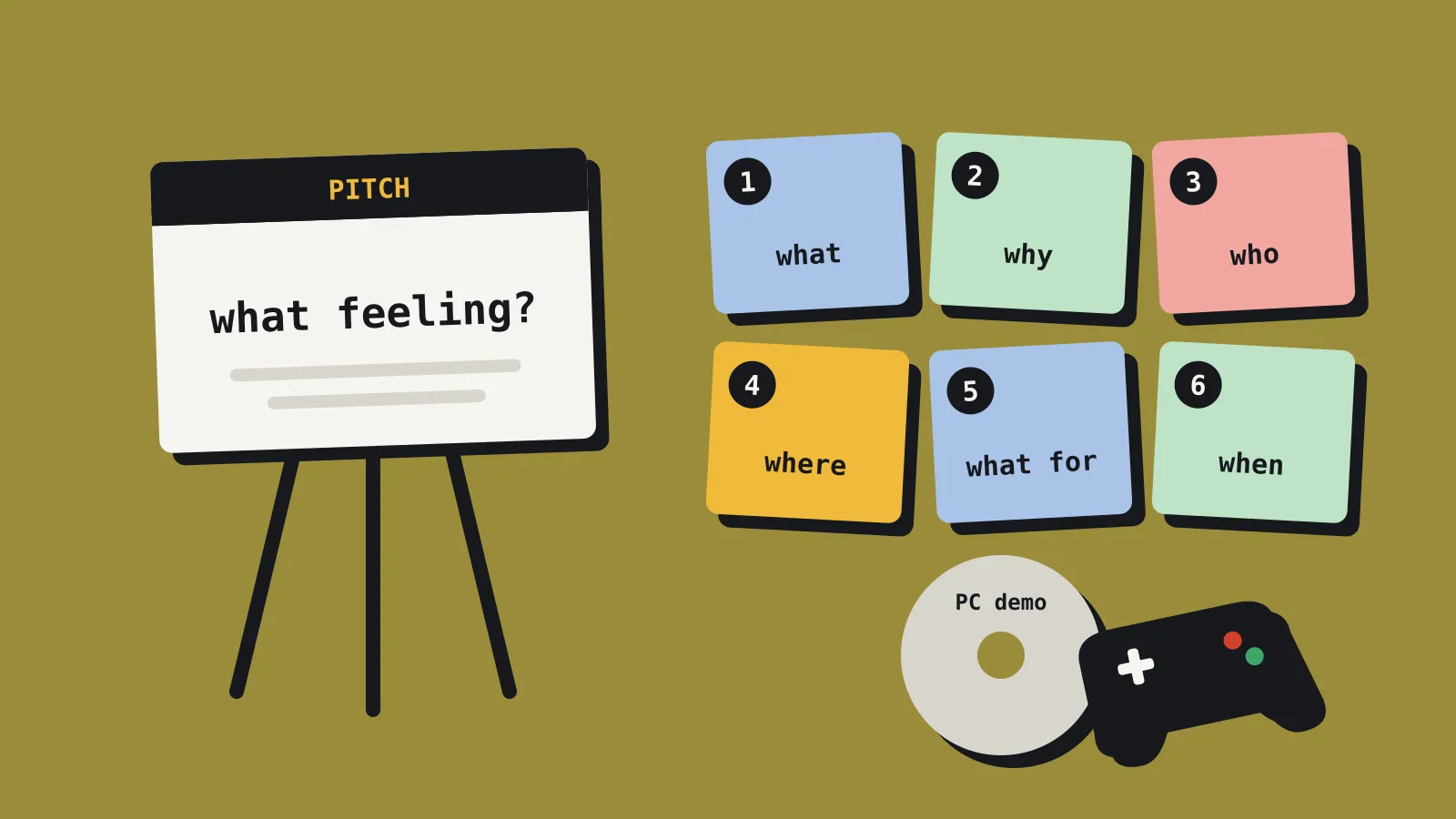
The deck has no set length or format. A six-slide deck is fine. It just has to answer six questions:
- What are you doing?
- Why are you doing it?
- Who are you?
- Where do you want to go?
- What do you need to get there?
- When will you be there?
You also need a playable PC build that gets the core of your game across to someone outside your team. The guide suggests skippable intros, checkpoints in longer builds, English subtitles if the voice work is in another language, and a control scheme, which can be a separate document. Raw Fury says it cannot promise to play a build more than once, so treat your first submission as your only shot.
The budget section trips people up. Raw Fury wants a development budget in US dollars for one PC version, covering only what it takes to reach a releasable game. Leave out marketing, events, PR, ports, localisation, voice-over and external QA, because the publisher budgets those separately. The guide suggests a simple method: months remaining multiplied by your monthly burn rate (what you spend each month to keep going).
Supporting material is optional. A design document, GIFs, timestamped video and concept art all help, especially if they show where the game will be in about 18 months. The guide gives no response time, only a promise to reply in a reasonable timeframe.
What the contract says about money
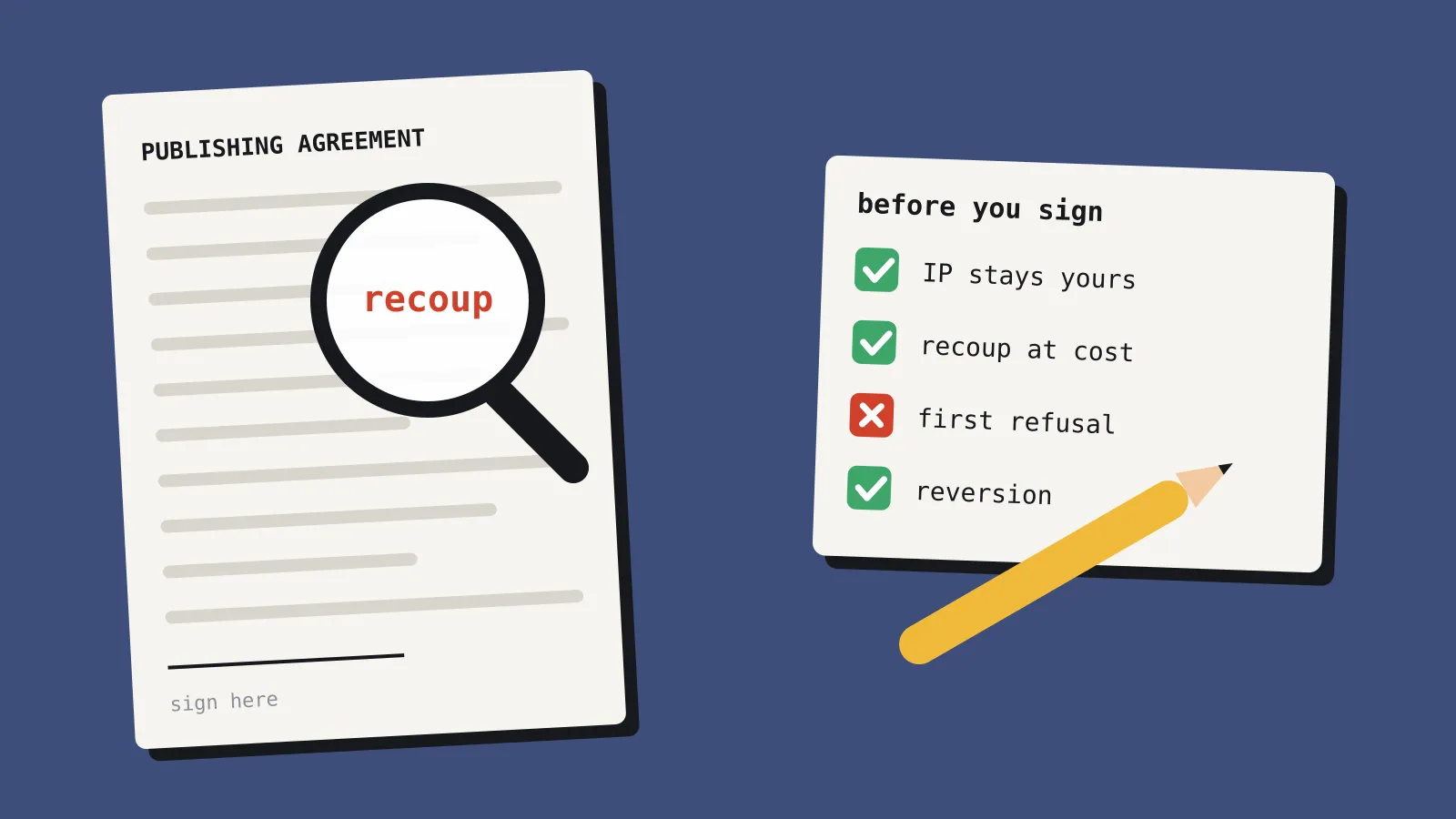
Raw Fury published its publishing agreement in December 2020 and now offers it in several languages, with English as the binding version. Its developer resources page also holds a pitch deck template, a mutual NDA, outsourcing contracts and a financial spreadsheet for modelling scenarios. The 2020 announcement also said developers in contract talks get US$500 towards legal advice.
The resources page says Raw Fury typically funds 12 to 24 months of development. Only externally invoiced services and marketing spend count towards the recoupable budget, meaning the money the publisher earns back from sales before you share in revenue. Work by Raw Fury’s own staff is not charged to your game.
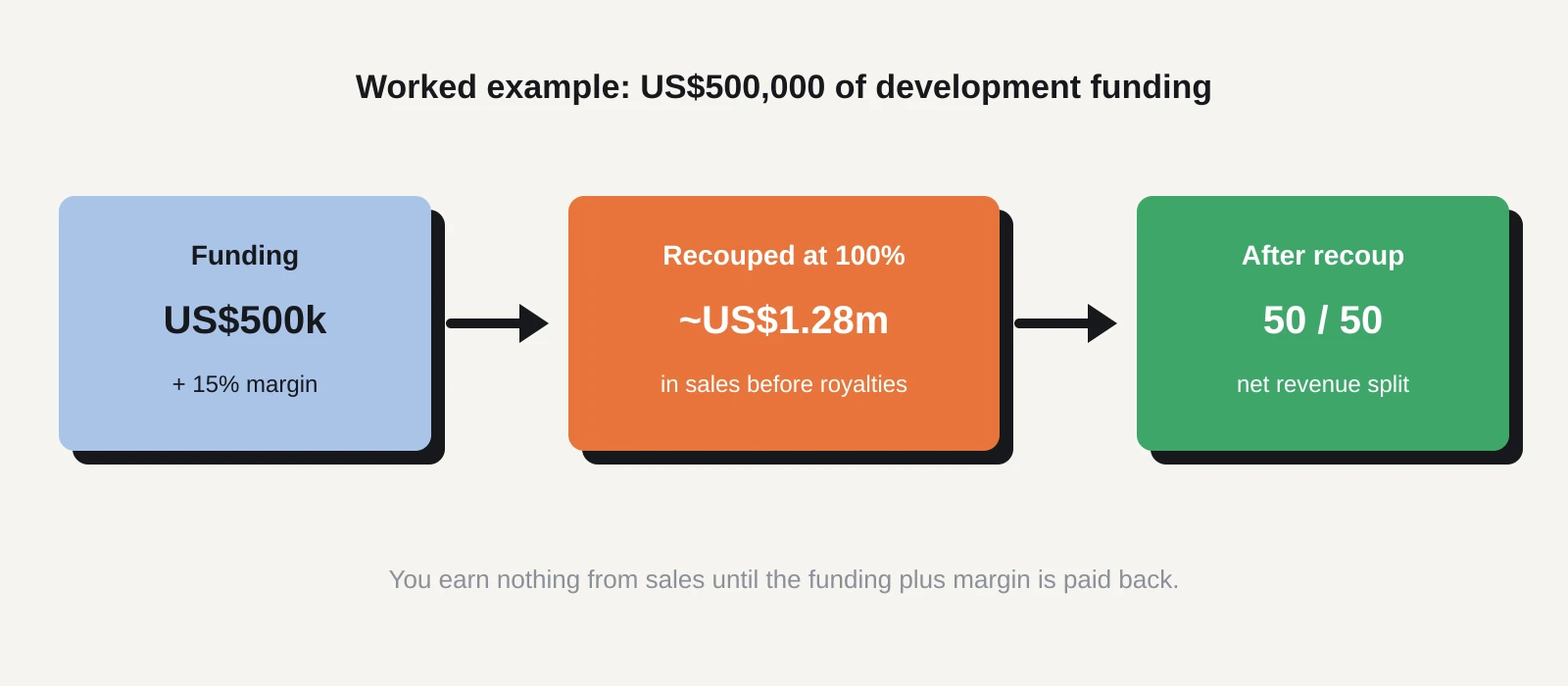
When Simon Carless analysed the 2020 contract for GameDiscoverCo, he found a 50/50 split of net revenue after recoup. Raw Fury adds a 15% margin to the development funding, then recoups that at 100%, so you earn nothing until it is paid back. In a worked example summarised by WN Hub, US$500,000 of funding meant roughly US$1.28 million in sales before royalties began. Carless also flagged a clause limiting games in the same genre and exclusive sequel rights for the life of the deal. He noted the contract does not take your IP outright.
What it means for a solo dev
Raw Fury’s process is unusually open, and that helps you. You can read the actual contract before you pitch, rather than seeing it for the first time after a yes. Compare it against the terms in our piece on bad publishing deals flagged by Outersloth and you will know where you stand.
The bar is high, though. A publisher that sorts games by feeling will pass on a competent clone of last year’s hit. If your pitch reads like a genre plus a twist, expect a no.
The budget rules also favour small teams. Because your own hours stay out of the recoupable total, a lean solo budget keeps the payback point lower. A small budget does not shorten the 100% recoup period, so model it in the spreadsheet before you sign.
What to do now
Work through this list before you open the Asana form:
- Write one sentence on the feeling you want players to leave with. Put it near the top of your deck.
- Answer the six questions in six slides or fewer. Cut anything that does not answer one of them.
- Build a PC demo a stranger can finish without you in the room. Add skippable intros, checkpoints and a controls sheet.
- Price development only, in US dollars: remaining months times monthly burn, plus external invoices. Leave out marketing and ports.
- Download the current publishing agreement and the financial spreadsheet from the resources page. Run your own sales numbers through the recoup maths.
- Mark the genre and sequel clauses as things to raise early. Raw Fury runs an FAQ form for contract questions, so use it.
- Polish the first build you send. Raw Fury may only play it once.
- Confirm your game uses no generative AI content, given Holfve’s comments.
Sources
- On the lookout for games that make you feel something: Raw Fury CEO on game publishing (80 Level)
- How to pitch to Raw Fury (Raw Fury)
- Developer resources (Raw Fury)
- Why we are publishing Raw Fury’s publishing agreement (Raw Fury)
- What makes for a good game publishing contract? (GameDiscoverCo)
- Raw Fury publishing contract evaluation by Simon Carless (WN Hub)