Code Monkey's tutorial views halved. AI is now the first teacher
A top Unity educator says his tutorial views and course sales have dropped as AI takes over. Here's how to keep learning when the chatbot answers first.
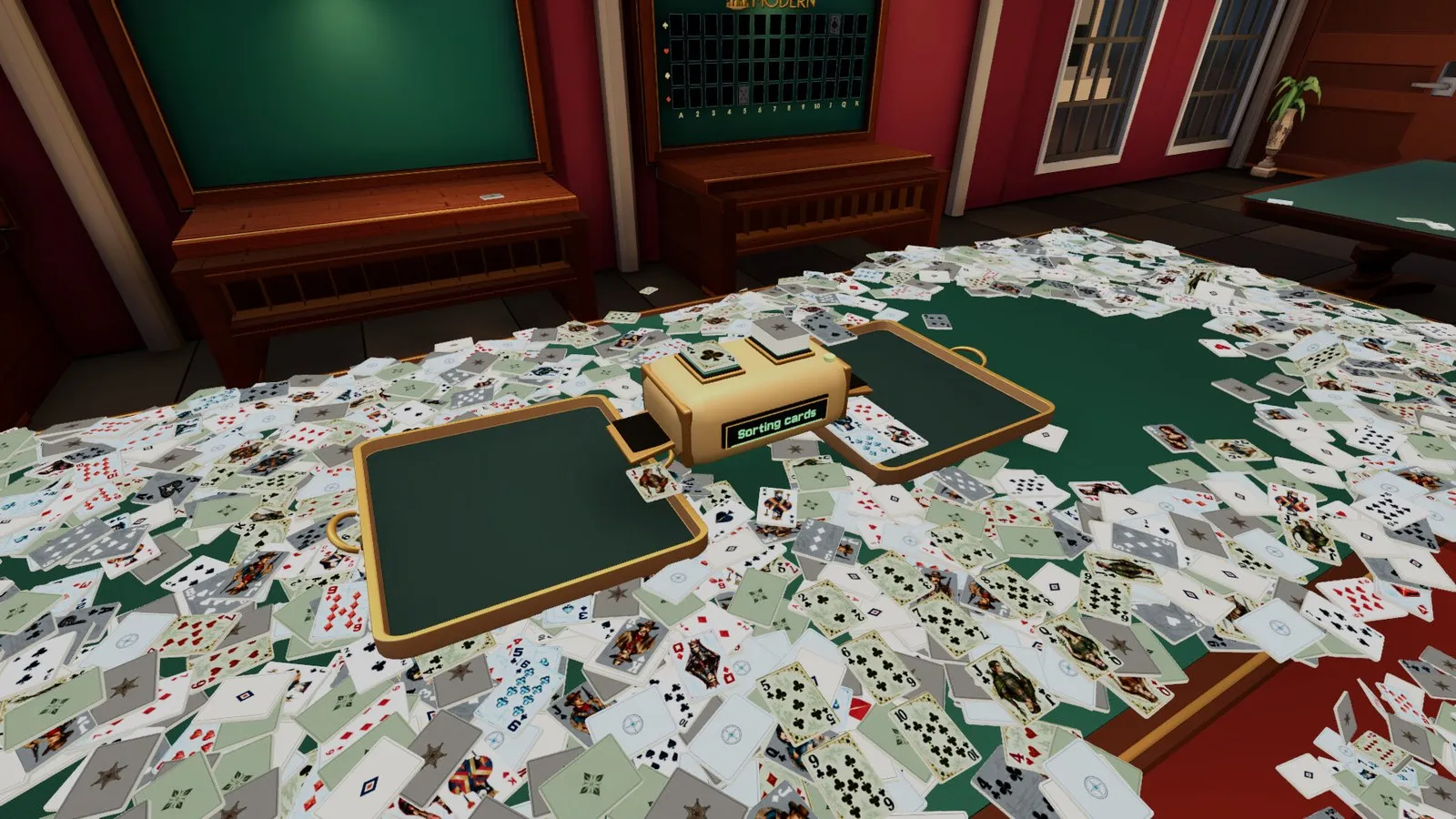
In his Game Dev Report newsletter on 15 November 2026, Unity educator Code Monkey said views on his big tutorials have fallen sharply. His Kitchen Chaos course is down 50% on January, and the course sales that fund his free videos have dropped too. In the same issue he announced his 10th Steam game, Cards: Tidy Up. He says he didn’t write a single line of its code.
Those two facts sit side by side for a reason. He used the game to test whether AI can help make something good, and he now wonders who still needs to learn programming. For anyone who learned Unity or C# from YouTube, that’s a big change in where help comes from.
What Code Monkey said
The numbers come from his own newsletter, so treat them as one creator’s figures rather than an industry measure. He says his free C# course took 10 months to make, and that he couldn’t justify that much time on a free course today because demand for learning content has fallen. He lists a few options for his channel: teaching game design, the publishing and marketing side, AI workflows, or going back to making games full time. He hasn’t picked one.
The game is the other half of the story. By his account, Cards: Tidy Up took about a month alongside a course he was recording. He puts the focused development time at around two weeks, against his estimate of 15 to 20 weeks by hand. OpenAI’s Codex wrote roughly 40,000 lines of code, driven through Unity’s command-line tools. He used 200 to 300 prompts across development and marketing, on a US$200 a month plan.
He’s clear about the limits. He acted as designer and creative director, playing builds and describing changes. AI didn’t handle the 3D art, so most models came from asset packs he’d bought over the years, mainly Synty’s Casino pack. He also plans to keep doing weekly coding challenges by hand so his own skills don’t fade.
One disclosure of our own: the same newsletter promotes his paid courses and practice programme, and the game was built as the example project for his Steam publishing course. That doesn’t make the numbers wrong, but you should know it.
The wider shift in where devs get answers
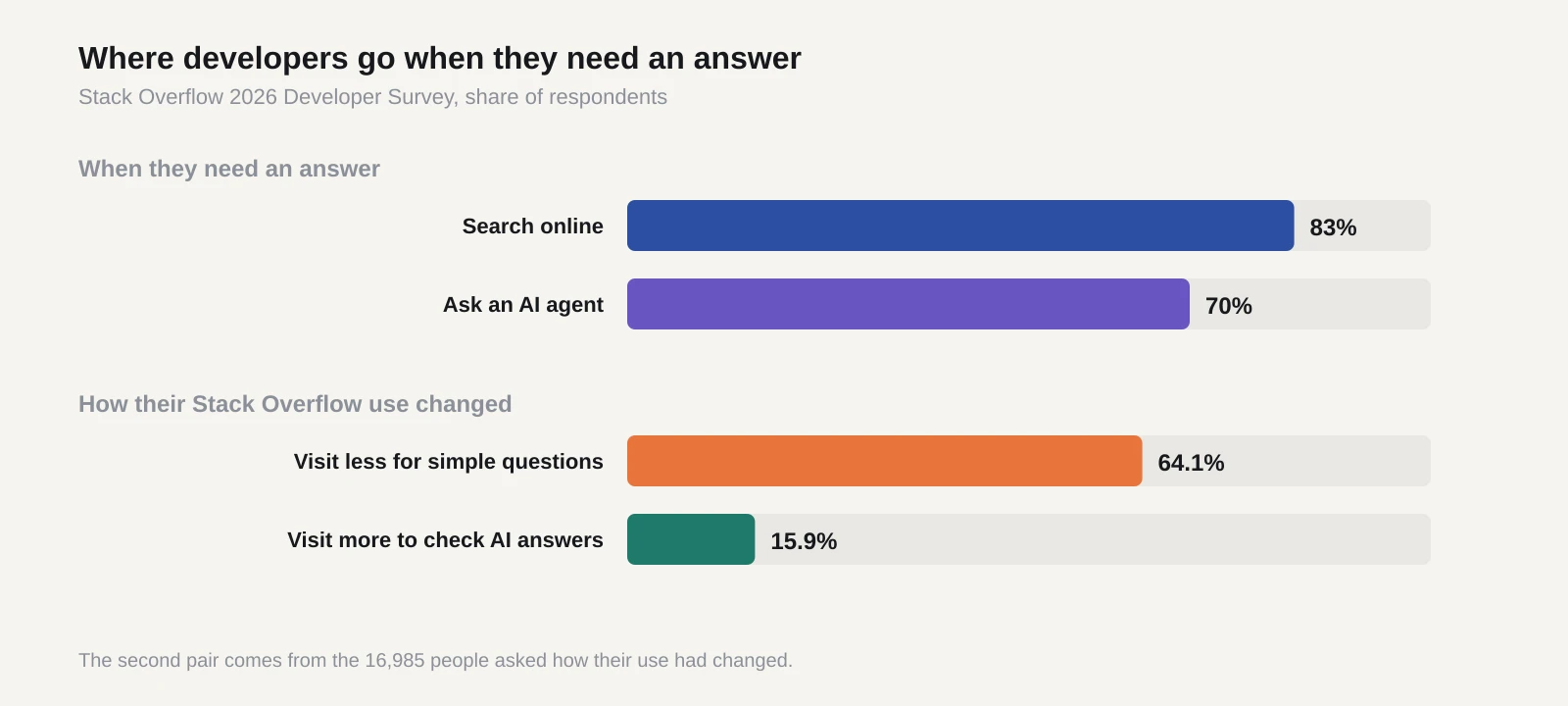
Code Monkey isn’t the only sign. Stack Overflow’s 2026 Developer Survey, published in October, found that 70% of respondents ask an AI agent when they need an answer, close behind the 83% who search online. Of 16,985 people asked how their Stack Overflow use had changed, 64.1% said they visit less for simple questions. Only 15.9% said they visit more to check what an AI told them.
The site’s question volume tells the same story. Gigazine, citing reporting by DevClass, put Stack Overflow at 3,862 new questions in December 2025. That’s down 78% on a year earlier, against a peak above 200,000 a month in 2014.
We can’t check Code Monkey’s view counts, and YouTube’s recommendation changes could explain part of any drop. But the direction matches what the survey data shows. Beginners increasingly ask a chatbot first and watch a video second, if at all.
What it means for a solo dev
AI is quick at the “how do I” questions. It’s weaker at the “why”, and worse at anything newer than its training data. If you’re learning on a new engine version, such as the Godot 4.8 betas or the Unity 7 alpha, a model may give you confident answers for an older API. A tutorial author or the official docs would have caught that.
There’s a longer-term risk, too, and this part is our opinion. Much of what AI tools know about Unity and Godot came from tutorials, forum answers and Stack Overflow threads written by people like Code Monkey. If fewer people are paid to write that material, the next engine version gets less of it. Models then have less to learn from.
The skill question is real as well. Code Monkey’s own split is a useful model: let AI handle production work, and keep practising by hand so you can still read, debug and judge what it writes. When the AI suggests something broken, you need to know enough to see it.
Finally, there’s disclosure. If you build your game the way he did, players may ask how much AI was involved. House House found that out this month with Big Walk, as we covered in our piece on IGF jurors and AI. Code Monkey’s numbers are a useful reality check on what “AI-assisted” means in practice.
What to do now
A few habits that keep you learning when the chatbot answers first:
- Ask for the source. When an AI gives you engine code, ask which docs page or API version it’s based on. Then open that page and check it matches the version you’re on.
- Read the release notes yourself. For any engine update you install, skim the official notes and migration guide before asking a model about the changes.
- Keep one hand-built exercise a week. A small jam entry, a practice challenge or a single mechanic rebuilt from scratch is enough. The point is to keep the muscle.
- Pay for the teaching you want to keep. If a creator’s videos taught you an engine, a course, a Patreon or simply watching the full video helps them keep making it.
- Write your AI disclosure as you go. Keep a short log of where AI wrote code, art or text, so the Steam content survey and any press questions are easy later.
If you’re a tutorial maker yourself, Code Monkey’s options are worth weighing. Design, marketing and publishing questions are harder for a chatbot to answer well, because they depend on judgement and recent data.
Sources
- Game Dev Report, 15 November 2026 issue (Code Monkey)
- Cards: Tidy Up! (Steam store page)
- The results of the 2026 Developer Survey are here (Stack Overflow blog)
- How Stack Overflow use has changed (2026 Developer Survey)
- Stack Overflow question volume drop (Gigazine)
- The end of Stack Overflow as you know it (LeadDev)