Unity's $50,000 indie grant takes no equity. Should you apply?
The new Unity Fellowship gives ten Unity games US$50,000 each and asks for no equity, IP or recoup. Applications close on 18 December.
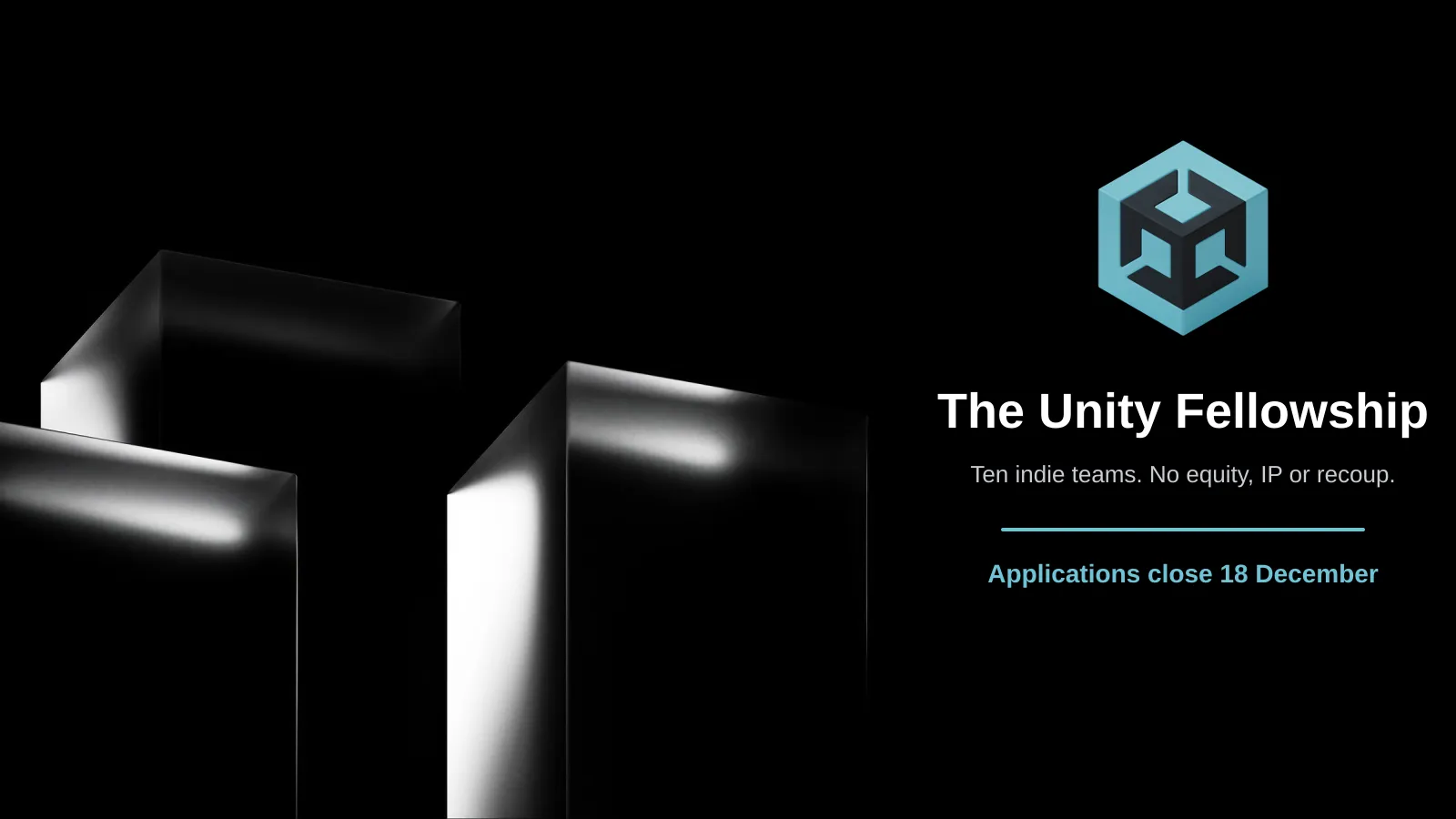
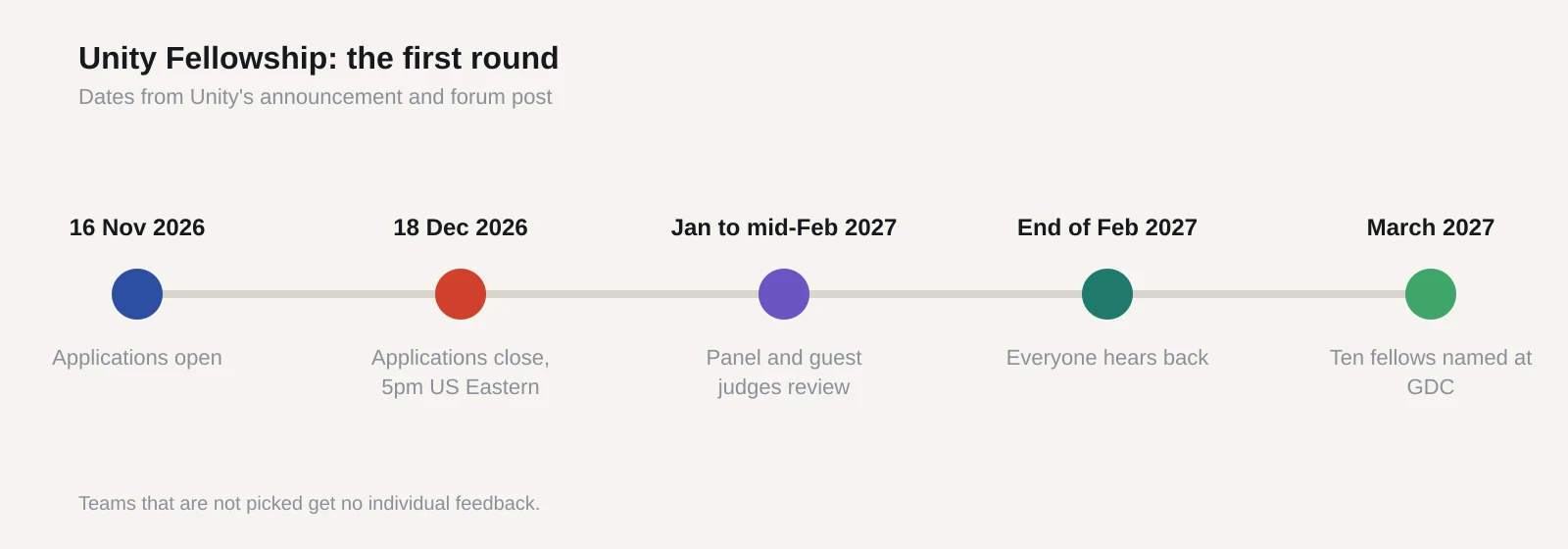
Unity opened applications for the Unity Fellowship on 16 November 2026. Ten indie teams will each get up to US$50,000 in cash, plus a named Unity contact and help with marketing. Unity takes no equity, no revenue share and no claim on your IP, and you don’t pay the money back. Applications close on 18 December at 5pm US Eastern time, which is 9am on 19 December in Sydney. Unity will name the first ten teams at GDC in March 2027.
That is a rare deal in a year when most money for small games comes with a recoup clause attached. It is also a lottery with ten winners, so it’s worth knowing exactly what you’re applying for before you spend a weekend on it.
What Unity is offering
The cash is the headline. Unity’s announcement says fellows decide how and when to spend it, and keep full control of the game and the business. Unity’s forum post adds that there are no mandatory milestones or gates before the money arrives, only regular check-ins.

The support side covers:
- a dedicated Unity contact for development help and troubleshooting
- office hours with people who know development, design and marketing
- pitch preparation and introductions to publishers
- a presence at Unity events
- PR and marketing pushes at key moments, such as your launch
Unity says it will pick ten games each year, which suggests this is meant to run annually. It hasn’t said that in so many words, and someone has asked the question on the forum without an answer yet.
Who can apply
The rules in Unity’s forum post are short. You need to be 18 or older, the game has to be made in Unity, and you need a playable build or demo. You also need to expect to launch, either in Early Access or as a full release, within 12 months of joining the programme.
Some places are excluded. Regions under US sanctions can’t apply, and for now neither can applicants in Brazil, Italy or Quebec. Unity hasn’t said why, but country-specific rules on grants and prize-style competitions are the usual reason a programme leaves places out.
Game Developer reports that mobile, console and PC games are all eligible, and that Unity says it will judge the strength of the creative vision rather than the platform. Your application has to be in English, but your game doesn’t. You can also send in more than one game if you have several that qualify.
What you’ll need to send
The application asks for a trailer or gameplay video (with subtitles if the audio isn’t in English) and a link to a playable build. You’ll also write short answers about the project, why you’re making it and what you want from it. Then comes a plan for how you’d use the money and the support.
That last part is where most teams will win or lose. Unity’s Adam Smith told Game Developer that the bottleneck Unity sees most often is the final stretch, getting the game in front of the right players. He gave test hardware for extra platforms and a targeted marketing campaign as examples of good uses. A plan that ties specific spending to a specific launch problem will read better than “it buys us six more months”.
Unity’s internal panel and guest judges review entries from January to mid-February 2027. Everyone hears back by the end of February. Teams that aren’t picked won’t get individual feedback.
What Unity gets out of it
Unity is clear about what it doesn’t take. What it does get is less spelled out. Ten polished Unity games with Unity’s name on their launch story is good marketing for an engine that has spent two years winning back trust after the 2023 runtime fee row. Smith also acknowledged to Game Developer that Unity’s recent results were driven mostly by its mobile ad business, not by the hit games it likes to name.
None of that makes the grant a bad deal for you. It does mean you should read the full terms when you apply, because neither the announcement nor the forum post links to them. Look in particular for:
- whether Unity can use your game, name and footage in its own marketing, and for how long
- whether there are reporting or attendance obligations at Unity events
- whether the grant counts towards Unity’s licence revenue threshold (someone has asked this on the forum, and there’s no answer yet)
- what happens if your launch slips past 12 months
Should you apply?
If you’re already shipping in Unity and you have a playable build, the cost of applying is low. You probably have a trailer and a pitch already, and the written answers are short. The main cost is a few hours, and the odds are long: ten places for what will surely be thousands of entries.
If you’re not in Unity, this isn’t a reason to switch. Moving engines a year from launch to chase a one-in-many grant would be a strange call.
If you’re using Unity but you’re more than a year from launch, wait. The forum post suggests this will run again, and an application with a near-finished build and a clear launch plan will be stronger next time.
If you don’t have a trailer yet, the deadline is a useful push. You’ll need one for your Steam page and your publisher pitches anyway, so building one now isn’t wasted if you don’t get picked.
What to do now
- Check you’re eligible: age, engine, a playable build, a launch inside 12 months and an eligible region.
- Read the full terms on Unity’s fellowship page before you write anything.
- Write the funding plan first. Name the launch problem and what the money fixes.
- Cut a 60 to 90 second trailer that shows play in the first ten seconds.
- Submit well before 18 December. Forms and upload limits tend to fail at the last minute.
We’ll update this piece if Unity answers the open questions on its forum.
Sources
- Unity launches the Unity Fellowship to support indie studios (Unity)
- Introducing the Unity Fellowship (Unity Discussions)
- Unity’s new fellowship program offers cash and dedicated support for indie devs (Game Developer)
- Unity launches $50,000 grant for indie developers with no equity or repayment (GameDev.net, from GamesIndustry.biz)
- The Unity Fellowship, source of the cover and body artwork (Unity)