GameMaker's new runtime goes free for commercial games in 2027
From 1 January 2027 you can sell GMRT games on desktop, mobile and web without a Professional licence, and every tier gets the runtime's source code.
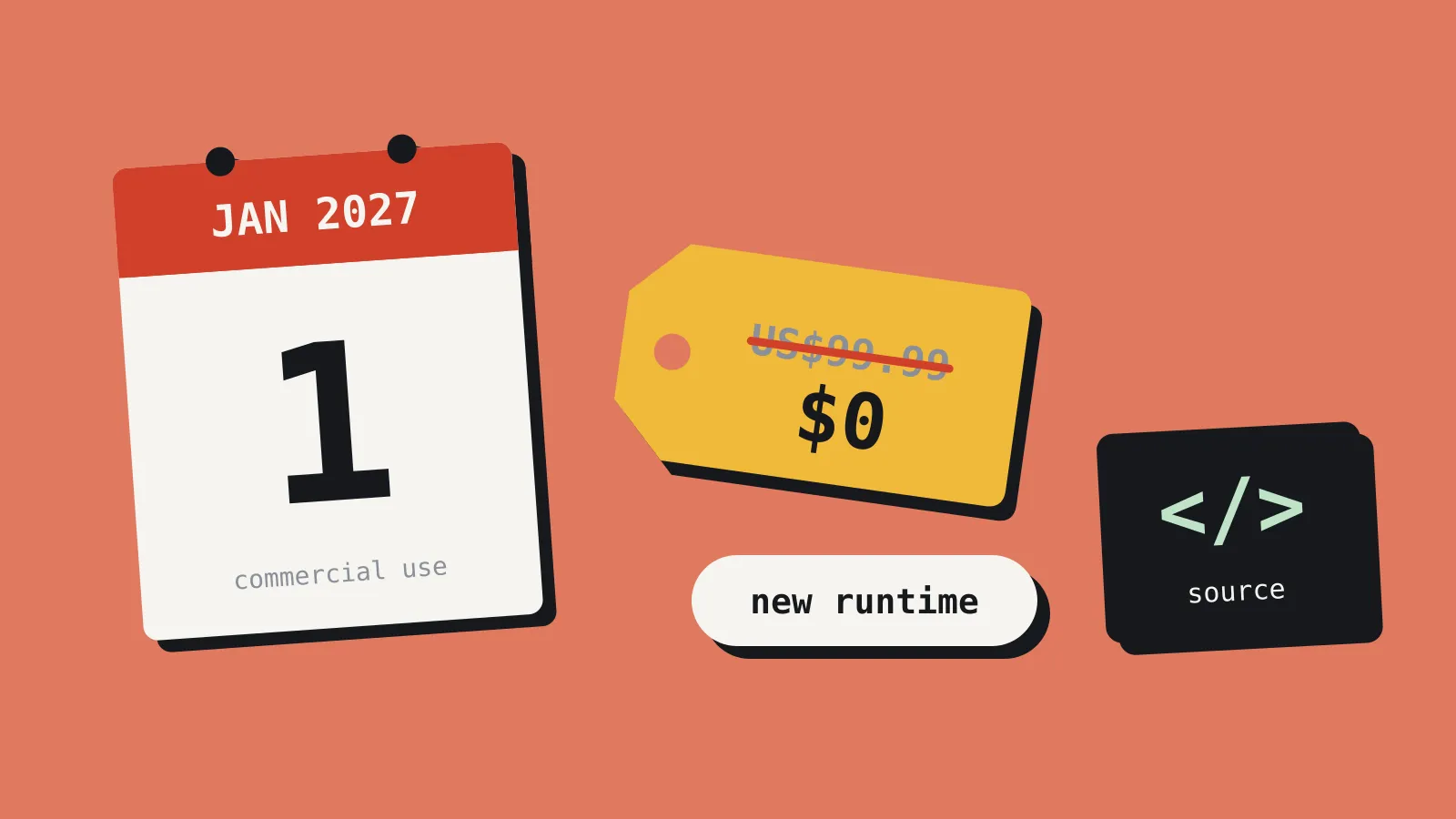
GameMaker announced on 23 October 2026 that GMRT, its next-generation runtime, will be free for commercial use from 1 January 2027. You’ll be able to sell GMRT games on desktop, mobile, web and GX Games without buying a Professional licence. GMRT source code access is also opening up to every tier, including Free. Console export still needs an Enterprise licence, and GameMaker says existing tier prices aren’t changing.
What changes on 1 January
GameMaker currently runs two runtimes. A runtime is the part of the engine that actually runs your finished game on a player’s machine. The older one is the GMS2 runtime, which most shipped GameMaker games use today. The newer one is GMRT, which GameMaker is still rolling out in beta across platforms.
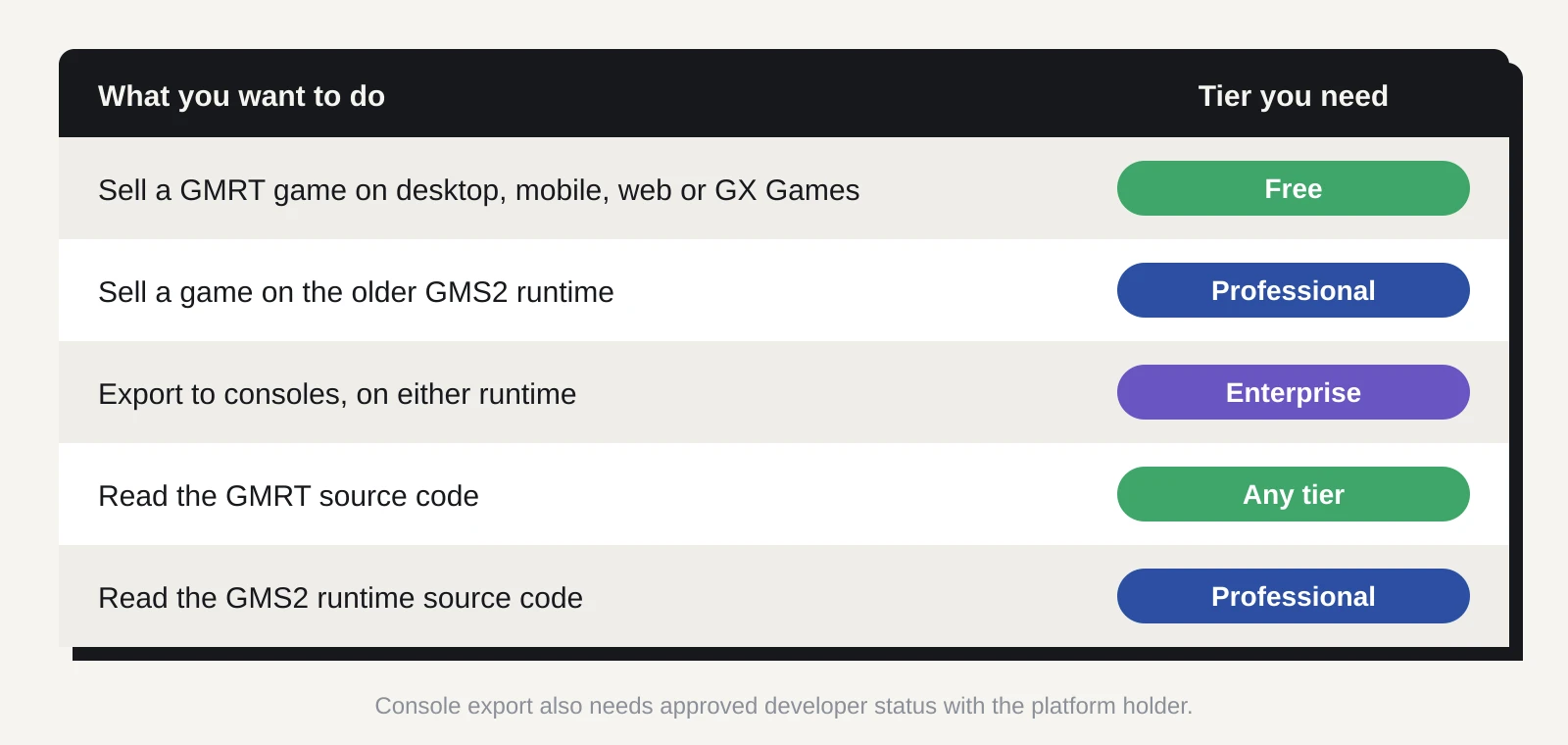
Under the current terms, the Free tier is for non-commercial projects only. To sell a game, you buy Professional, a one-off US$99.99 licence on the current pricing page. From 1 January, that rule changes for GMRT. According to the official announcement, GMRT games can be released commercially on desktop, mobile, web and GX Games at no cost.
The GMS2 runtime doesn’t get the same deal. If you want to sell a game built on GMS2, you still need Professional. Existing Professional owners keep that right and also gain access to the GMS2 runtime’s source code.
Consoles are unchanged on either runtime. You need an Enterprise licence plus approved developer status with the platform holder. Our Defold 1.14 piece noted Enterprise cost US$799.99 a year after GameMaker’s November 2023 pricing change. The current pricing page lists Enterprise as monthly or yearly without showing a price, so check before you budget for it.
Source code for everyone
GMRT source access isn’t new. GameMaker first offered it earlier in 2026. What’s new is that it now covers every tier. GameMaker’s stated aim is to let developers study the runtime, adapt it to their projects and possibly contribute back.
For most solo devs, source access won’t change daily work. It matters when you hit a bug in the engine itself, or need a platform feature the runtime doesn’t expose. Being able to read how the runtime handles input, audio or rendering also makes debugging less of a guessing game.
The announcement doesn’t spell out the licence terms for that source code. Before you fork the runtime or ship a modified build, read whatever terms come with the download.
Why GameMaker is doing this
Opera owns GameMaker, and it has been moving towards a free entry point for a while. In November 2023 it made the engine free for non-commercial use and moved the commercial licence to a one-off payment. Russell Kay, Head of GameMaker, described this latest change as widening what GameMaker offers developers as GMRT rolls out.
There’s also a practical reason. A free commercial runtime gives developers a strong reason to move to GMRT and test it while it’s still in beta. More projects on GMRT means more bug reports, and less need to support the older runtime over time.
GameFromScratch pointed out a side effect. Once GMRT is free for commercial use, Professional’s main appeal shrinks to selling GMS2 games and its Igor command-line tool, which handles automated builds. If you’re starting a new project on GMRT, you may never need it.
What it means for a solo dev or small team
If you’re on Free today and planning to sell a small PC or mobile game, you may not need to pay for GameMaker at all. That depends on GMRT being ready for your game by the time you ship.
That’s the real question to ask. GMRT is still in beta. The announcement doesn’t give a date for the beta to end, or say which platforms are stable. Building a commercial game on a runtime that’s still changing carries risk. Features can move, bugs can appear in updates, and documentation may lag behind.
If you already own Professional, you lose nothing. Your GMS2 games stay sellable, and you gain the GMS2 source code. If you were about to buy Professional for a new GMRT project, it may be worth waiting until January, unless you need Igor builds or plan to stay on GMS2.
If consoles are part of your plan, nothing here changes your costs. Enterprise is still the route, and you still need approval from Sony, Microsoft or Nintendo. Compare that with free engines such as Defold if console export is your main reason to pay.
What to do now
Check which runtime your project uses. If it’s on GMS2 and you plan to sell it, you still need Professional. Moving an existing project to GMRT isn’t something to rush in the middle of production.
Try GMRT on a small test project. Build a short prototype for the platforms you care about and see what breaks. That tells you more about readiness than any announcement.
Hold off on buying Professional if you’re starting fresh on GMRT and only need desktop, mobile or web. Free will cover commercial GMRT releases from 1 January.
Read the updated terms once they’re published. The pricing page still says commercial GMRT releases need Professional, so it hasn’t caught up with the announcement yet. Make sure the written licence matches what the blog post says before you rely on it.
Watch for GMRT beta updates. Follow the GameMaker blog for platform status and a date for the beta to end. That date, more than the price, decides whether GMRT is the right choice for your next release. You can find more engine coverage in our Engines section.