What a Launchable revenue-share deal costs you
Launchable pairs late-stage indie studios with talent and publishing help paid from revenue for five years after launch. Here's who carries the risk.
A new platform called Launchable wants to pay the people who finish your game out of the money the game makes after release. GamesIndustry.biz reported the launch on 12 November 2026, and GameDev.net republished the story the same day. Seven studios have signed up so far, and a closed beta will add 30 more.
What Launchable is and how the deals work
Launchable matches independent studios that are late in development with two things they often lack: extra development talent and publishing support. Instead of a fee or a salary, those people are paid a share of the game’s revenue. According to the GamesIndustry.biz report by Lewis Packwood, the payouts are tied to revenue for the first five years after launch.
Developers negotiate their own revenue-share terms. Launchable suggests deal structures and takes what the report calls a small cut. It has not published a percentage, and we couldn’t find a public fee page.
The platform also handles the paperwork side. The report lists templated legal documents, contract storage, milestone tracking and revenue distribution. That last one matters most. It means Launchable sits between your sales and everyone’s payout.
Projects are vetted before they get in. Launchable looks at design and production documents and at team leadership, and an executive producer has to approve each one. Greg Hall is named as co-CEO.
The seven launch studios include Hyper Luminal Games, Bossa Studios, Observer Interactive, Big Moxi and Expression Games. Names for the 30 beta studios are due in early 2027.
Three ways to pay for the last stretch
Say your game is 70% done and you need a composer, a porting programmer and someone to run a launch campaign. You have roughly three options.
Pay contractors up front. You spend cash now, often your own savings. If the game flops, you lose that money. If it hits, you keep every dollar above your costs. The contractor carries almost no risk, because they’re paid whether the game sells or not.
Take a publisher advance. A publisher funds the work, then recoups that advance from sales before you see much revenue. You give up a share of income, often for years. You also give up some control. The publisher carries the risk of a flop, which is why they ask for a large share of a hit.
Defer the pay through revenue share. Nobody gets paid until the game earns. You spend little cash and keep more control. The risk moves to the people doing the work. If the game sells 500 copies, your composer may earn almost nothing for months of effort.
Launchable is a marketplace and admin layer for the third option. Its contracts and tracking make the deal clearer, but the risk still sits with the talent.
The GamesIndustry.biz report raised the same concern. Deferred pay can be hard to accept for freelancers and specialists who can’t afford to wait for a hit.
What it means for a solo dev or small team
For you as the studio, the upside is real. You can finish a game without an advance or a loan. You keep your IP, at least as far as the report describes, because there’s no publisher in the middle.
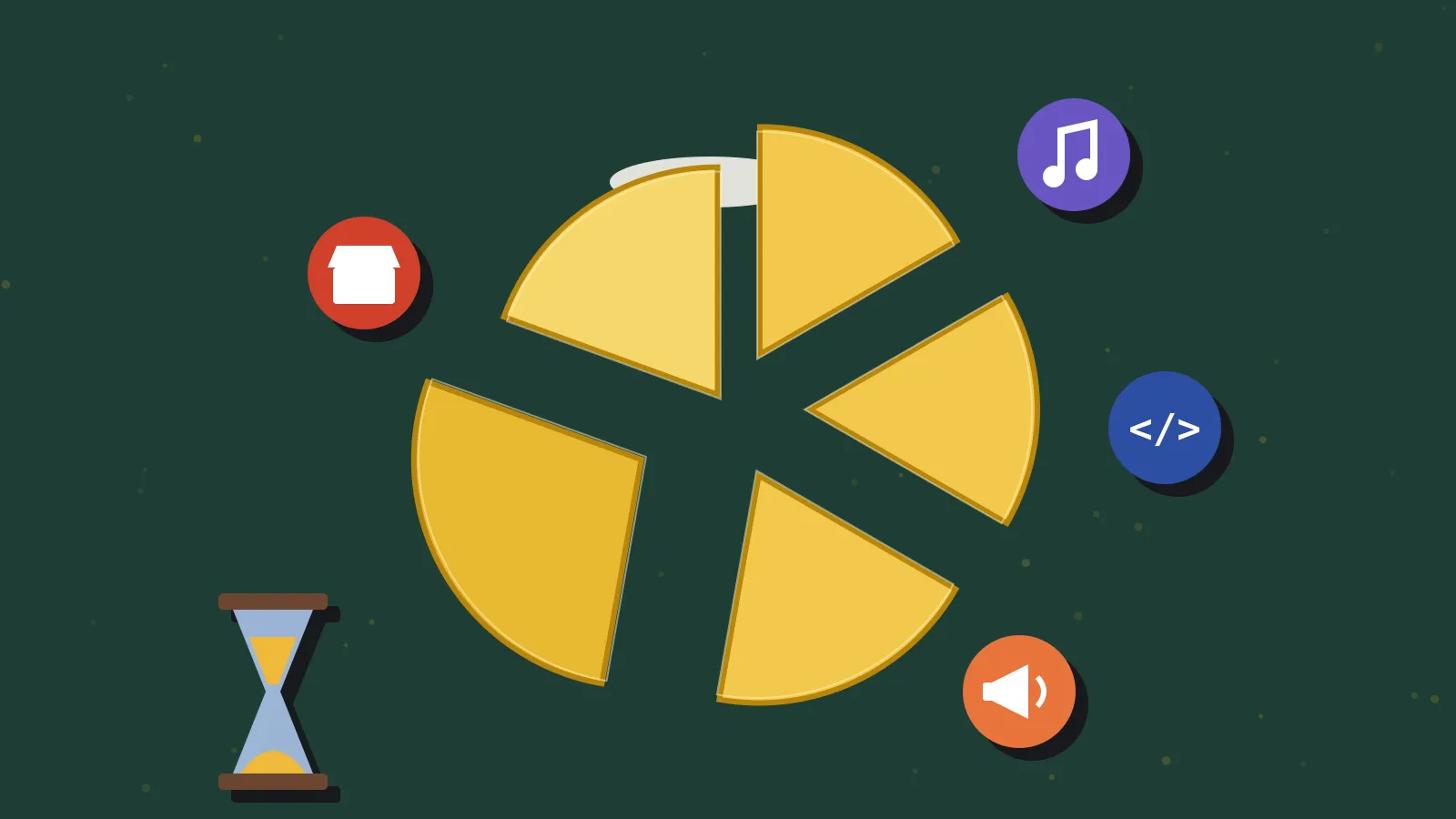
The cost shows up later. Every share you hand out is a cut of revenue for five years. Add up the splits before you sign anything. If your composer takes 5%, your programmer 10% and a marketing lead 10%, that’s a quarter of your income gone until year five. Then the platform cut sits on top, and your storefront takes its share first.
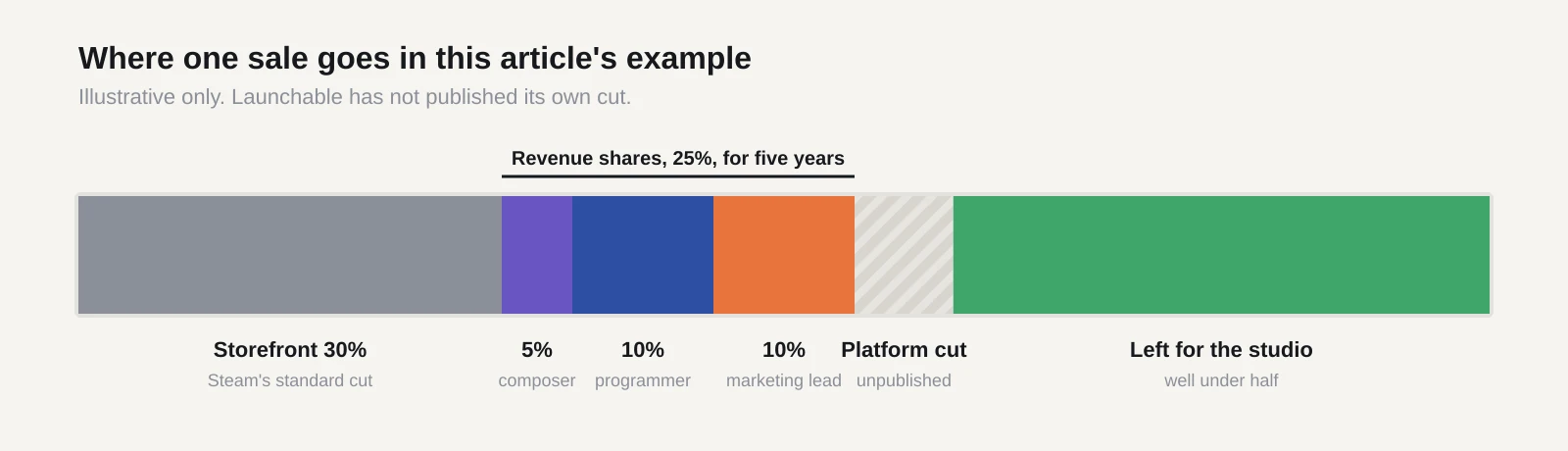
Steam’s standard cut is 30%, for comparison. Stack that with 25% in shares and you’re looking at well under half of each sale reaching you. That can still beat a publisher deal. It can also be worse than paying a contractor a fixed fee you could have covered.
Deferred pay also changes who you can hire. The best freelancers usually have rent to pay. A revenue-share offer filters toward people who can afford to gamble, and that’s often not the most experienced person for the job.
The freelancer’s side
If you’re the composer, artist or programmer being offered a share, treat it as an investment. You’re putting in your time instead of cash.
Ask the studio what it expects the game to earn, and how it got that figure. Wishlist counts and the sales of similar games are a fair starting point. Launchable’s vetting step should screen out the weakest projects, but it can’t promise sales.
Ask how payments flow. Launchable says it handles revenue distribution, so check when it pays, how often, and what reports you’ll see. Ask for unit sales and refunds alongside each payment.
Ask what happens if the studio folds, sells the game, or ports it to a console. Five years is a long time in indie development.
What to check before you sign
Whichever side you’re on, read the terms with these questions in mind:
- Gross or net? Is your share calculated on gross sales, or after storefront fees, refunds, tax and the platform cut? Net figures can shrink fast.
- What counts as revenue? Check whether DLC, sequels, console ports, bundles and licensing deals are included.
- Payment schedule. Monthly, quarterly or yearly payouts change your cash flow a lot.
- Audit rights. You should be able to see the numbers behind your payment.
- Exit terms. What happens if you leave the project early, or if the studio drops you?
- The five-year cap. Does the term run from launch or from signing, and what about early access?
- Launchable’s cut. Get the exact percentage in writing, since it hasn’t been published.
A hybrid deal is also worth asking for. Some freelancers will take a smaller fixed fee plus a smaller share. That spreads the risk instead of moving all of it.
Other shared-risk options exist too. Pixel Doors, an Amsterdam label profiled by GamesBeat, says it pays the developer before it recoups its own costs, with roughly 60% of revenue going to developers. Compare a few models before you commit.
If you’re a studio, run the numbers at three sales levels: poor, fair and good. If the shares only feel fair in the good case, your collaborators will feel cheated in the other two. If you’re a freelancer, decide up front how many unpaid months you can absorb, and stick to that number.
Launchable’s closed beta names arrive in early 2027. We’ll check in once real studios share real terms.