Samson sold 150,000 copies. Its studio still went bankrupt
Liquid Swords' debut made about US$2.4m in net revenue in six months, and the 27-person studio still ran out of money. What that says about team size.
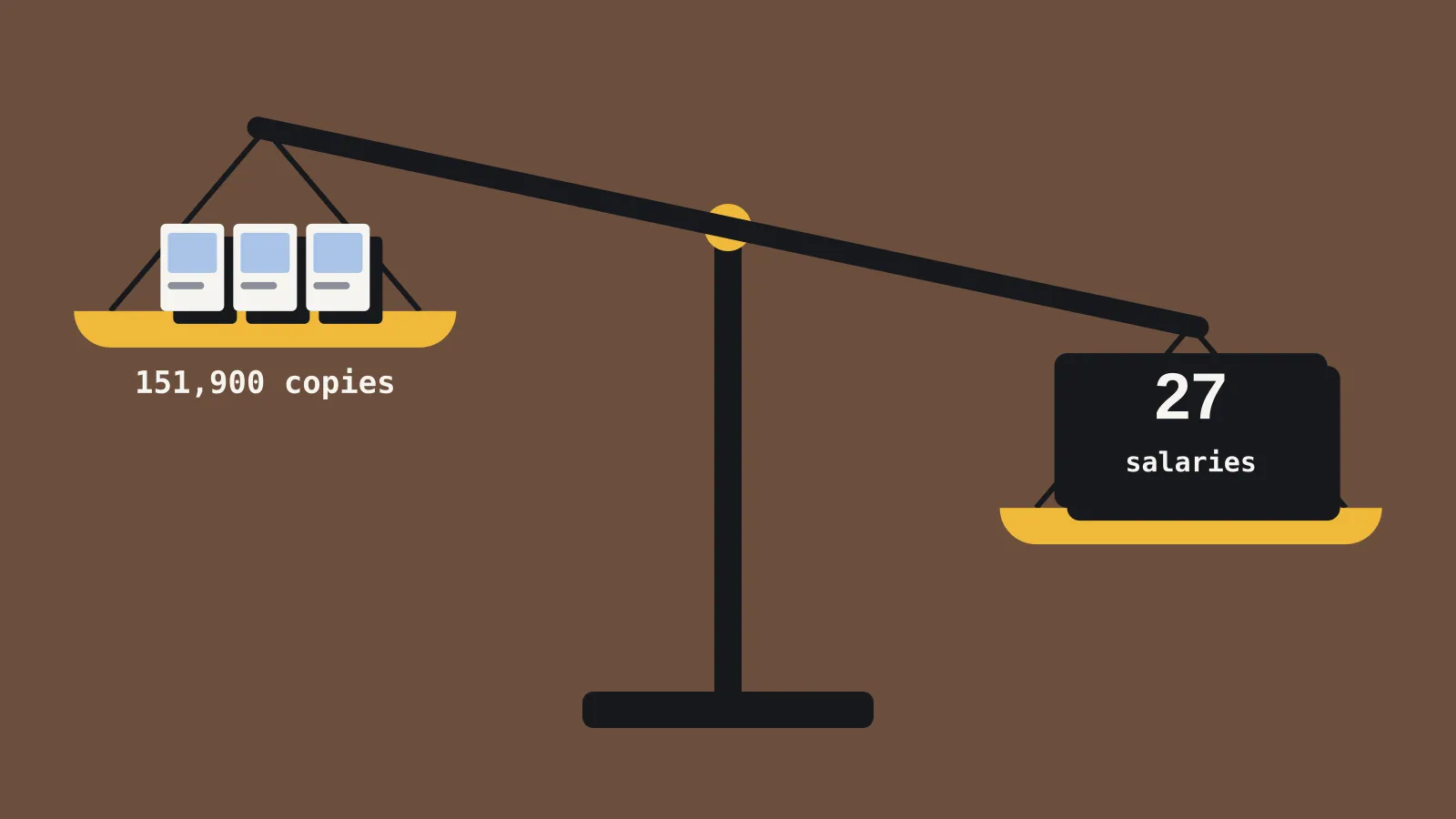
Liquid Swords, the Stockholm studio behind Samson: A Tyndalston Story, was declared bankrupt on 12 October. Its debut game had sold 151,900 copies by 14 October, for about SEK 24.1 million (roughly US$2.4 million) in net revenue. All 27 staff are being let go, after going two months without pay.
That’s a lot of copies. Plenty of solo developers would be thrilled with a tenth of it. For a small team, the lesson is about headcount: the number of people you pay sets the number of copies you need, and that target grows much faster than most people expect.
What happened
According to Game Talk, staff themselves asked for the bankruptcy after two months without wages. Sweden’s state wage guarantee now covers what they’re owed. The administrator, law firm Cirio, is selling the Samson IP, the studio’s other trademarks, development assets and equipment. Employment contracts don’t transfer, so a buyer would have to offer the team new jobs.
Indicative bids close at midday Stockholm time on 21 October. A buyer may still turn up, and some of the team could be rehired. We hope that happens.
Christofer Sundberg, a co-founder of Avalanche Studios, started Liquid Swords in 2020. NetEase took a minority stake in 2022. The studio announced layoffs in February 2025, before Samson shipped. The game launched on PC on 8 April 2026 at US$24.99, then on PlayStation and Xbox on 21 September.
What the numbers say
Cirio’s bidding document gives the clearest figures. The SEK 24.1 million is net revenue, not gross. For PlayStation and Xbox, it’s the net figure the platforms report. For Steam, it’s Steam’s figure after returns, chargebacks and taxes. Valve’s revenue share is normally taken from that Steam figure, so the money the studio actually received was probably lower.
Two more details stand out. On Steam, 18,536 of 83,990 base-game sales were refunded, about 22%. And 82,001 of the 151,900 copies sold after the console launch in September, so the game’s sales came in two waves, five months apart.
The same document summarises Liquid Swords’ 2024 annual report. That year the studio had no revenue, an average of 86 staff, personnel costs of about SEK 84.3 million and a loss of about SEK 39.3 million. In other words, Samson’s lifetime net revenue was less than a third of one year’s staff costs, from a year when the team was much larger.
We don’t know the studio’s costs in 2025 or 2026, and we won’t guess them. But you don’t need Liquid Swords’ real costs to see how team size moves the target.
How team size sets the target
This is a rough model, not an estimate of anyone’s real finances. The assumptions are ours:
- Three years of development before launch, then six months of support after it.
- A salaried studio costs about US$7,000 a month per person, including wages, payroll taxes, equipment, software and office space.
- A two- or three-person indie team pays itself modestly, at about US$4,000 a month per person.
- The studio keeps about US$12 per copy of a US$20 game, after platform fees, refunds and taxes.
| Team | Monthly burn | Cost to launch plus six months | Copies to break even |
|---|---|---|---|
| 27 people | US$189,000 | about US$7.9m | about 660,000 |
| 3 people | US$12,000 | about US$504,000 | about 42,000 |
| 2 people | US$8,000 | about US$336,000 | about 28,000 |
On these assumptions, 150,000 copies would pay for a three-person team three times over. For a 27-person team, it covers less than a quarter of the cost. Change any assumption and the numbers move, but the shape stays the same: break-even rises in step with headcount, while your sales depend on the game, not the size of the team that made it.
Size buys real things, such as more content, higher production values and console ports. Each extra person needs to add enough sales to pay for themselves, and that’s very hard to predict before launch.
What a small team can do
Start with three numbers, written down before you launch.
Know your monthly burn. Add up everything you spend in a month: wages or what you pay yourself, software, contractors, hardware, rent and any loan repayments. Update it whenever you hire or sign a new subscription.
Know your break-even copies. Total cost to launch, divided by what you keep per copy. Use a cautious figure per copy. Your US$20 game will sell many copies at a discount, in cheaper regional prices and in bundles, and some players will refund. Samson’s 22% Steam refund rate is higher than most, but plan for some.
Budget for the months after launch. Sales usually drop sharply after the first few weeks, and platform payouts arrive weeks after the sale. Liquid Swords’ second wave of sales came five months after launch, with the console versions. Make sure you can pay for patches, ports and the next six months of burn without counting on a big launch.
Two more habits help:
- Grow headcount after revenue, not before. If you need more people, contractors for a fixed job can be cheaper to add and easier to stop paying than permanent hires.
- Have a plan for a quiet launch. Decide in advance what you’ll cut, and when, if sales come in at half your target.
Should you care?
| You are | Our verdict |
|---|---|
| A solo dev or a team of two or three | Yes. Work out your break-even copies this week. It’s likely far lower than you fear, and knowing it helps you scope. |
| A small studio thinking about hiring | Yes. Model the extra copies each new hire needs before you post the job. |
| A funded studio with 15 or more staff | Very much so. Plan for slow sales and late payments as well as your best case. |
| Thinking about bidding for Samson | Bids close at 12:00 CEST on 21 October. Contact Cirio directly. |
Sources
- Liquid Swords bankruptcy notice (Cirio)
- Preliminary bidding documents (Cirio, PDF)
- Liquid Swords declared bankrupt (Game Talk)
- Samson studio Liquid Swords files for bankruptcy (GamesIndustry.biz)
- Liquid Swords announces proposed workforce reduction (Liquid Swords, February 2025)
- Samson: A Tyndalston Story drops for PC on April 8th (GamingTrend)