Someone AI-cloned Word Play and asked first. Where's your line?
Two hobbyists rebuilt Mark Brown's Word Play with Claude Code and asked before releasing it. Here's how to think about clones, and what to prepare.
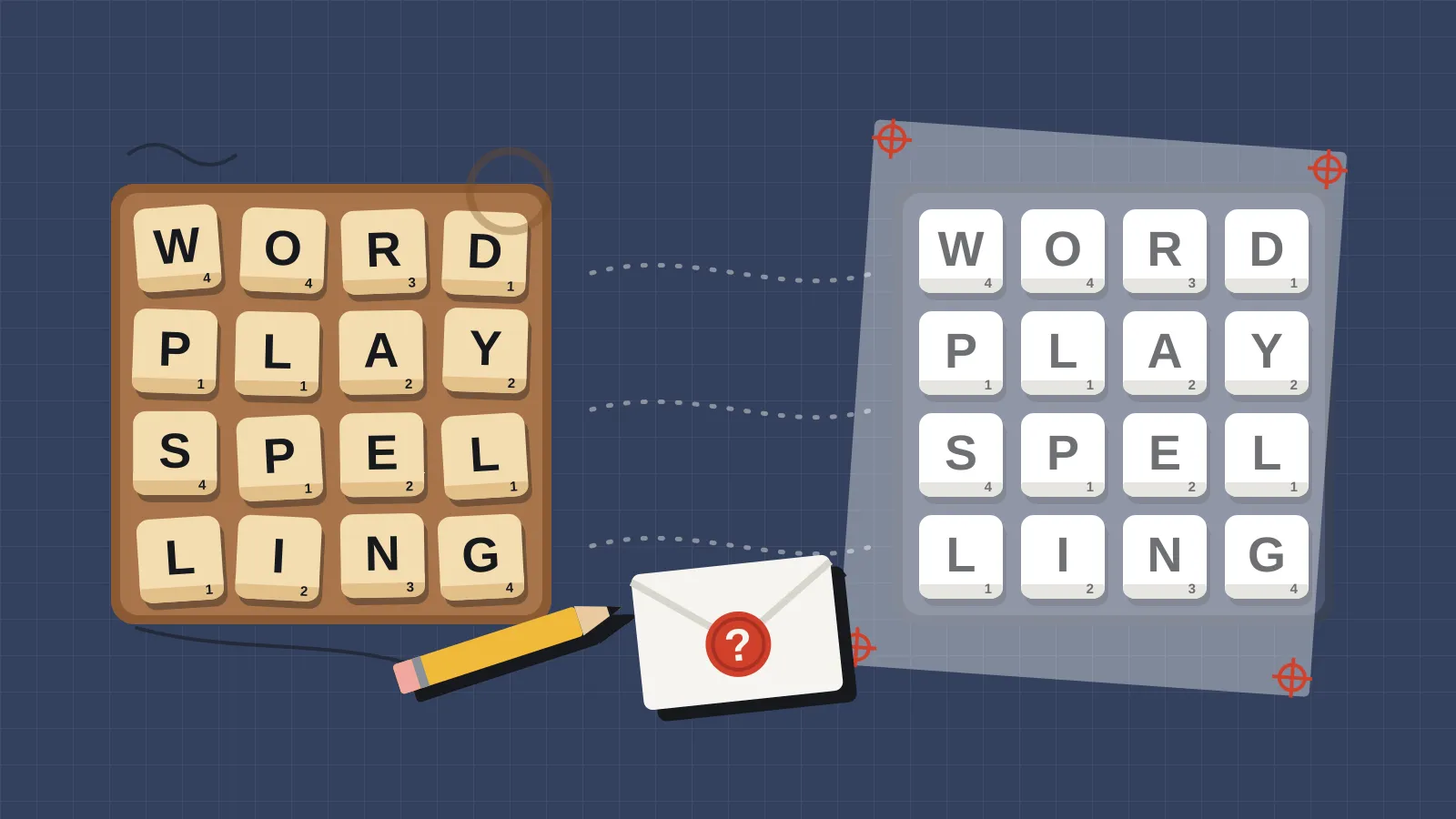
Mark Brown, who runs Game Maker’s Toolkit, has published a video about an email he didn’t expect. Two hobby developers had used Claude Code to rebuild Word Play, his 2025 spelling roguelike, and wanted to know if he minded them releasing it. He asked them to wait while he thought it over. As of the video, he hasn’t decided.
The case is useful because it’s polite. Nobody stole anything in the dark. That makes it a clean test of a question every small developer will face sooner or later: when does “inspired by” turn into “a copy of”?
What the clone does
The new game is called Words Upon Words. Going by Brown’s account, it keeps Word Play’s core loop. You make words from a grid of letter tiles, hit score targets and stack modifiers. On top of that it adds a timed mode, a daily challenge, multiplayer races and duels, meta-progression, perks, special tiles and Hungarian language support.
The speed is what stands out. Brown says the AI logs show a playable core came together in about 12 minutes. Word Play took him around seven months. He admits to some envy. Several of the added features were on his own wish list, and debugging, technical debt and burnout kept him from building them.
He also points out that cloning isn’t new. The 2014 puzzle game Threes was followed within weeks by 2048, a free browser game built on a near-identical idea, which overtook it in reach. Our earlier piece on Claude Code steering away from cloning a specific game covered Anthropic’s change to the tool. Brown welcomes that change but doubts it will stop anyone determined, and other AI tools have made no similar promise.
Where the line usually sits
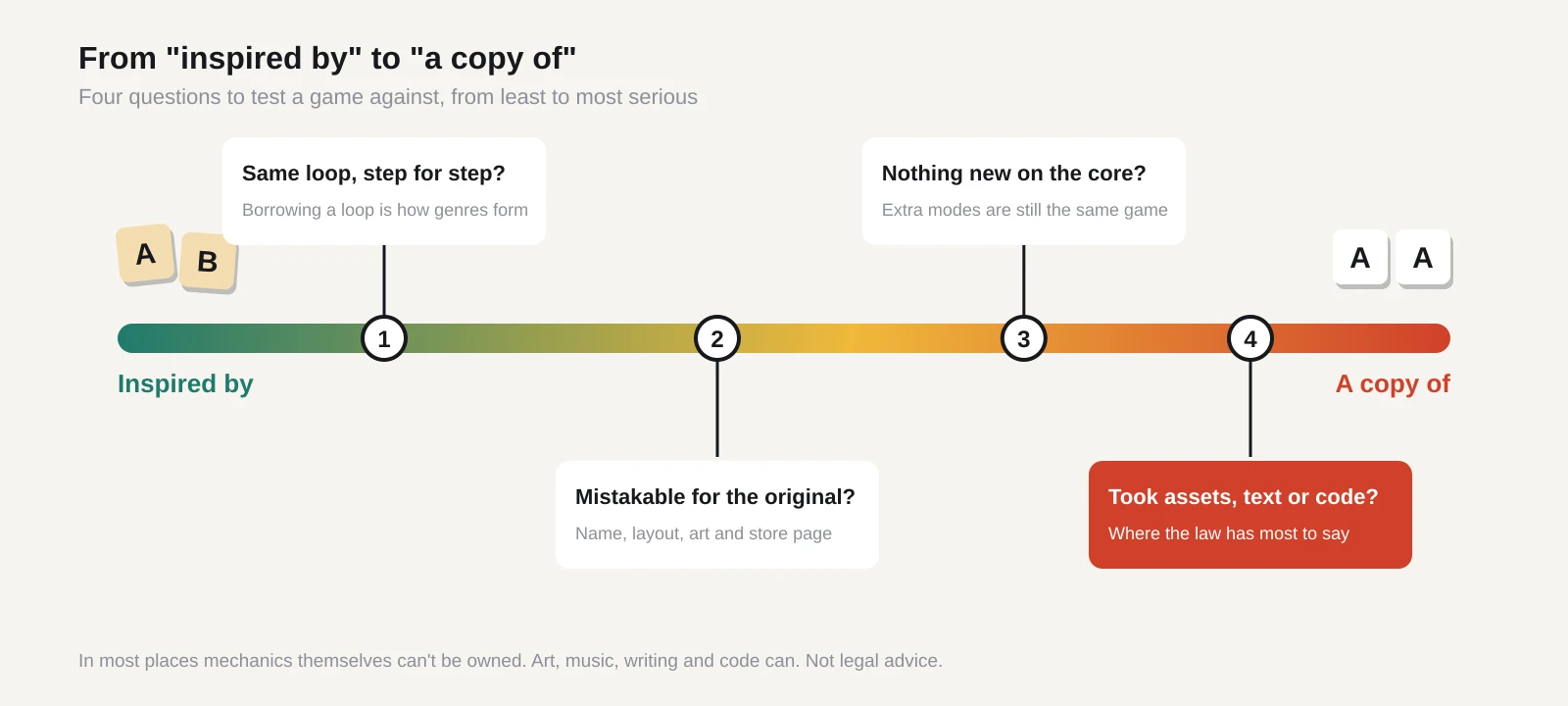
There’s no single rule, but you can test a game against a few practical questions.
- Is the core loop the same, step for step? Almost every game borrows a loop. Brown says Word Play itself drew on Balatro, which drew on Luck be a Landlord and Slay the Spire. Borrowing a loop and combining it with other ideas is how genres form.
- Would a player mistake one for the other? If the name, layout, art style and store page all point to the original, you’re closer to copying than building on it.
- What did you add that the original couldn’t easily add? Extra modes on the same core, as in this case, are still the same game with more menus.
- Did you take any assets, text or code? This is where the law has most to say. In most places game mechanics themselves can’t be owned, but art, music, writing and code can.
Brown’s own view sits in the middle. He’s glad the game inspired someone, but feels this one reproduces the core too closely to count as general inspiration. He also worries about income. A free or cheaper version could pull players away from a game that still pays his bills.
Game Dev Report’s Code Monkey made a related point this week. A commenter called his upcoming card game a clone because it shares a genre with other games. Where people draw the line varies a lot, so expect some noise whatever you make.
What it means for a solo dev
Two risks matter here, and they pull in opposite directions.
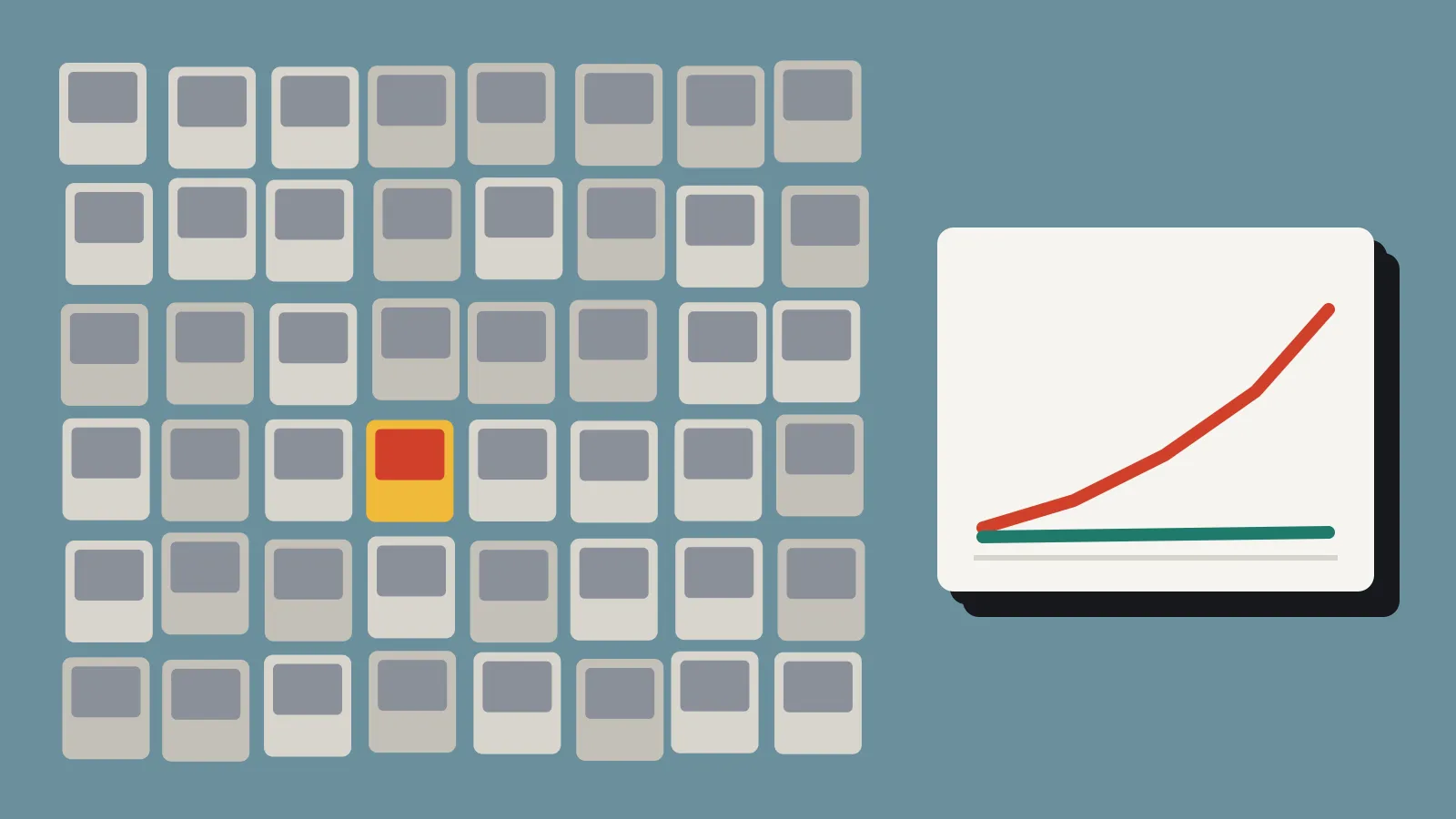
The first is being cloned. AI tools have cut the cost of a fast copy close to zero. The Needle In A Haystack case is the clearest recent example. Chris Zukowski of How To Market A Game traced it in a post on 28 October. A prototype went viral on 22 August. Clone pages appeared on Steam within a week, and one clone’s demo passed the original’s follower count by 5 October. By his estimate the original now sits about 20,000 wishlists behind the leading clone.
The second risk is obscurity, and for most of us it’s the bigger one. Zukowski’s advice, and Code Monkey’s, is the same: don’t hide your game and shadow drop it. Players can’t wishlist something they haven’t seen. Moonlighter’s studio tried the cautious route and shrank its playtest over clone fears. It’s a trade-off you can make, but it costs reach.
Valve has said it is watching for clones too. We summed up what it told developers in What Valve actually said about wishlists, clones and Next Fest.
What to do now
You can’t stop someone copying a mechanic. You can make a copy less likely to win.
- Keep marketing on the normal schedule. Plan for a store page, a playtest or demo, and a festival slot. Zukowski suggests about six months of preparation.
- Have a fast-launch plan ready. If a clip goes viral, you want a demo out in days, not weeks. Keep a build that’s close to demo quality. Code Monkey suggests planning a three to six month campaign while being able to ship within one or two months if things take off.
- Own what can be owned. Distinctive art, audio, writing and a memorable name are protected in ways mechanics aren’t. They also make a copy easy to spot.
- Keep dated records. Save your early builds, devlogs, trailer uploads and store page history. If you ever need to file a copyright complaint, dates help.
- Check before you panic. Zukowski suggests looking up a suspected clone’s follower chart on SteamDB. Many stall with a few hundred followers.
- Decide your answer to Brown’s email now. If someone asks to release a remake of your game, what would you say? Options range from a flat no to a licence with credit and a revenue share. Settling it early saves you a stressful week later.
If you’re the one building something inspired by another game, the same questions apply in reverse. Change the presentation, add an idea of your own, and credit what inspired you. Asking the original developer, as these two hobbyists did, is a good habit even when the answer is no.