Itch.io's new game pages doubled. Its sales didn't
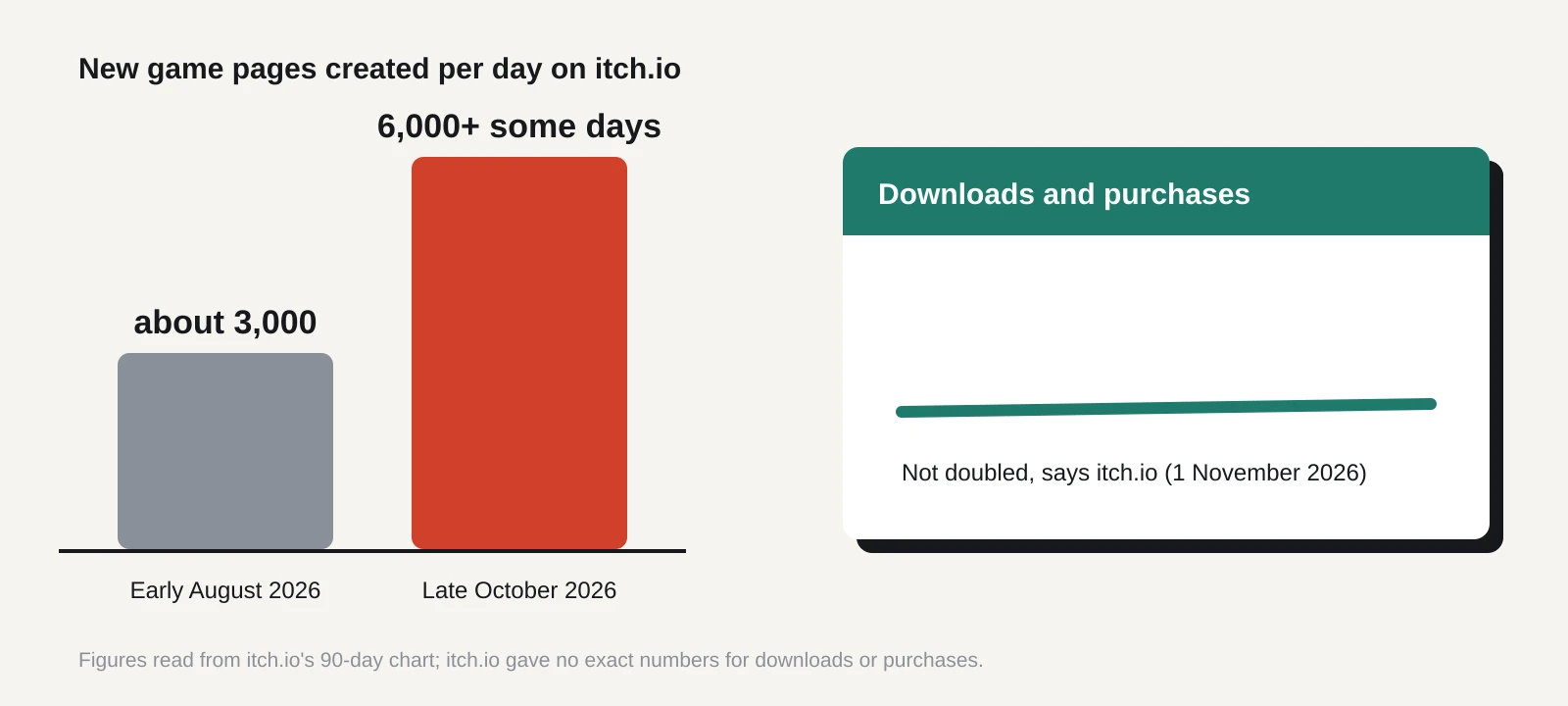
Itch.io says daily new pages went from about 3,000 to over 6,000 in two months, while downloads and purchases stayed flat. Here's how to stay findable.
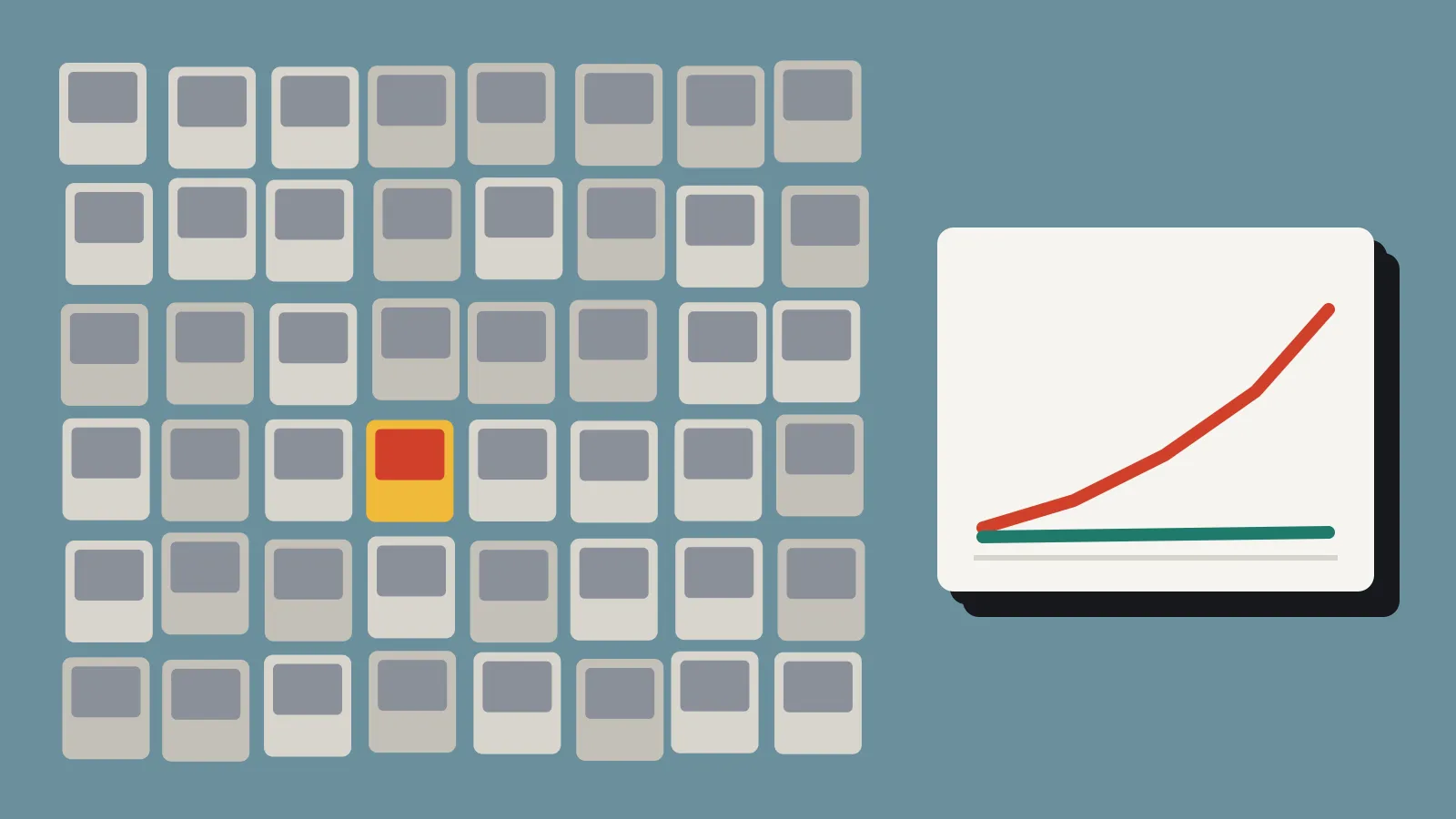
Itch.io says the number of game pages created each day has roughly doubled in two months. On 1 November 2026 it posted a 90-day chart on Bluesky and X showing daily new pages rising from about 3,000 in early August to more than 6,000 on some days by late October. In a follow-up post, it said downloads and purchases had not doubled.
If you sell or give away games on itch, that’s the number that matters. Twice as many pages are competing for roughly the same pool of players.
What itch.io said, and what it didn’t
Itch didn’t publish a breakdown of where the new pages come from. When people replying asked why, its account answered with robot and crying emojis and told one person to take a guess. PC Gamer, Aftermath and Game Developer all read that as a hint that generative AI is behind most of the growth. That’s a fair reading, though itch hasn’t said so outright.
Some numbers help. When PC Gamer checked on 1 November, itch listed 1,769,316 games, and 131,929 of them (about 7.5%) carried the “AI Generated” tag. That tag depends on creators disclosing their own AI use. Aftermath’s Luke Plunkett browsed the newest releases and found several that looked AI-made but had no tag at all. So the tagged share is a floor, and the real share of new pages is probably higher.
The same pattern is showing up elsewhere. PC Gamer points out that Steam Next Fest demo counts rose from about 4,000 to more than 8,000 over a similar stretch. We covered the October Next Fest when it hit 7,240 demos, and the lesson there holds here: more entries don’t bring more players with them.
The rules itch already has
Itch.io’s creator quality guidelines already cover most of this. Two parts matter for small teams.
First, AI disclosure. Itch defines generative AI as software that makes new text, images or music after training on large datasets. Pathfinding, procedural levels and dynamic difficulty don’t count and don’t need the tag. You declare AI use in the “AI Disclosure” section of your project’s edit page. Itch says it enforces this strictly for asset pages, and an untagged asset pack can be delisted. For games, the guidelines ask for disclosure, but it’s not clear how often itch acts on games that skip it.
Second, spam. The guidelines treat these as spam: projects made mostly by AI or algorithms with little human input, near-identical pages, and pages mass-produced with automated tools. Reskins posted as separate pages and irrelevant tags added for visibility are also against the rules.
The penalty is usually delisting. A delisted page drops out of browse, search and recommendations, but still works from a direct link and your profile. Repeat or serious cases can cost an account its discovery eligibility, its jam submissions or the account itself.
What it means for a solo dev
The “Most Recent” feed now moves about twice as fast. Itch’s guidelines say a page joins that list the first time you publish it, and you can’t bump it back to the top later. If your launch window was already short, it just got shorter.
Browse and tag pages will feel the same squeeze, especially in popular tags where AI-made games cluster. Players can turn on the “No AI” filter, but it only hides pages whose creators tagged them honestly. Untagged AI games will still land next to yours.
On the other hand, itch’s flat sales line tells you players aren’t buying the flood. Volume isn’t turning into revenue for the people uploading it. A clear, honest page with real screenshots still stands out to the players who are looking, as long as they can find it.
What to do now
Treat itch’s discovery as a bonus and bring your own traffic. In practice:
- Finish the page before you publish. Keep it in draft or restricted mode while you add screenshots, a cover, the description and tags. Draft and restricted pages don’t show up in New Releases, so you won’t waste your one appearance in the Most Recent feed on a half-built page.
- Fill in the AI disclosure, either way. If you used no generative AI, say so. If you used some (placeholder art, translation, voice), declare it. Honest pages are the ones players who filter AI will see, and itch can delist asset packs that don’t declare it.
- Use accurate tags only. Irrelevant tags break the guidelines and send the wrong players to your page.
- Point your own channels at the page. Use your devlog, mailing list, Discord, Bluesky and jam entries. Every link you share works even if browse buries you.
- Join jams. Jam pages group entries by event, so your game appears in a much smaller list than New Releases. Read the jam rules on AI first, because many hosts now ban it or ask you to disclose it.
- Watch your own numbers. Itch’s analytics show views, downloads and where traffic came from. If browse traffic drops off over the next few months, you’ll know the flood has reached your tags. Then shift effort to links you control.
If you also sell on Steam, the same thinking applies. Valve’s recent advice to Steam developers was to use Steam’s community features and make games that are harder to copy. Itch’s numbers show why that advice travels.
We’ll keep an eye on whether itch changes its disclosure rules or its browse pages. If it does, we’ll update this piece.
Sources
- Downloads and purchases have not doubled (itch.io on Bluesky)
- Daily new pages chart (itch.io on X)
- Creator quality guidelines (itch.io)
- New game pages created per day on itch.io have doubled (PC Gamer)
- Itch’s AI filter and untagged releases (Aftermath)
- Number of game pages doubles on itch.io (Game Developer)