What protects your game if someone clones it with AI
Speakers at a Korean game law conference say copycat fights now centre on AI clones of whole games. Here is what the law covers and what evidence to keep.
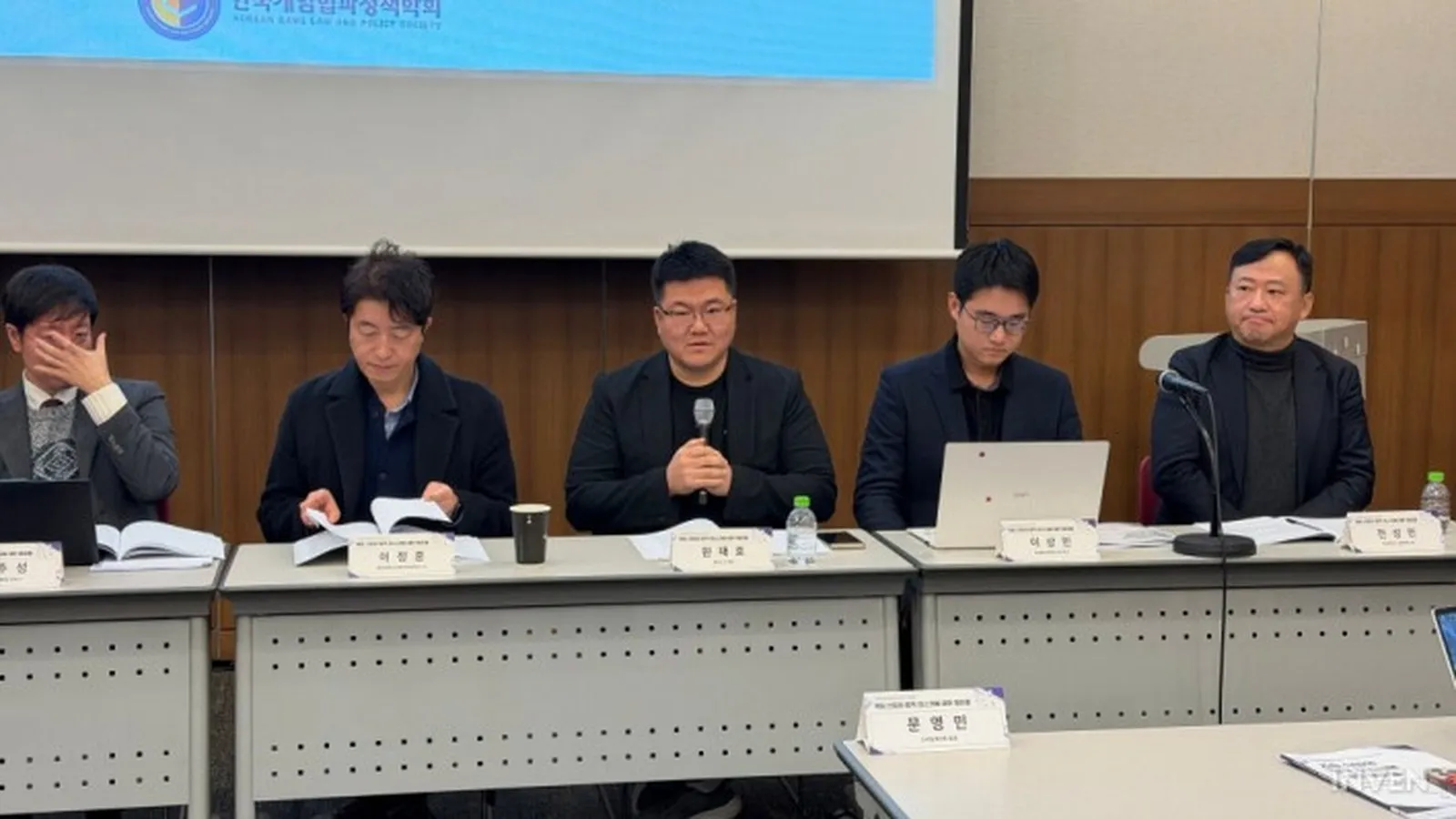
On 20 November 2026, panellists at the Korea Game Law and Policy Association’s 25th regular conference in Busan said copycat disputes have changed shape. The old fight was over “like games” that borrow a genre’s rules. The new one is AI cloning of entire games, according to Inven Global’s report. Won Jae-ho, CEO of Anchor Node, told the session that games built with years of effort have been copied within a day and put up on Chinese platforms. The law has not sped up to match, so your best defence is the paperwork you keep before anything goes wrong. This is not legal advice. It is a list of what to prepare and what to ask a lawyer.
What the law protects and what it leaves open
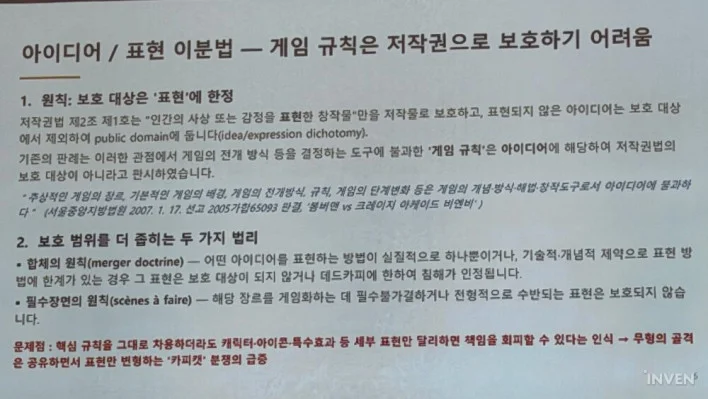
Copyright covers expression, not ideas. The US Copyright Office’s guidance on games says a game’s idea, its title and its rules or method of play are not protected. Original artwork and the written text of rules can be.
Lim Chul-keun, an attorney at Yoon & Yang, made the same split at the Busan session. In his framing, rules and genre are ideas, while the concrete implementation is expression. He also said courts stay fairly conservative, and a mature genre makes copyright harder to win because judges want clear creativity.
Look and feel can still count. In Tetris Holding v. Xio Interactive, a US federal court in New Jersey ruled on 30 May 2012 that the puzzle game Mino copied Tetris’s protected visual expression. Judge Freda Wolfson pointed to the piece style, colours, movement and the 20 by 10 playfield. Xio had not copied the code or exact images and still lost. The court also found for Tetris on trade dress, meaning the game’s distinctive look could mislead buyers about who made it.
Korea has gone a step further. Inven reports that the Korean Supreme Court ruled in 2019, in the “Forest Mania” match-3 case, that a selection and arrangement of unprotectable parts can be protected if it shows original character. In the 111% lawsuits, a first-instance court rejected copyright infringement but found “misappropriation of achievements” under Article 2, Item 1, Sub-item (k) of the Unfair Competition Prevention and Trade Secret Protection Act. That clause is civil only, and Lim said courts apply it narrowly.
Why AI changes the timing
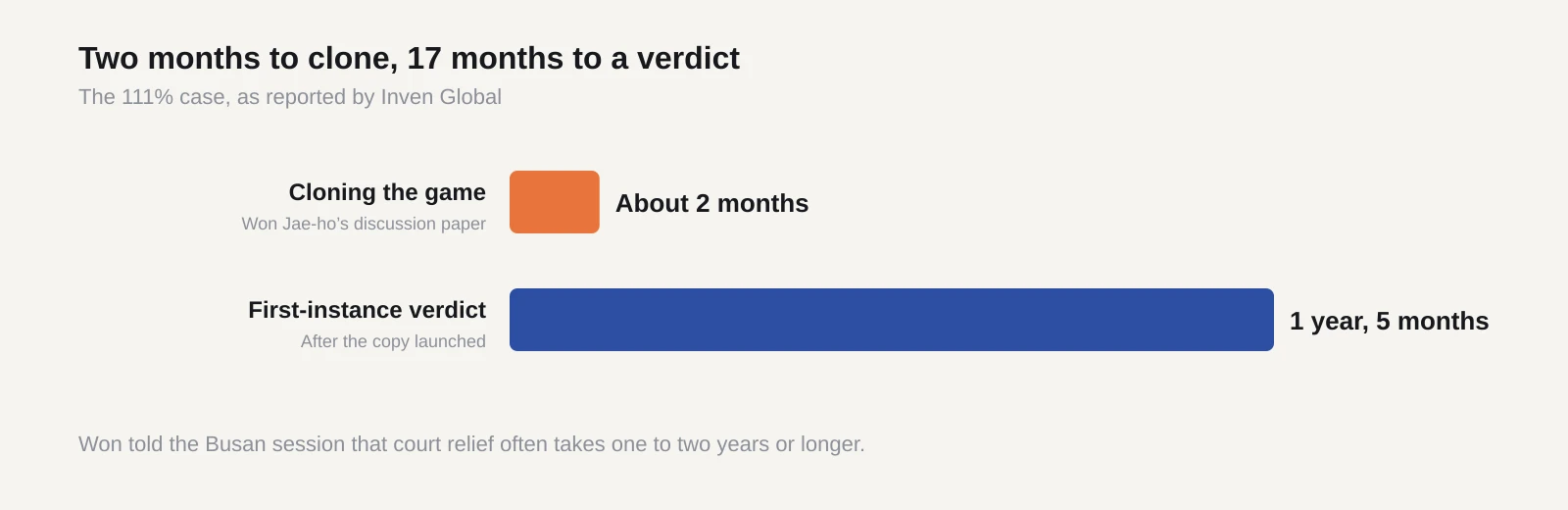
Won argued that speed is the real problem. Games are software, so AI tools can pull usable source code out of a build and make a full clone simple. Court relief takes one to two years or longer, he said, by which point a small studio may be gone.
The 111% case shows the gap. Inven reports the first-instance verdict came 1 year and 5 months after the imitating game launched, while Won’s discussion paper put the cloning itself at about two months.
Won said some Korean indie studios have stopped releasing demos for fear of AI imitation. Digital Sun made a similar call when it moved its ReVamp playtest to invite-only. Won also warned that AI-assisted development can produce accidental resemblance, and he wants clear tests to separate that from deliberate copying.
Gachon University professor Jeon Seong-min expects more disputes and more demands for development logs that prove independent creation. He noted that this record-keeping is a direct cost for small studios.
What it means for a solo dev or small team
You probably cannot stop someone making a game with your mechanics. Your stronger claims sit in things you made: art, audio, code, writing, trailers, store assets and your title as a brand. An AI clone built from your decompiled build may copy those directly, which gives you a copyright claim rather than an argument about ideas.
The fastest route is usually the store, not a court. Each one works differently:
- Steam: Valve’s copyright infringement notice form asks for the infringing URL on Valve’s systems, a description of the content and details of your original work. You sign statements under penalty of perjury. Valve suggests contacting the uploader first and says your name and email may be passed to them.
- Apple: The App Store Content Dispute page links to a form. Apple then contacts the app’s provider and asks them to sort it out with you directly.
- Google Play: The Intellectual Property policy routes copyright claims through Google’s DMCA process. For trademark, it asks you to approach the developer first, then file a complaint.
- itch.io: Its terms list uploading content you don’t own as abuse but name no takedown form. Notices go to support@itch.io, and itch.io posts them publicly, such as a Gorilla Tag takedown published in July 2025.
A false or careless claim can backfire. Steam’s form warns that knowingly misrepresenting infringement can make you liable for damages under section 512(f) of the US DMCA.
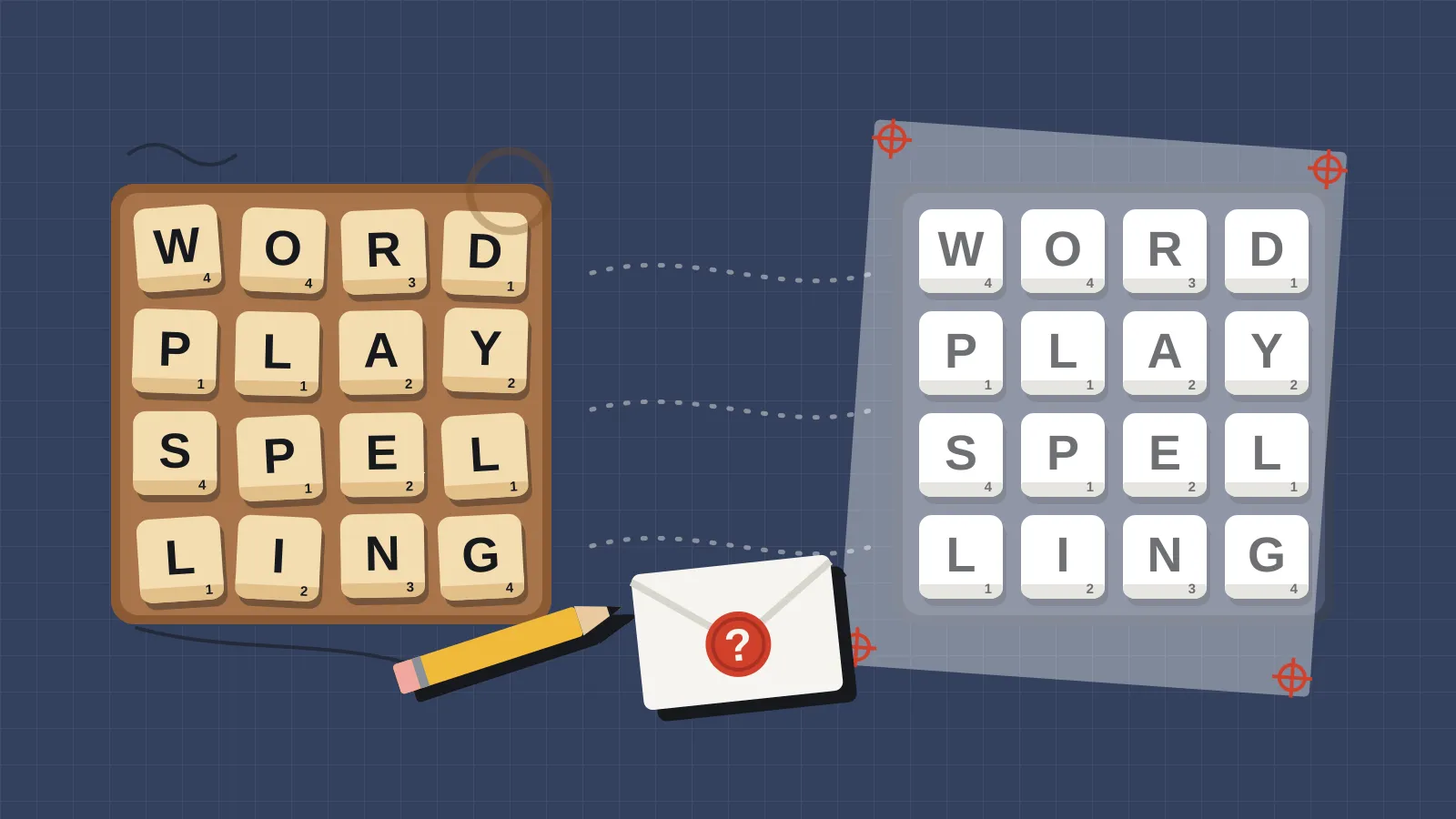
Not every clone is hostile. When someone AI-cloned Word Play, they asked first, which gives you a chance to set terms before anything ships.
What to keep on file now
Lim advised developers to write down why a game was conceived and which elements were made deliberately different. Build that habit before launch. Keep:
- Dated builds. Archive every build you send outside the team, with its upload date and store build ID.
- Design docs in version control. Commit history gives each decision a timestamp that is hard to fake.
- Source art and audio. Keep layered project files, not just exports, so you can show how each asset was made.
- Trailer and screenshot originals. Save the master files and a record of each public upload date.
- Store page history. Screenshot your page whenever it changes and save a copy to the Internet Archive.
- A clone log. Record the infringing URL, the date you found it and screenshots before you file anything.
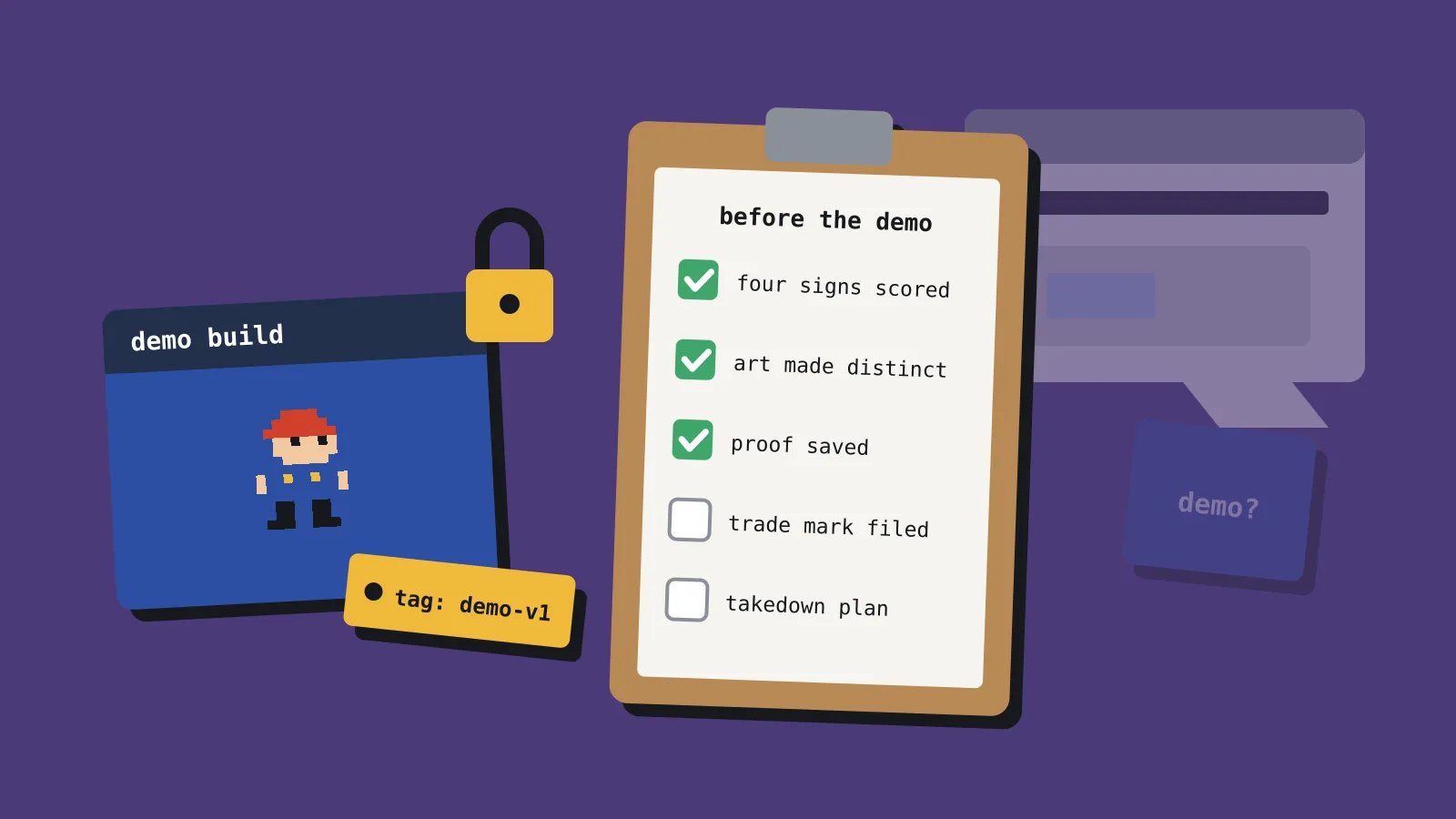
Before you release a public demo, run through our pre-demo clone checklist.
Then book an hour with an IP lawyer and ask:
- Which country’s law applies when the clone sits on a foreign store?
- Should I register copyright or a trademark for my title, art or code, and where?
- Does my game’s look have a real trade dress argument?
- What happens if the other side files a counter-notice?
- How much would court action cost, and what result is realistic?
Lim said he would submit formal proposals for administrative remedy procedures, so Korea’s process may change. For now, your folder of dated evidence is the part you control.
Sources
- Imitation Disputes Shift from ‘Like Games’ to ‘AI Cloning’, source of the photos (Inven Global)
- Games (US Copyright Office)
- Tetris Holding, LLC v. Xio Interactive, Inc., opinion of 30 May 2012 (Justia)
- Copyright infringement notice (Steam)
- App Store Content Dispute (Apple)
- Intellectual Property policy (Google Play Console Help)
- Terms of service (itch.io)
- Takedown notice for ‘Trizzle Tag’ (itch.io)