A pre-demo checklist for making your game harder to clone
Two guides this week covered which games AI cloners copy fastest and which legal groundwork to lay first. Here is the solo dev version, before your demo ships.
On 11 November 2026, How To Market A Game published four signs that make a game easy to clone with AI. Two days earlier, on 9 November, GameDev.net ran a five-step legal guide for protecting a demo. Read together, they give you a design check and a paperwork check to run before a public build goes out. We have already covered where the line sits on AI remakes, how to stage a playtest and what Valve said about clones. This piece is the checklist that sits on top of those.
What the two guides say
The four signs come from How To Market A Game. In our paraphrase, a game is easier to copy when:
- it rests on one clever mechanic or joke that players “get” in minutes, which the author calls a gimmick rather than a hook
- its art direction is neutral, so a copy could plausibly look the same by accident
- it sits in a well-worn genre and is mostly made of familiar parts
- its content comes from simple systems with a clear end point, not hand-made or deeply emergent design
The post names Dwarf Fortress as the example of depth that resists copying. It also points to the January 2024 Banana game, whose fast-follow clones did not succeed. Its timing advice is to get the Steam page up at least six months before release. If your game fits the risky profile, it suggests building the demo and holding it until you are ready to react. It also warns against panic moves such as shadow dropping (releasing with no announcement) or cancelling a demo.
The GameDev.net guide, by member Jesper_Rantatulkkila, is US-focused. Its core point is that copyright covers your code, art, music and writing, but generally not ideas or mechanics. AI clones built from trailers rarely copy code, so your strongest claims are usually over copied assets or a copied name. Its steps are to control what you show, confirm you own everything, register before publishing, set demo terms and plan your takedowns in advance.
What it means for a solo dev
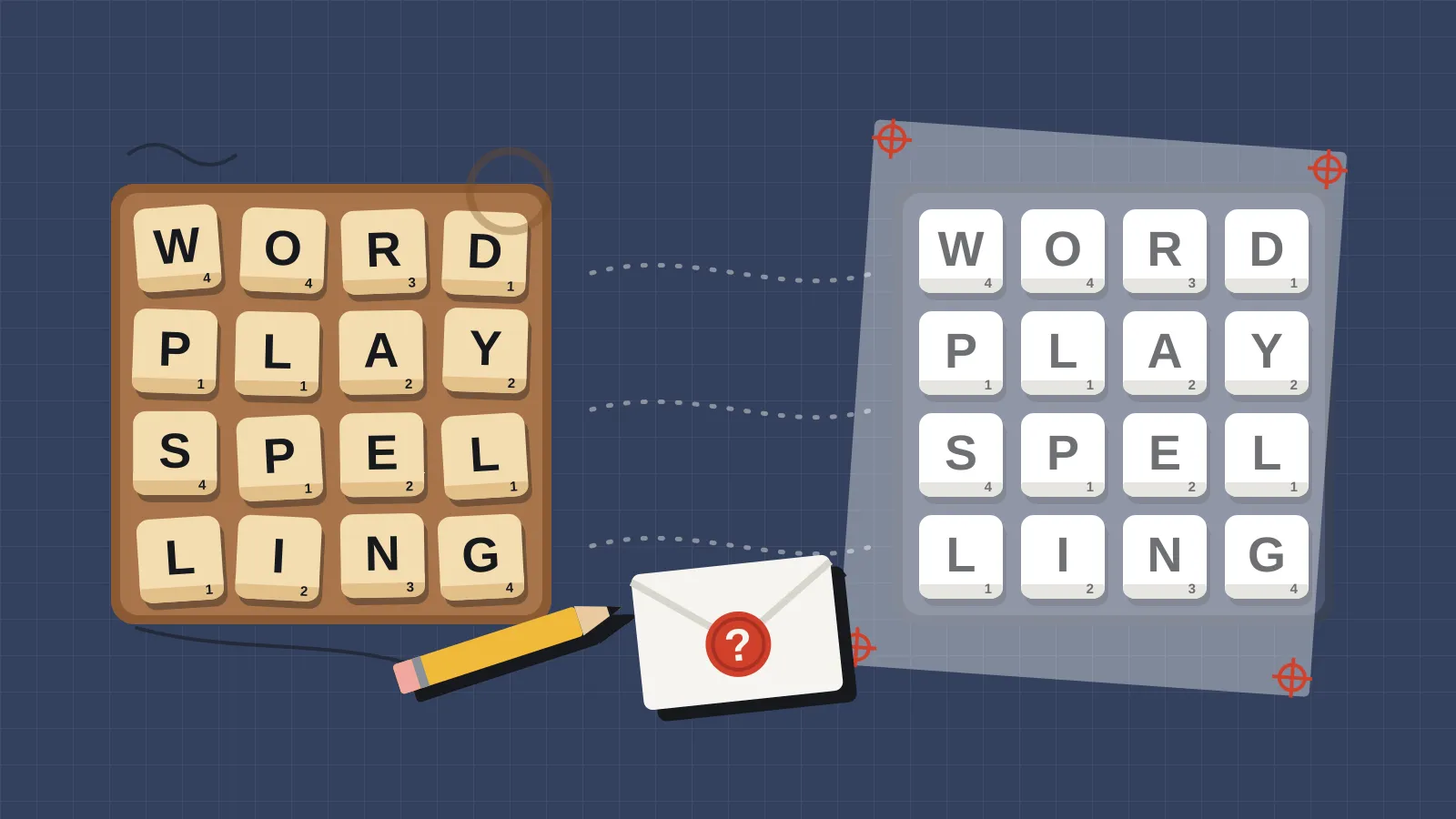
If your game hits two or more of the four signs, assume someone could rebuild the core loop from a trailer. Our Word Play coverage reported a playable core rebuilt in about 12 minutes. The law will not protect the mechanic itself, so your real defences are depth, a distinctive look and a name you own.
Paperwork matters most where you can act on it. A copied sprite sheet or a near-identical title gives you something to file. A copied idea usually does not. That means the cheapest wins come from owning your assets cleanly and locking down your name early.
Timing is the other lever. Hiding the game costs wishlists, and Valve has told developers that visibility follows sales and play, as we covered from Steam Indie Connect. The goal is a demo that goes out on your schedule, with your groundwork already done.
Design and timing checks before the demo
Run these at least a month before a public build.
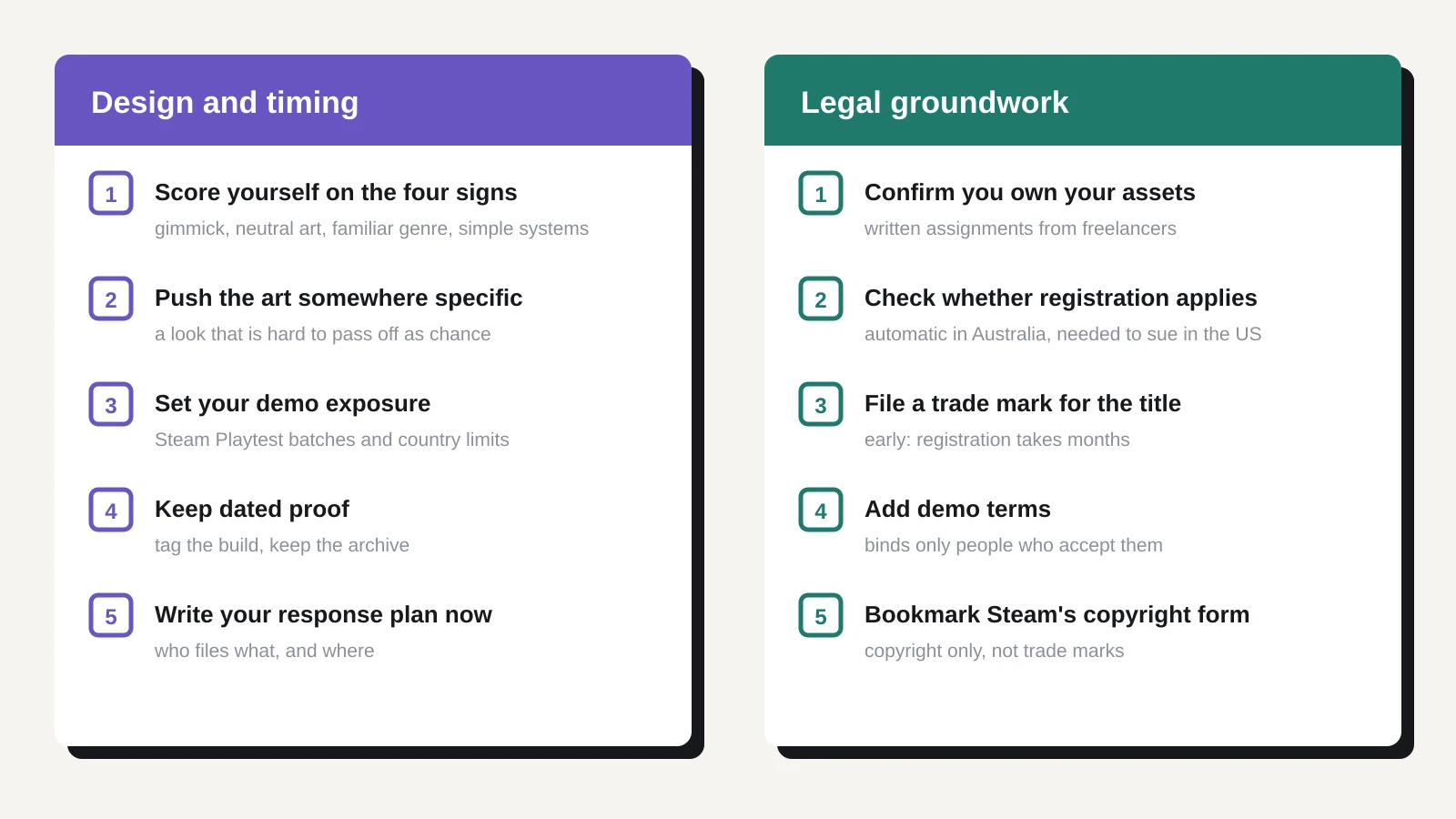
- Score yourself on the four signs. Be honest about whether your hook survives an hour of play. If the demo reveals everything good in ten minutes, cut it shorter or show more of the depth.
- Push the art somewhere specific. A recognisable palette, character or UI style is harder to pass off as a coincidence, and it helps players spot the original.
- Set your demo exposure. Steam Playtest runs as a separate “child” app linked to your game. Players request access and you grant it in batches, and you can limit selection by country, according to Steamworks documentation. Valve also says playtests are not confidential and players sign no NDA, so use it to limit reach and expect footage to leak anyway. Our Moonlighter piece has the full ladder of options and build hardening tips.
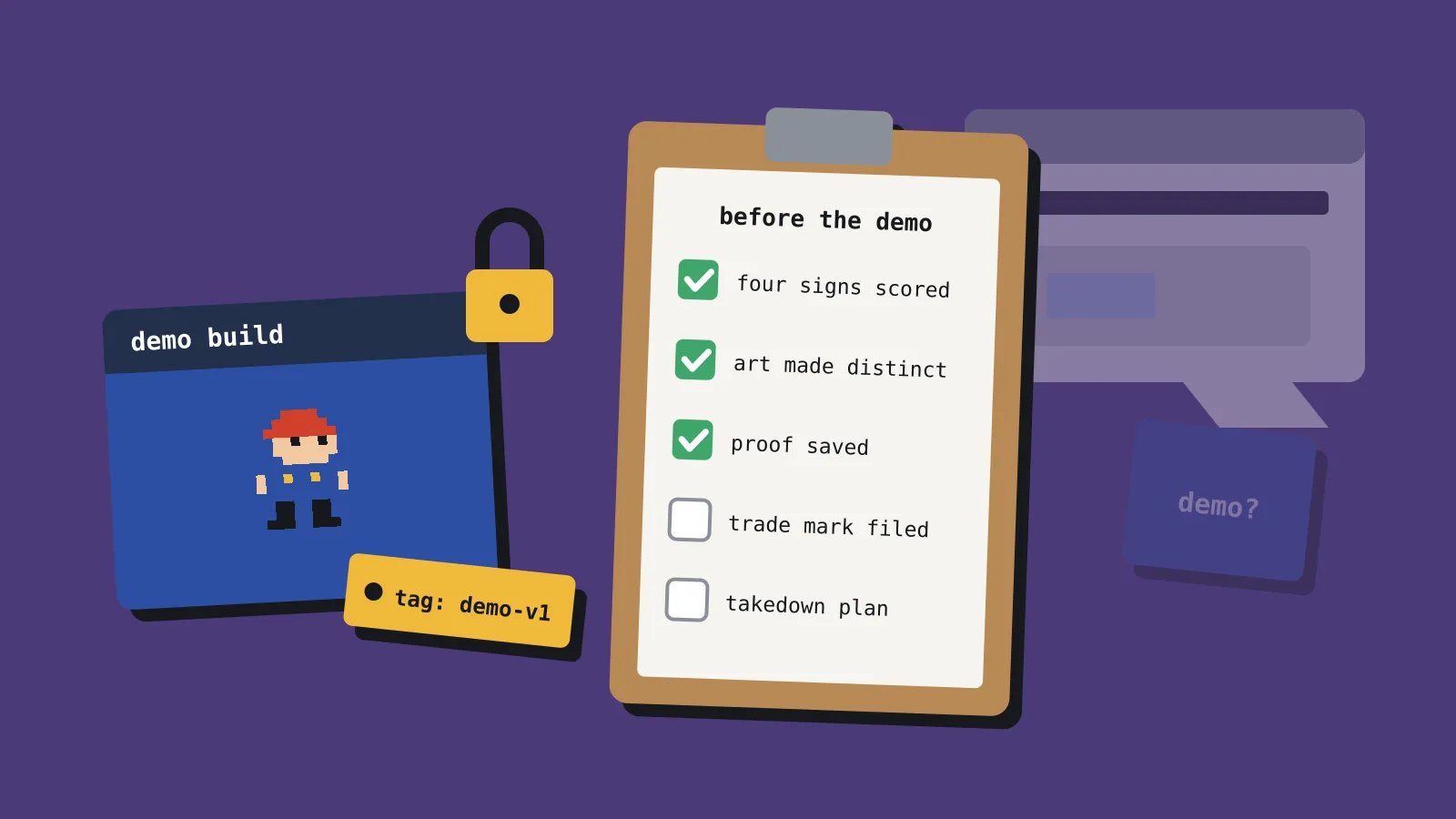
- Keep dated proof. Tag the exact demo build in version control, keep a copy of the archive and save your store page history. You will need this evidence for any complaint.
- Write your response plan now. Decide who files what, and where, while you are calm.
Legal groundwork before the demo
This is general information, not legal advice. Rules differ by country, so check with a lawyer where you live before relying on any of it.
- Confirm you own your assets. GameDev.net recommends written assignments or licences from every freelancer. It also notes that purely AI-generated output may not be protected, so keep records of the human work behind key assets.
- Know whether registration applies to you. In Australia, copyright is automatic and there is nothing to register, according to IP Australia. In the US, you must register a US work before suing. Registering before infringement, or within three months of publication, makes statutory damages and attorney’s fees available, says the Copyright Office’s Circular 1. Electronic filing costs $45 for a single-author work or $65 for a standard application, per its fee schedule. Unpublished games expected to sell can be preregistered for $200.
- File a trade mark for the title early. IP Australia charges from $250 per class and says registration takes at least seven months. The USPTO base fee is $350 per class. GameDev.net says a registration helps when asking Steam to remove a confusingly similar game.
- Add demo terms. A demo EULA (the licence players accept) can ban decompiling, redistributing or using the build to train AI. GameDev.net notes these bind only people who accept them, so they will not stop copying from public videos.
- Bookmark Steam’s copyright form. Valve takes copyright complaints through its infringement notice form, linked from its legal page. It asks for your legal name, address and statements made under penalty of perjury. It also warns that your name and email may be shared with the person who posted the content. The form covers copyright only. For trade mark issues, our Valve coverage has the route through Steamworks support.
If a clone appears, GameDev.net suggests a cease-and-desist letter (a formal demand to stop) as the usual first step, with lawsuits as a last resort. The fastest win is a platform takedown backed by the dated evidence you saved in step four.
Sources
- How Clone-Proof Is Your Game? 4 Signs to Check (How To Market A Game)
- Releasing a Game Demo? Legal Steps to Protect It from AI Clones (GameDev.net)
- Steam Playtest (Steamworks Documentation)
- Copyright infringement notice form (Steam)
- Legal information (Valve)
- Circular 1: Copyright Basics (US Copyright Office)
- Fees (US Copyright Office)
- Preregistration: computer program that may include a videogame (US Copyright Office)
- Copyright (IP Australia IP First Response)
- Trade mark timeframes and fees (IP Australia)
- How much does it cost? (USPTO)