Miyamoto says AI can do the work but not the making
At a Kyoto press conference, Shigeru Miyamoto split game creation into deciding and doing. That line gives solo devs a simple test for how they use AI tools.
Shigeru Miyamoto has given game developers a useful way to think about where generative AI fits. Speaking at a press conference at Nintendo’s Kyoto head office, reported by Nintendo Dream on 23 October 2026, he drew a line between making a game and working on one. AI, he said, mostly takes over the second. A translation spread through r/gamedev, and the Game Dev Report newsletter picked it up on 1 November.
This isn’t a product launch, so there’s nothing to download. It is a useful rule of thumb from someone who has shipped more hit games than most studios, and it maps neatly onto the decisions you make every week with AI tools.
What Miyamoto actually said
The press conference ran for about an hour and was held after his selection for Japan’s Order of Culture was announced. AI came up in one answer. Here’s the gist, paraphrased from the Japanese report.
Tools have always improved, from typewriters to word processors and on to computers. Each time the technical chores got easier, a person’s real design ability became easier to see.
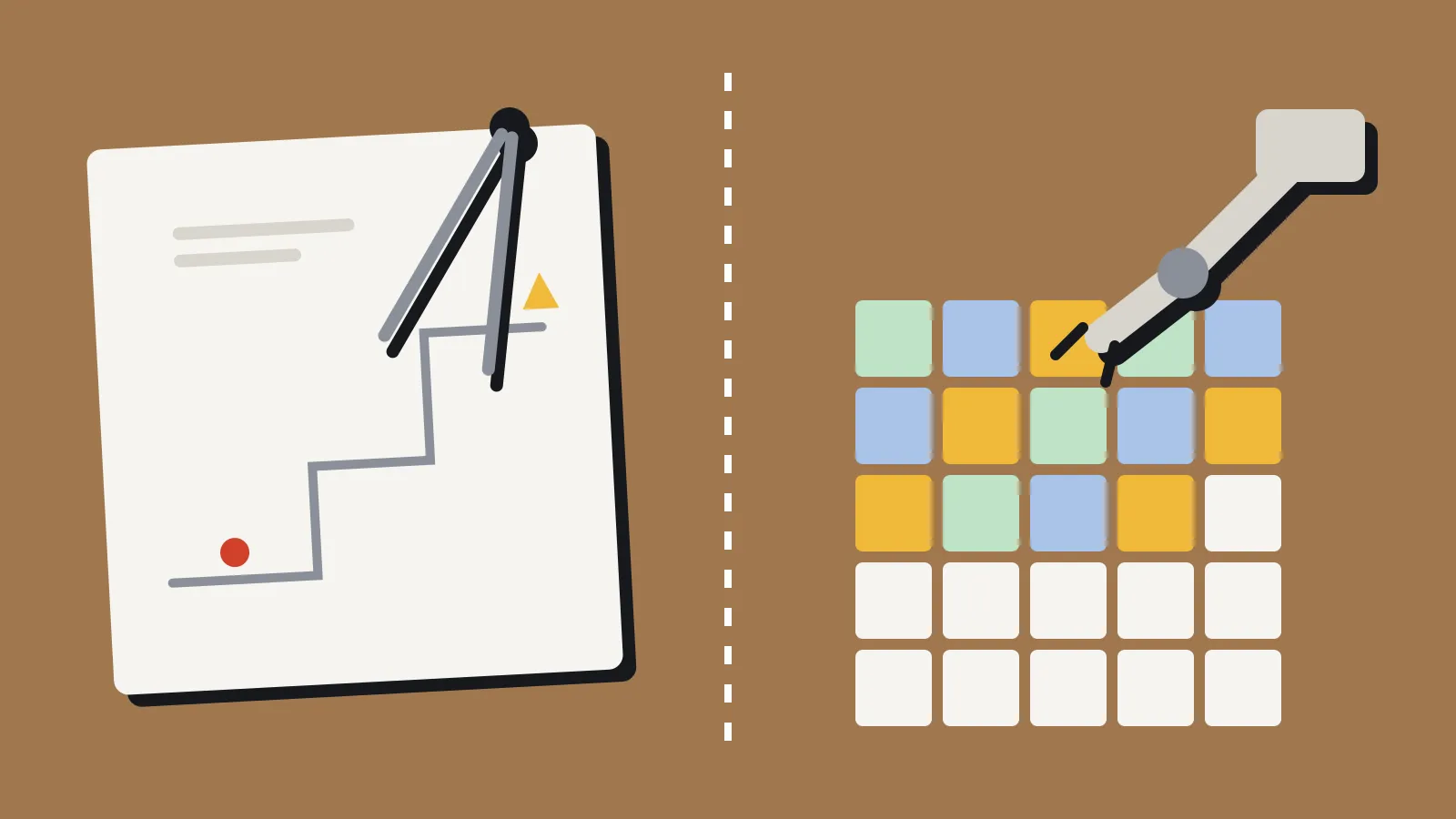
He separates two kinds of effort. Making is setting the structure and direction of a thing. Working is filling in the gaps and polishing. In his view, AI mostly handles the working part.
He also gave a warning. The satisfaction of doing the work can trick you into thinking you’ve made something good when you haven’t.
Overall, he was positive. He thinks AI could push people to think hard about what making a game really means. Work that lasts, he said, comes from people deliberately designing something with a computer’s help. He added that humans still have a lot to contribute, while admitting AI might one day handle all of it.
Why this framing helps a small team
Most of the AI argument in game dev runs on two tracks. One says AI output is slop and players will reject it. The other says AI makes you ten times faster. Neither tells you what to do on a Tuesday afternoon with a half-built level.
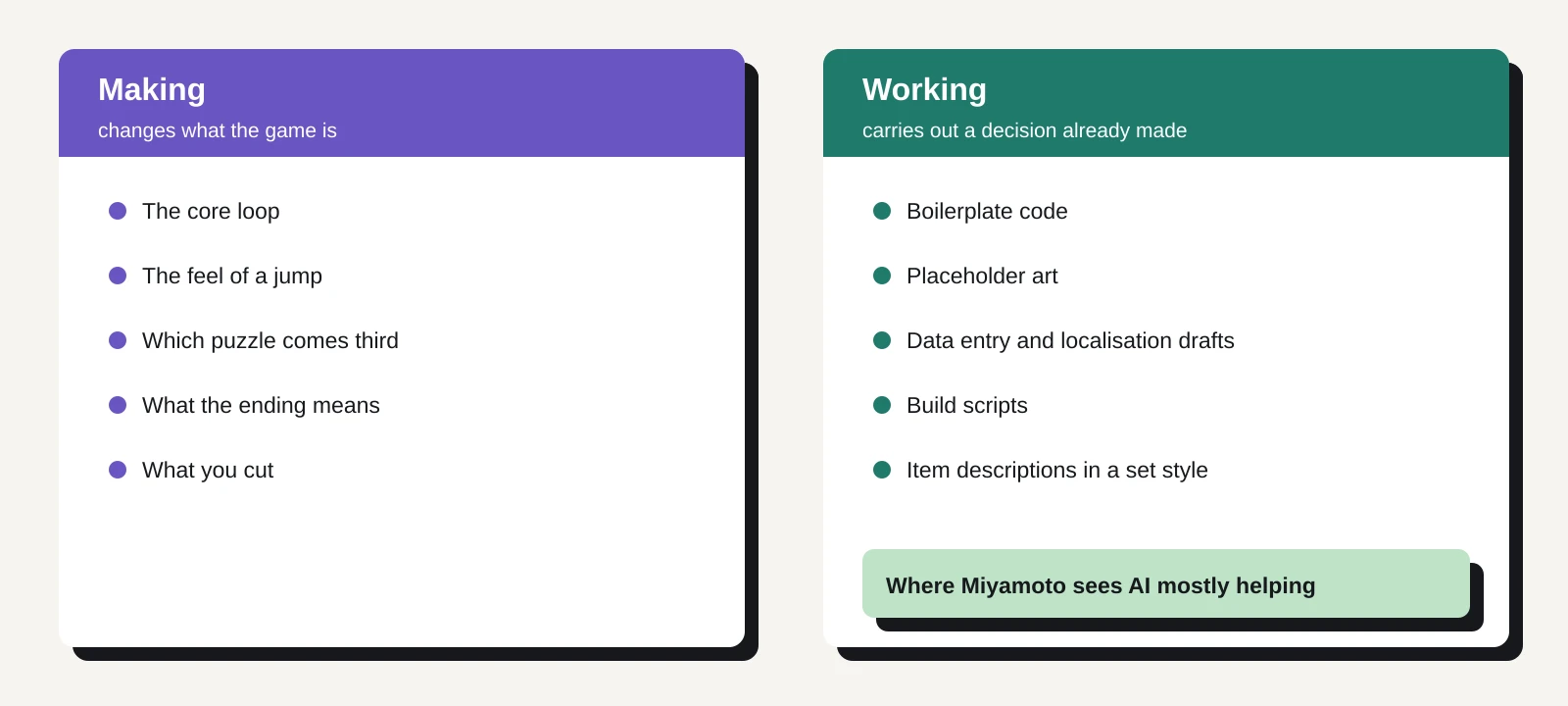
Miyamoto’s split does. It gives you a question to ask about any task: is this a decision about what the game is, or is it labour that serves a decision you’ve already made?
Decisions include the core loop, the feel of a jump, which puzzle comes third, what the ending means and what you cut. Labour includes boilerplate code, placeholder art, data entry, localisation drafts, build scripts and writing the 40th item description in a set style.
His warning is the part solo devs should take most seriously. When you work alone, nobody tells you the game isn’t fun yet. Hours spent prompting, tweaking and fixing can feel like progress, and the build can grow fast. None of that proves the design works. A playable thing and a good game are not the same, and AI makes the first much cheaper than the second.
There’s a live example in this week’s news. The developer of BENNE, a new open-source point-and-click engine, says AI tools wrote much of its code while they handled the architecture, feature design and editor experience. That’s Miyamoto’s split in practice. Whether it worked will show in how BENNE holds up, not in how fast it was built.
Where Valve and players come in
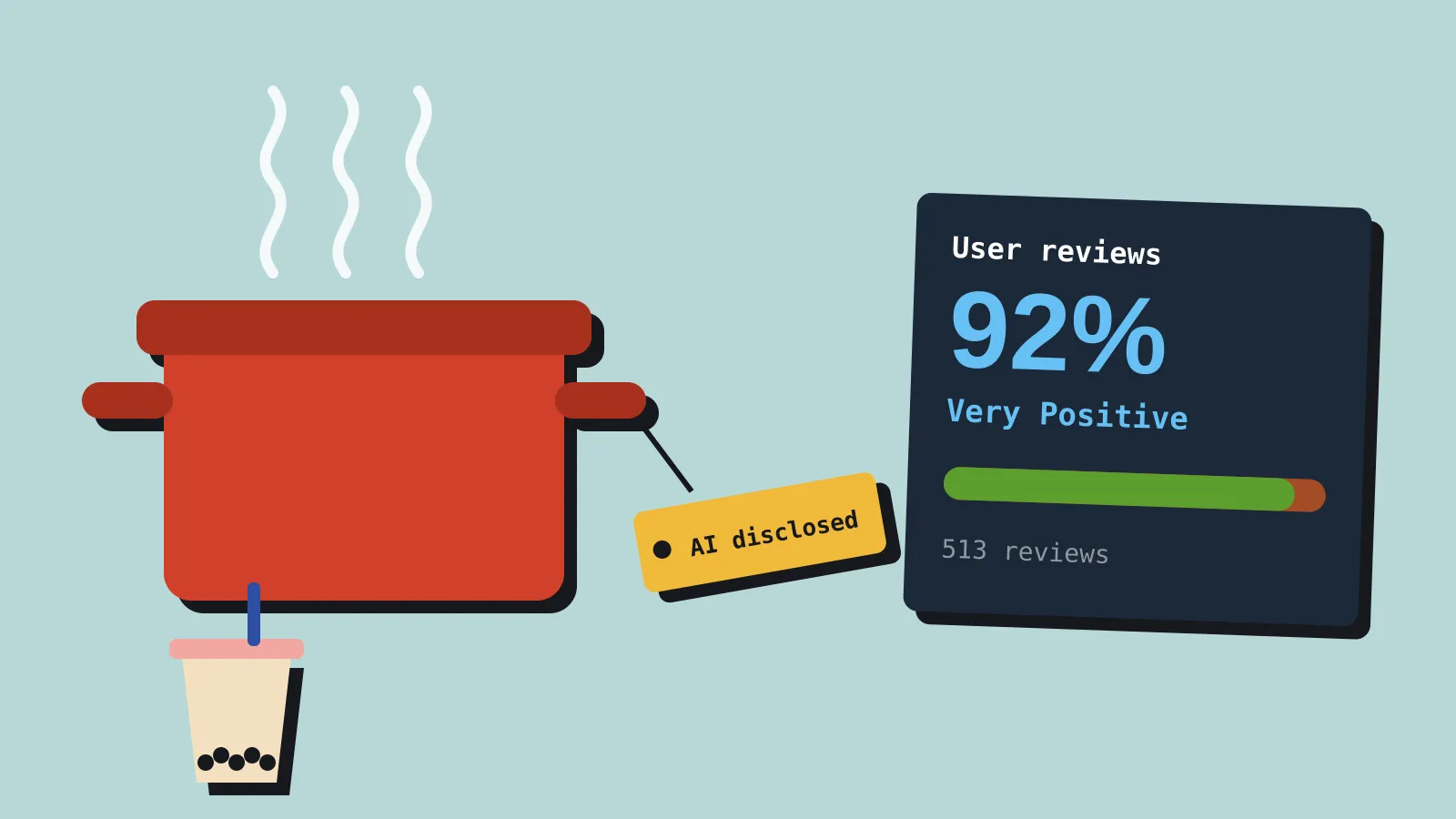
How you use AI also affects how you ship. Valve requires developers to disclose AI-generated content on Steam store pages. At an event in Korea last month, Valve also said it wants to fix discovery for players, not police which tools developers use. We covered those comments on 28 October.
Players are less relaxed. Comment sections on Steam, Reddit and YouTube still react strongly to visible AI art, even when a game reviews well. In the Game Dev Report, Code Monkey describes the same split. Professional developers seem more open to these tools, while online reaction stays loud. His own course game used AI heavily, and he argues it isn’t slop because the design came from many rounds of his own iteration.
Miyamoto’s line gives you a way to explain your choices honestly. “We used AI for code scaffolding and placeholder art, and every design decision is ours” is a statement you can stand behind on a store page or in a devlog.
What to do now
Try a simple audit on your current project. It takes about an hour.
- List your last two weeks of tasks. Use your task board, commits or devlog.
- Mark each one as making or working. Making means it changed what the game is. Working means it carried out a decision you’d already made.
- Check where AI helped. If AI is mostly on the working side, you’re using it the way Miyamoto describes. If it’s choosing mechanics, writing the story beats or picking the art direction, ask whether you’d defend those choices as yours.
- Playtest with someone else this week. Hand a build to one person who owes you nothing. Watch them play without explaining anything. This is the check against the “busy feels like good” trap.
- Write down your AI use now. Keep a running note of which tools touched which assets. You’ll need it for Steam’s disclosure form, publisher due diligence and your own credits page.
- Decide what you won’t hand over. Pick one or two areas, such as the core feel or the writing, that stay fully yours. It keeps your voice in the game and gives you a clear line to explain to players.
You don’t have to agree with Miyamoto that AI is a positive force. His distinction still holds either way. The decisions are the game, and those are yours to make.