A release brief, annotated
A labelled specimen of a release note: version, platforms, what changed, what was tested, and what the page must not claim. The game is invented.
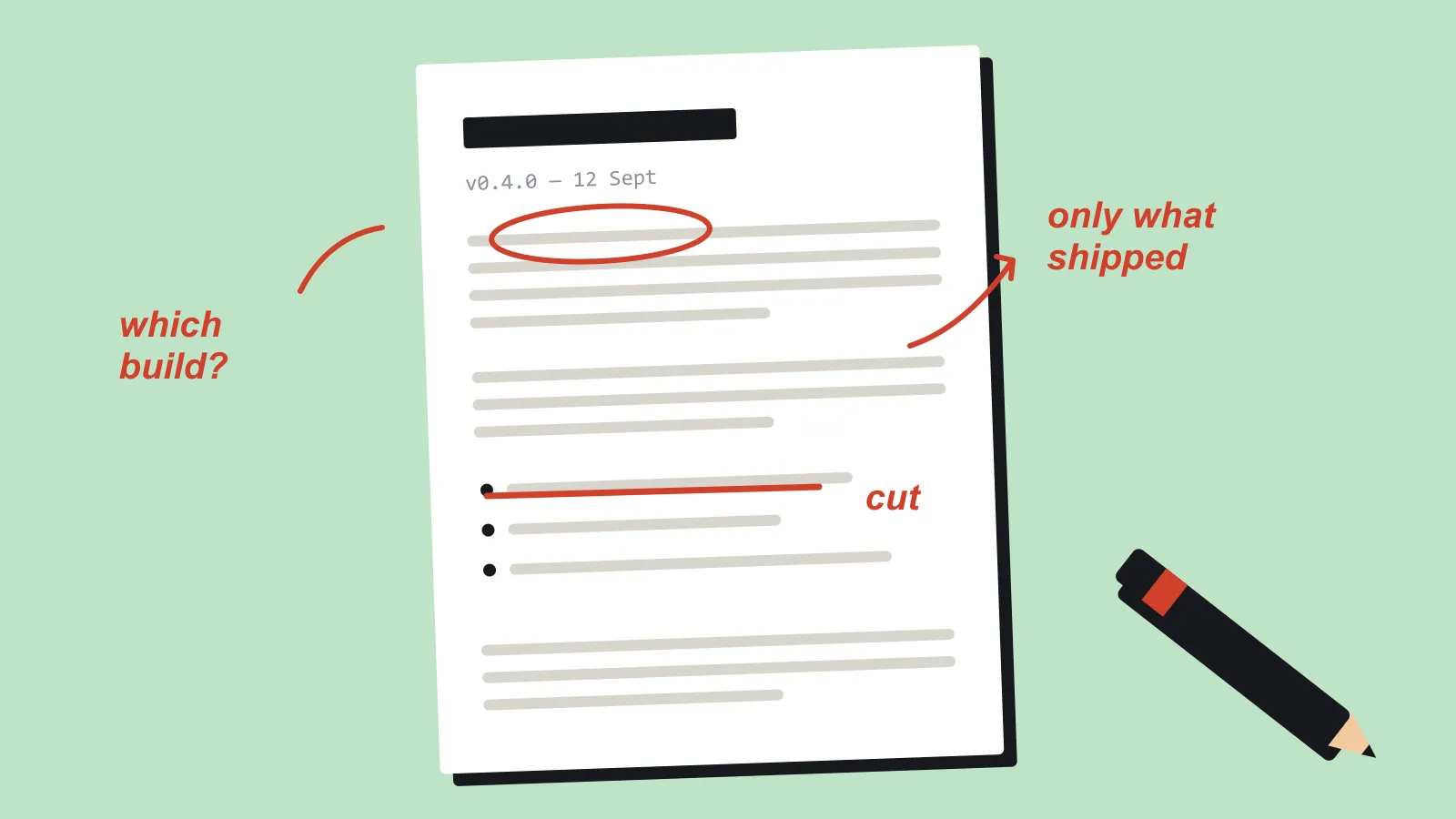
This page is a specimen. The game is not real, the version is not real, and nothing was uploaded. It is here so a release brief on this site has a shape you can copy: short, specific, and unwilling to invent a feature.
Specimen. Northroom 0.3, a fictional one-room stealth toy, imagined for this page.
Platforms. Windows and a web build. There is no Linux build in 0.3, so the note does not say Linux.
What changed. Guards now lose you when you break line of sight for a full two seconds, instead of knowing your tile forever. The lantern uses oil, and oil is a pickup in the room rather than an infinite meter. The pause screen shows the actual controls. That is the list. There is no line about various fixes, because that line is where specifics go to hide.
Each item is something a player could notice and check. “Guards lose you after two seconds” can be tested with a stopwatch. “Improved AI” cannot. If you cannot say how a reader would confirm a line, rewrite it until you can, or cut it.
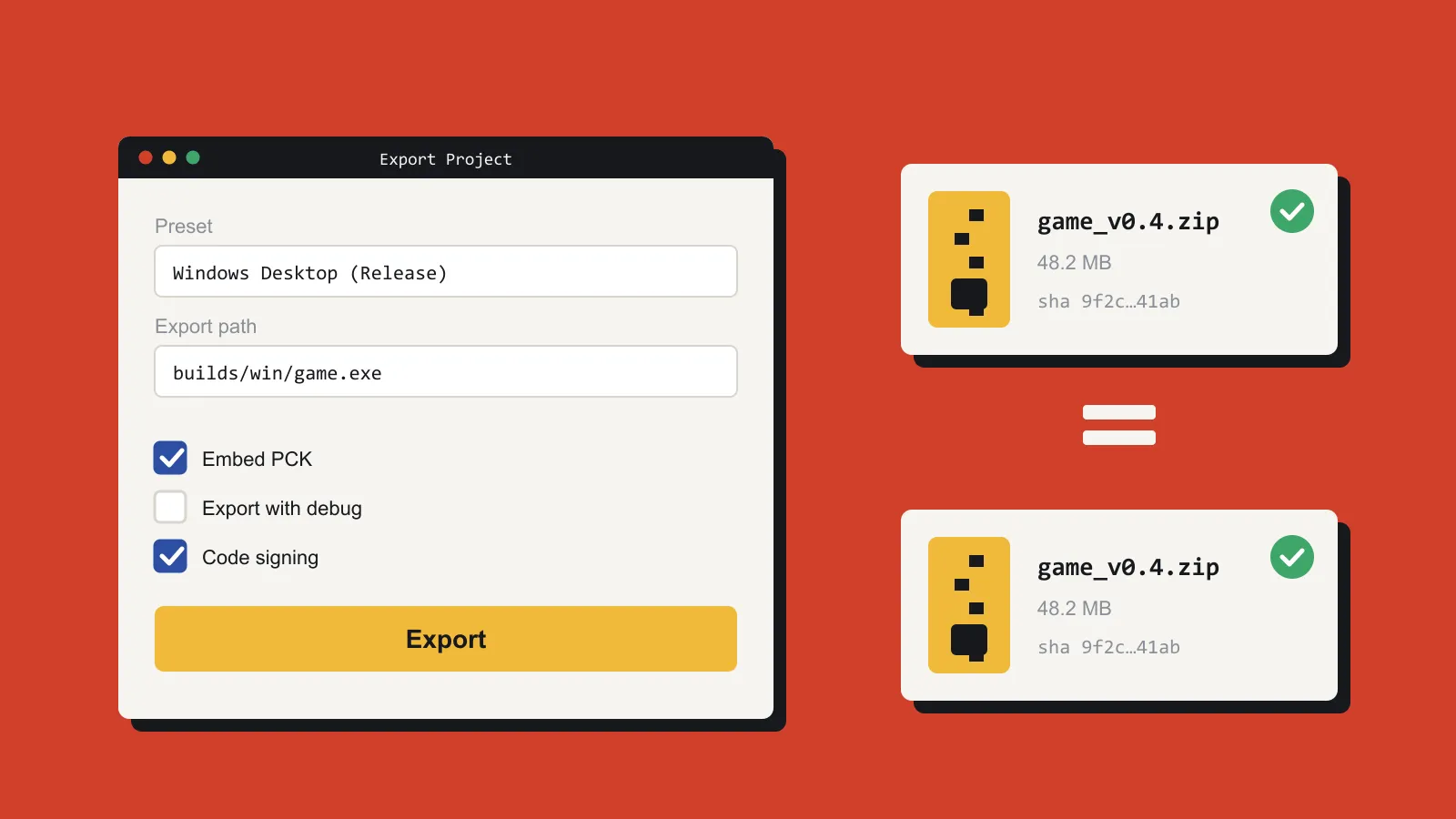
What was tested. The Windows export and the web export, from the preset, not from the editor. One full clear, one deliberate failure, and a refresh on the web build to see that progress does not pretend to save. There is no save in 0.3. The store page should say so, and this note says so.
Left broken on purpose. Windowed mode on Windows remembers the wrong size. It will not be fixed in 0.3. Writing it down is the difference between a known limit and a surprise. It also saves a player the bug report, and saves you the reply.
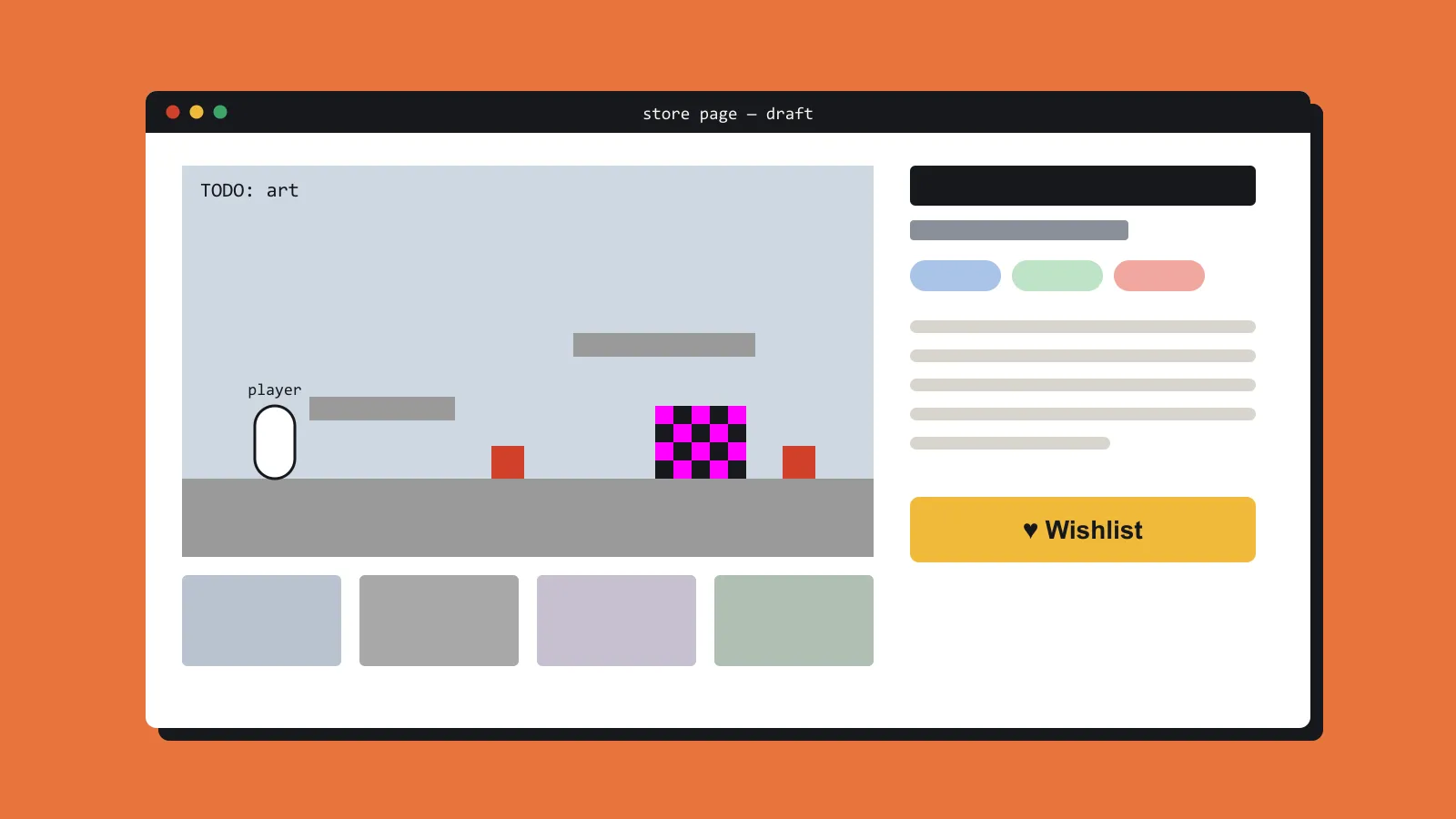
What the page may claim. One room, about fifteen minutes, keyboard, no saving, Windows and web. It may not claim a campaign, a map, or controller support. Those were wishes, and they are not in this build.
Write the brief before you upload, not after. Drafting it late means writing from memory, and memory remembers the features you meant to finish. Do it with the exported build open beside you.
That is a release brief. It is boring to write and easy to trust. Version, platforms, the behaviour that changed, the test you actually ran, and the bug you are leaving in. A reader — including you, next month — can tell what the build does.
When Indie Tooling runs a real release note, it will use this shape and it will be about a real build. If a sentence needs a feature that does not exist, the sentence goes. That rule is the point of the page.