E.T.'s creator says the AI game flood rhymes with 1983
Howard Scott Warshaw told DevGAMM Lisbon that AI-made games echo the pre-crash glut. The fix last time was filters, and today's filters are tightening fast.
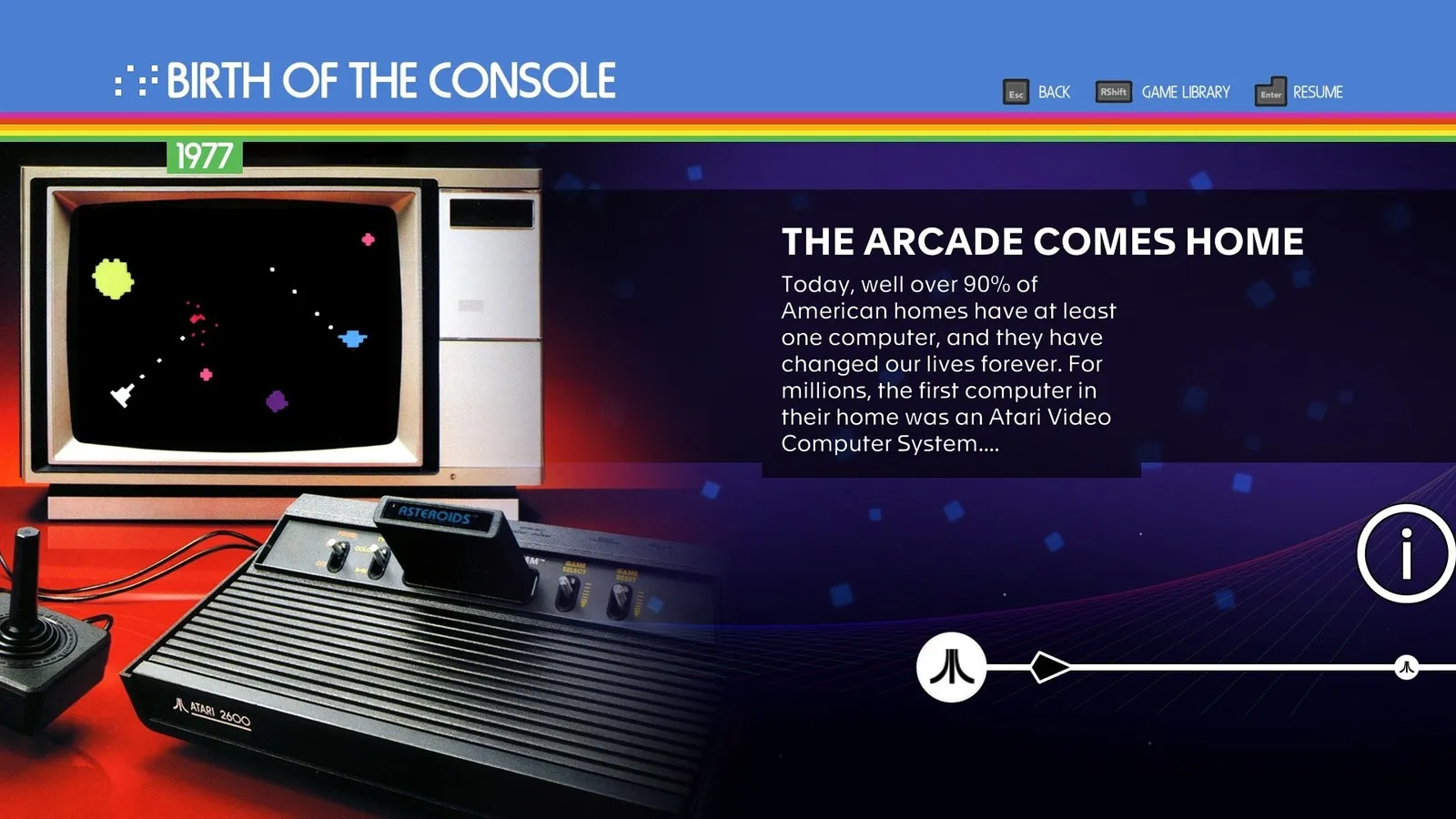
Howard Scott Warshaw, who made E.T. and Yars’ Revenge for the Atari 2600, used his “From Atari to AI” talk at DevGAMM Lisbon (17 to 18 November 2026) to compare the rising volume of AI-made games to the flood of weak cartridges before the 1983 US video game crash. GamesIndustry.biz reported the talk on 20 November, and GameDev.net mirrored the story. He doesn’t predict a repeat crash. He predicts a sorting-out, where players need better filters to find the good games.
What Warshaw actually argued
According to the GamesIndustry.biz report by Lewis Packwood, his case has four parts. AI lowers the barrier to making a game, so you get more releases and more low-quality ones. That mirrors the early 1980s, when poor titles helped sour buyers on the whole market. He thinks games are now too embedded in culture to collapse the same way. And his main worry is discoverability: how players find interesting work among the disposable stuff.
He also sees an upside. If AI handles grind that used to take weeks or months, more of a developer’s effort can go into design rather than production.
He knows the topic from the inside. Atari gave him about five weeks to build E.T. in 1982, and unsold copies ended up in a New Mexico landfill in 1983. He now works as a psychotherapist in California.
We couldn’t find a recording of the talk. DevGAMM’s programme lists him as a speaker but gives no session detail, and its YouTube channel had no upload when we checked.

Where the 1983 comparison holds, and where it breaks
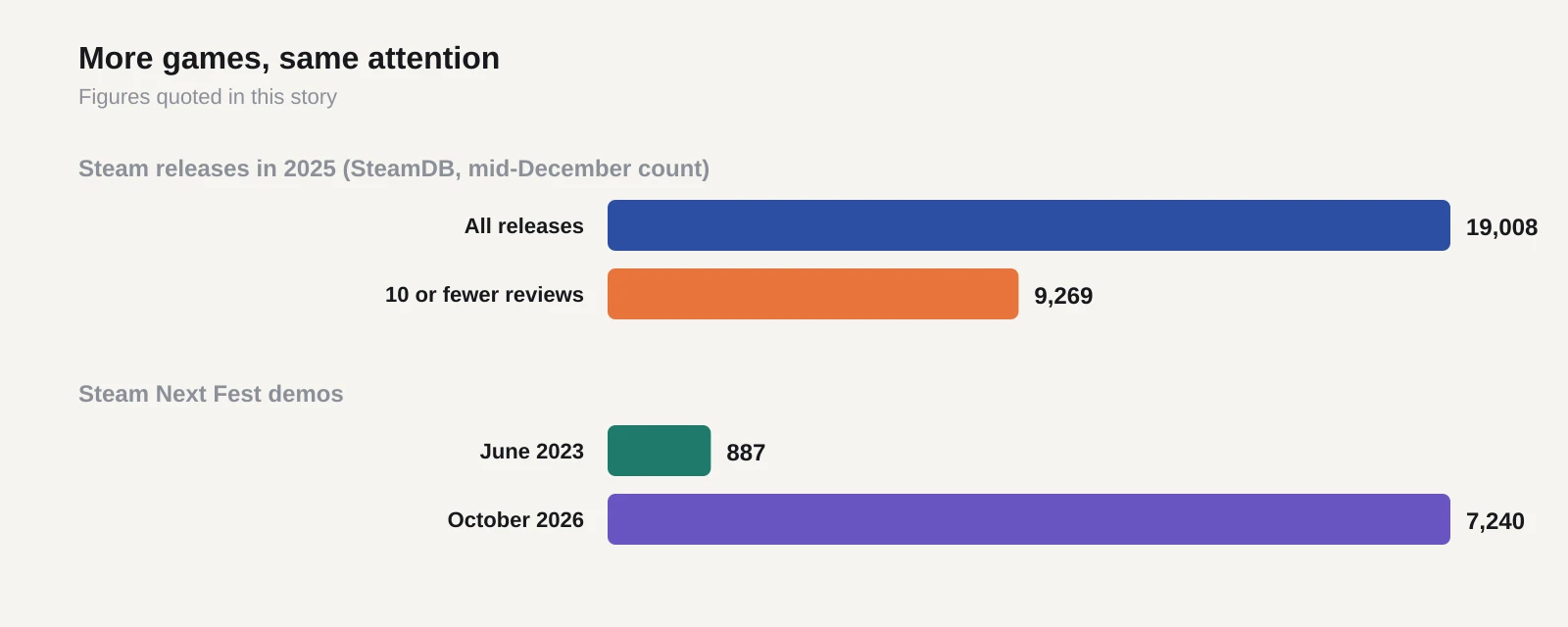
The volume part holds up. SteamDB counted 19,008 Steam releases in 2025, and GamingOnLinux reported that 9,269 of them had 10 or fewer reviews. On itch.io, new game pages per day roughly doubled from about 3,000 in early August 2026 to over 6,000 on some days by late October, while itch said downloads and purchases did not double. We covered that in itch.io pages doubled, sales didn’t.
The mechanics of the crash don’t carry over as neatly. In the early 1980s, publishers overproduced cartridges, retailers returned unsold stock, and prices collapsed from about US$35 to around US$5 per game. Home video game revenue fell from about US$3.2 billion to about US$100 million by 1985, according to Wikipedia’s summary of the crash.
Digital storefronts have none of that physical weight. Shelf space is effectively infinite. Nobody ships a pallet of unsold games back to a distributor. A bad game on Steam still competes with yours for attention, which is harder to measure but just as finite.
For a solo dev, the realistic risk is being invisible in a market that keeps working fine for the top few hundred games.
The fix last time was a filter
What pulled US console gaming out of the crash was curation. When Nintendo launched the NES in North America in 1985, a lockout chip (a security chip that stopped unlicensed cartridges from running) let it decide who could publish. It capped most third-party publishers at five games a year and put its Seal of Quality on licensed titles. Players had a signal they could trust again.
Today’s filters are looser, but they exist and they are getting stricter.
Steam’s review queue is one. Valve aims to review builds in 3 to 5 business days. In early November it said it was running behind, at up to 12 business days, largely because of re-reviews of builds that failed first time, VGC reported on 4 November. Valve added checklist rules: launch your game through Steam for at least five minutes before submitting, list required redistributables, have achievements ready, make sure Steam Cloud works, and mark at least five screenshots as gameplay.
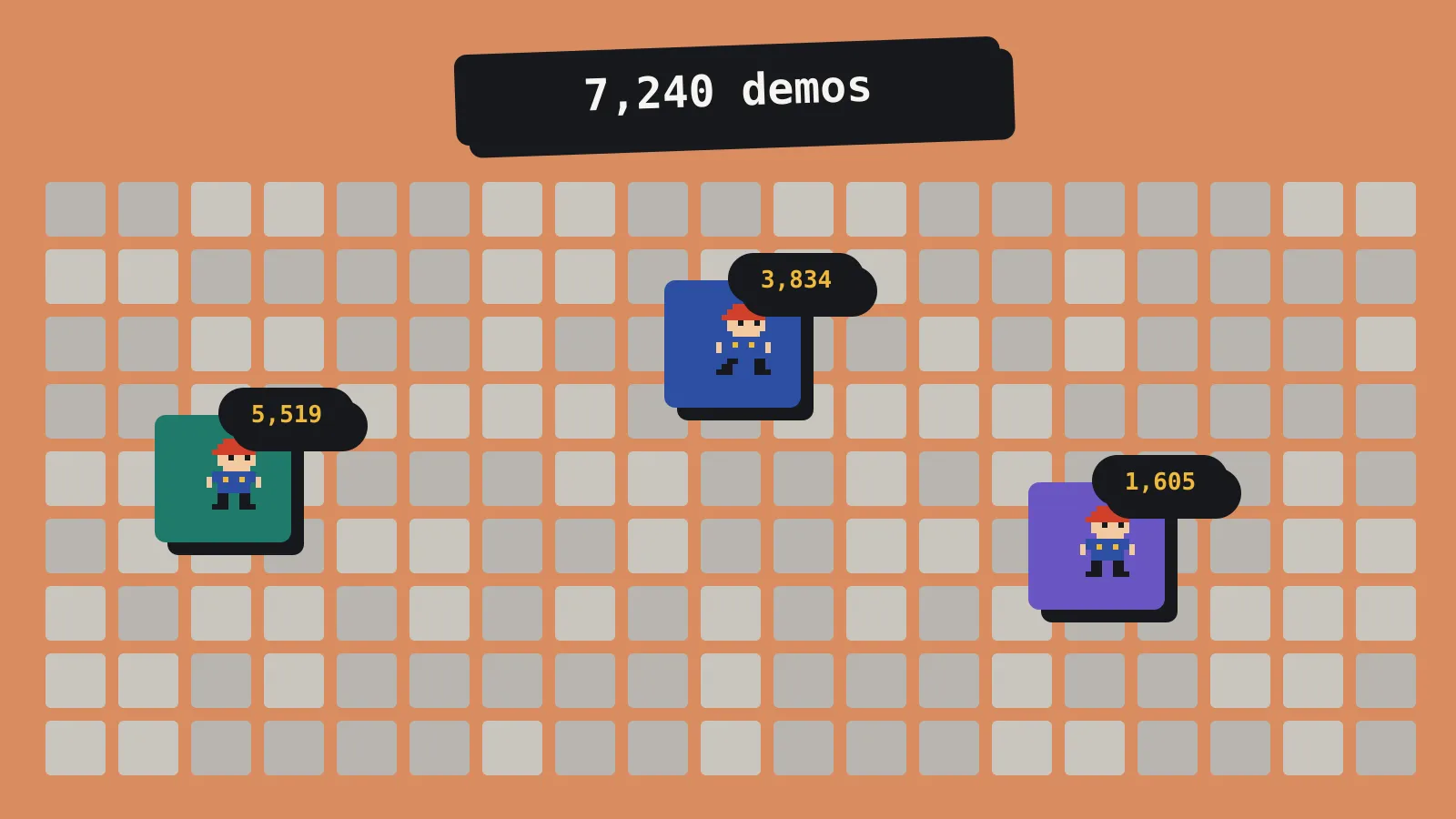
Next Fest is another. October 2026 had 7,240 demos, up from 887 in June 2023. Chris Zukowski’s analysis found the top 25 demos had a median of 5,519 followers the day before the festival, while the other 6,942 games had a median of 15. Only 7.6% of demos peaked above 10 concurrent players. We broke that down in Next Fest October 2026: followers decide who gets seen.
The rest are human filters: Steam curators, publishers, festival juries, press, streamers and your own community. None of them can look at everything, so each leans on quick quality signals.
What it means for a solo dev
Warshaw’s point lands hardest on small teams. You don’t have a marketing budget to buy your way past the noise. You have to pass the filters on signal alone.
The good news is that most filters still reward the same things. Valve’s business team told developers in Seoul in October that sales and play matter more for visibility than wishlists, and that the first two days of Next Fest are close to random before personalised carousels take over. We covered that in what Valve said about wishlists, clones and Next Fest. A clear hook and a demo people actually finish count for more than raw page count.
Whatever tools you use, every filter asks one question: can a curator, juror or player tell in a few seconds that your game is worth their time? Zukowski’s data showed the top 25 Next Fest demos disclosed AI use at 8%, against 35% for the field. That is a correlation and doesn’t show disclosure hurts. Honest disclosure is still required on Steam, and accurate tags help the right players find you.
What to do now
- Add buffer to your Steam dates. Plan for 12 business days for build review, not 3 to 5, and work through Valve’s new checklist before you submit. A failed first review costs you a second wait.
- Build followers before Next Fest, not during it. The followers you have the day before the festival matter most. Put your demo up a few weeks early and point every devlog, post and trailer at your Steam page.
- Make your capsule and first 30 seconds readable. Filters are skimming. Your capsule needs a legible title, your screenshots need to show real gameplay, and your trailer should show the core loop fast.
- Pick two human filters and work them properly. Choose a few curators who cover your genre, one festival with an indie strand, or a small publisher. Send each a tailored pitch with a build key, not a mass email.
- Grow a channel you own. A mailing list or Discord still works when store algorithms change. Itch.io’s own advice is to drive traffic from your own channels rather than waiting for browse pages.
- Tag and disclose accurately. Wrong tags put you in front of players who bounce, and that hurts your signals.
Sources
- The creator of E.T. on the Atari 2600 likens the deluge of AI-made games to the glut before the 1983 crash (GameDev.net mirror of GamesIndustry.biz)
- DevGAMM Lisbon 2026, source of the event banner (DevGAMM)
- Steam says it’s running behind when reviewing pre-release games (VGC)
- Steamworks review process documentation (Valve)
- Over 19,000 games released on Steam in 2025 (GamingOnLinux)
- Video game crash of 1983 (Wikipedia)
- Howard Scott Warshaw (Wikipedia)
- Atari 50: The Anniversary Celebration, source of the cover image (Steam)