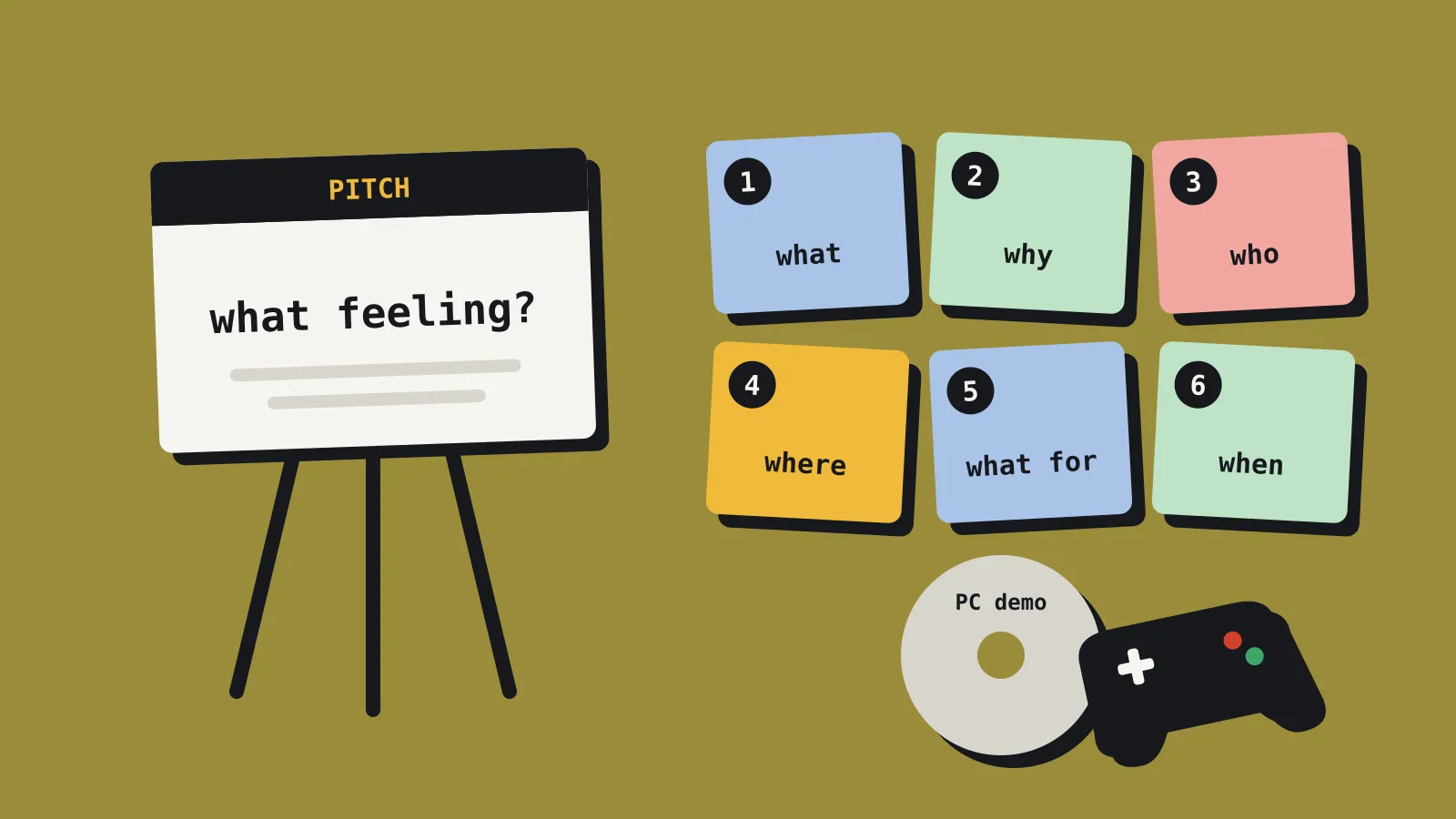
What your vertical slice must prove before a publisher plays it
Publishers' own pitch pages say the same thing: a short, stable build that proves the fun fast. Here is what to build, what to skip and a scope sheet.
A GameDev.net post from an outsourcing studio on 20 November 2026 put a number on a common mistake: vertical slices that take four months and still don’t answer a publisher’s questions. We went to the publishers instead. Raw Fury, tinyBuild, Kepler Interactive, Fellow Traveller and Outersloth all publish what they want to see, and their pages agree more than you might expect. They want a playable build that shows why the game is fun, quickly, plus a believable plan for the rest.
Prototype, demo and vertical slice are different jobs
A prototype answers one question for you: is this mechanic worth making? It can look like grey boxes. A demo is for players, usually on Steam, and its job is wishlists. A vertical slice is for a publisher or funder. It is a small part of the game built close to final quality, so someone can judge the whole game from a few minutes of it.
tinyBuild’s pitch page asks for exactly that: a build with a vertical slice of gameplay that shows why the game is fun, sent as an easy-to-play Dropbox link. Raw Fury asks for a playable PC build that shows the essence of the game, and warns it may only be played once. Kepler Interactive says it is generally unable to assess projects without a build, and ranks pitch media as demo, then video, then concept art, then words.

Not every publisher insists on one. Fellow Traveller says it has signed games at every stage, from 48-hour jam prototypes to announced projects, though it usually needs to play some kind of build before signing. Forest W, who reviews pitches for Outersloth, wrote in October 2024 that complete vertical slices are hard to justify. He would rather see a tech or debug demo that shows the mechanics, with unfinished parts obviously unfinished.
What the slice has to prove
Read across those pages and five things come up.
- The core loop is fun in minutes. Forest says many demos need 15 minutes or more before their nature is clear, which adds up across hundreds of pitches. He wants a build that hooks harder than the final game will. Finji’s Rebekah Saltsman told Game Dev Unchained in 2019 that a pitch build should give a complete playthrough in about 7 to 13 minutes.
- The art direction holds up, in a small space. Saltsman’s rule was to polish what your genre is judged on. A story game needs finished art. An action game needs responsive combat first, with art second.
- The risky tech works. If your game depends on a hard system, such as physics, netcode or procedural generation, the slice should run it for real. Faking it here hides the exact thing a publisher is paying to de-risk.
- The budget is credible. Raw Fury wants development costs for one PC build in US dollars, excluding marketing and ports. Its suggested estimate is your monthly burn rate times the months left. Outersloth wants milestones and a budget split by department, and says asks of US$1 million or more draw harder questions about whether the team can handle the money.
- The team can finish. Outersloth judges the team last, after asking whether the game is good and whether it can be made. A slice that runs well is your best evidence for the second question.
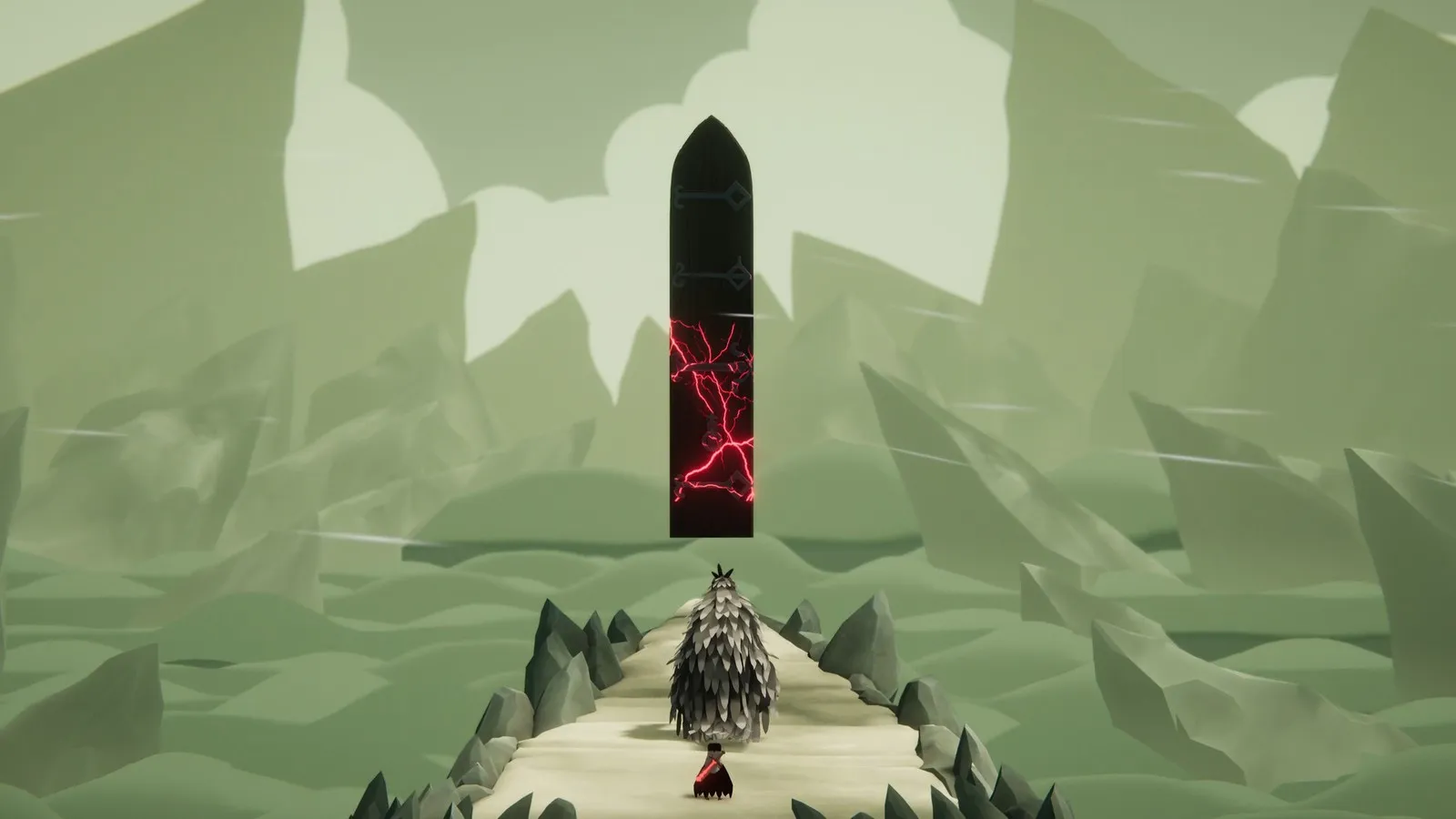
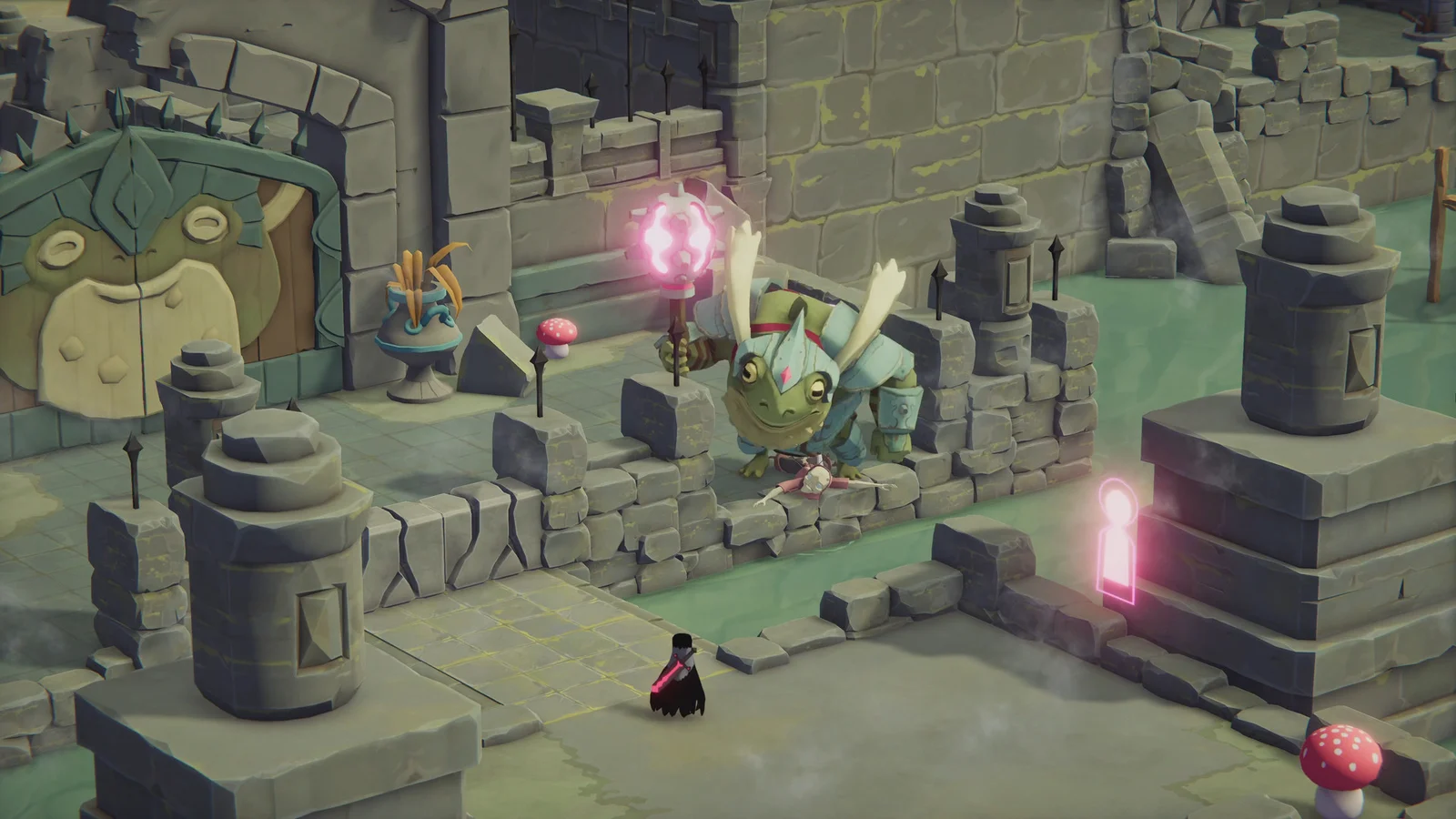
Devolver gives a useful real example. Acid Nerve told GamesRadar in 2021 that its Death’s Door pitch was a roughly 10-minute gameplay demo, about three months of work, covering one opening area and fights with a few enemy types. The goal was to prove the studio could make 3D combat feel as good as its earlier pixel-art games. One question, answered well.
What not to spend time on
Polish the deck less than you think. tinyBuild CEO Alex Nichiporchik wrote in August 2024 that a fancy slide deck is rarely what matters, and that the time is better spent on a fun walkthrough video. He added that 90% of pitches are first viewed on a phone, so check your UI is readable on a small screen.
Skip content outside the main path. Every extra room or menu is something to test and something that can break in front of the person deciding your funding. Skip long intros too. Raw Fury asks for skippable cutscenes and intros, checkpoints through the build, English subtitles if needed, and the controls written down.
Don’t build a full tutorial unless your audience is players. Forest says he accepts written notes. Developer agent Alex Beck, who argues for near-final slices, takes the opposite line and says tutorials must be in-game. Check each publisher’s page before you choose.
What it means for a solo dev
Aim for a short slice that works every time: ten minutes on one path, final quality on the things your genre is judged on, rough everywhere else. A clean build with a video and a one-page budget gets you further than a sprawling slice that crashes in the second room.
If you have already read our guide on the six questions Raw Fury wants answered, the slice is where you prove your answer to “what are you making?”
Your scope sheet
Fill this in before you open the engine. If a line is blank, the slice isn’t scoped yet.
- The one question: What does a publisher doubt about this game? Write one sentence.
- Target length: 7 to 15 minutes, on one route, with a clear end.
- Final quality list: Up to three things at final quality, such as the player character, one area and the HUD.
- Real or faked: For each system, mark it real code, prototype or scripted. Your selling point must be real.
- Target machine: One device and one minimum frame rate.
- Build checklist: Skippable intro, checkpoints, controls sheet, version number on the title screen.
- Test plan: Run the slice end to end at least 10 times, then watch two outsiders play without help.
- Budget line: Monthly burn times remaining months, in US dollars.
- Supporting material: One gameplay video, one GIF, one-page budget, deck.
A realistic note on cost and time
Plan for two to four months. Acid Nerve’s pitch took about three. For a solo dev, the cost is mostly your own time, so price it honestly. At a modest living cost of US$3,000 a month, three months is US$9,000 of runway spent before anyone says yes. That is why the slice should be as small as the one question allows. Before you sign anything it leads to, read our checklist of publishing terms Outersloth warns about.
Sources
- How to pitch to Raw Fury, source of the collage (Raw Fury)
- How to pitch your game (tinyBuild)
- How to pitch games (in 2024), Alex Nichiporchik (tinyBuild)
- How I review Outersloth pitches, Forest W (Innersloth)
- Inbound form (Kepler Interactive)
- Developers (Fellow Traveller)
- Death’s Door developer walks us through the pitching process (GamesRadar)
- Pitching your game with Rebekah Saltsman (Game Developer)
- The vertical slice meta, part 1 (Beck Interactive Partners)
- What a vertical slice should prove before you take it to publishers (GameDev.net blog)
- Death’s Door, source of the cover and combat screenshot (Steam)